 By st20113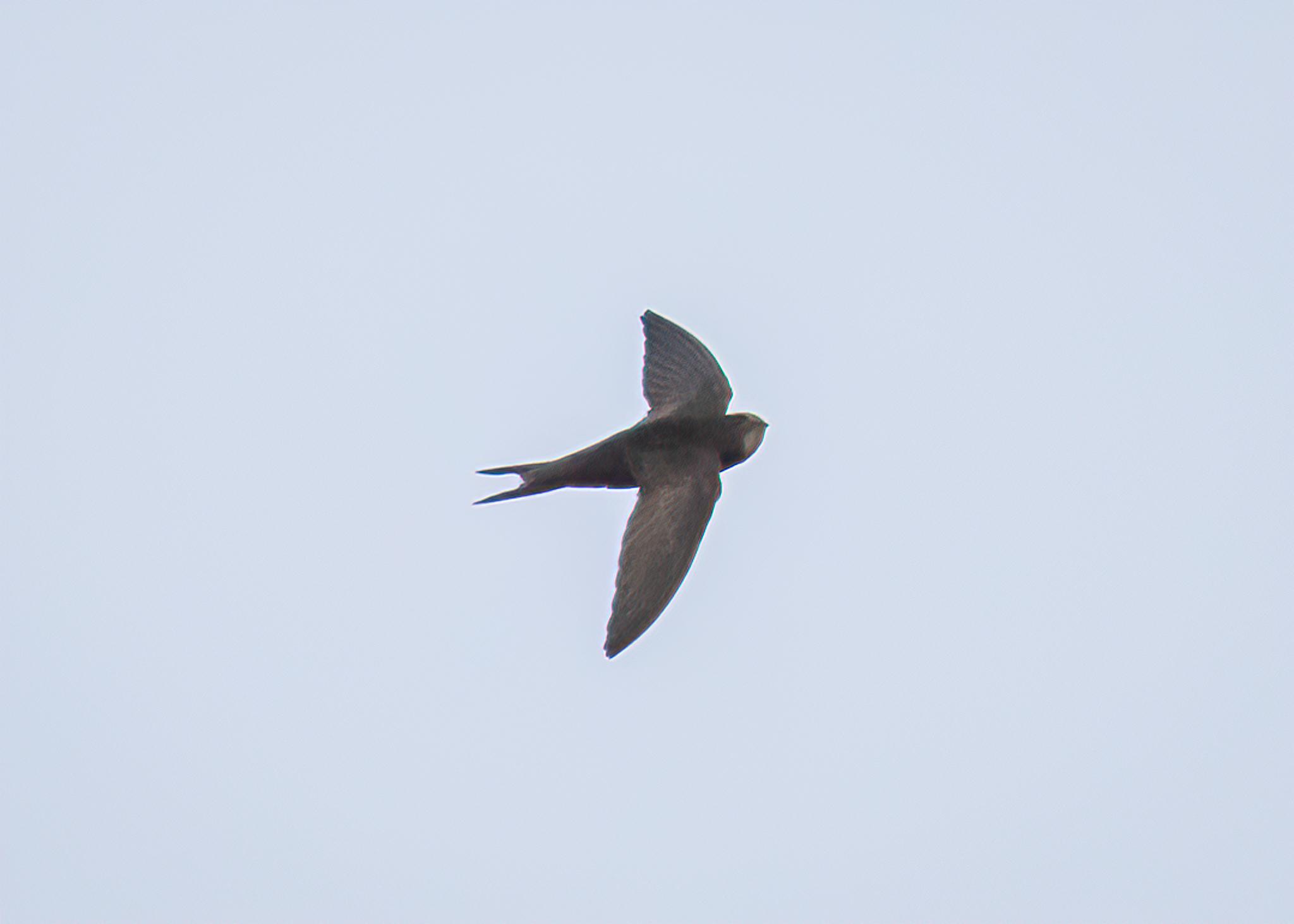
Introduction
The common swift (Apus apus) is a dark, sickle-winged bird that spends almost its entire life in the air. About 16 to 17 centimeters long, it is often mistaken for a swallow, but swifts are only distant relatives and are built for a far more aerial existence. Common swifts eat, drink, bathe, and even sleep on the wing, landing only to nest. They breed across Europe and Asia and migrate to southern Africa for the winter, a journey they perform almost entirely aloft. Their screaming calls over rooftops are a familiar sound of summer in cities and towns. Because they depend on flying insects, swifts are sensitive to weather and to the loss of the old buildings they use as nest sites.
Taxonomy
The common swift belongs to the family Apodidae, whose name means “footless” in Greek, reflecting how rarely these birds touch the ground. It was described by Linnaeus in 1758. Although similar in shape to swallows, swifts are more closely related to hummingbirds than to perching songbirds. The genus Apus includes many swift species worldwide, all sharing the same mastery of sustained flight. Unlike the osprey, which hunts fish from above water, the swift catches tiny insects high in the sky, illustrating the diversity of aerial hunting strategies among birds.
Physical Characteristics
Common swifts are uniformly dark brown with a pale grey throat patch and a long, narrow body. Their wings are long, curved, and blade-like, forming a boomerang shape in flight. They lack a branched tail, instead having short, stiff feathers. Feet are tiny and weak, used only for clinging vertically to nest walls. Adults weigh 36 to 50 grams. The wide gape and small beak are perfectly shaped for scooping insects at speed. Their streamlined form and powerful chest muscles allow almost continuous flight. In the air they are unmistakable: a fast, flickering dart with stiff wings and a shrill call.
Habitat
Common swifts breed in towns, villages, and cliffs where they can access enclosed cavities high above the ground. Historically they nested in tree holes and rock crevices, but today they almost exclusively use buildings, slipping into gaps under roof tiles, eaves, and vents. They need open airspace nearby for feeding and gathering, favoring areas where warm air lifts insects upward. During migration and winter they live entirely over savanna and forest in Africa, rarely touching down. The species has adapted so thoroughly to human structures that modern sealed buildings without access points have become a major threat to local populations.
Diet
Swifts feed on airborne plankton: small flies, aphids, spiders carried by the wind, and other tiny insects caught in mid-air. They often feed in mixed flocks with swallows and martins, though swifts usually fly higher. A parent can carry hundreds of insects stuck together in a ball at the back of its throat to feed chicks. They drink by skimming water surfaces and bathe by flying through rain or mist. Because prey must be airborne, cold or wet weather can force swifts to fly vast distances to find food. Their dependence on insect swarms ties their breeding success directly to summer weather patterns.
Reproduction
Common swifts nest in colonies within building cavities, laying two to three white eggs on a small platform of feathers and debris. Both parents incubate for about three weeks. Young develop slowly and can enter a state of torpor to survive food shortages. Fledglings leave the nest already capable of sustained flight and may not land again for years. Pairs return to the same nesting site each spring, sometimes after migrating more than ten thousand kilometers. The birds’ reliance on specific building gaps makes them vulnerable when roofs are repaired without providing alternative nest boxes.
Conservation
The common swift is still widespread and listed as Least Concern, but numbers have fallen sharply in several European countries because of building renovation that removes nesting access, declines in insect food, and fewer suitable old structures. Many towns now install swift bricks and nest boxes to compensate. Reducing pesticide use and preserving roof spaces helps local populations. Because swifts are entirely aerial and insect-dependent, their declines echo broader concerns about pollinator and invertebrate loss. Citizen science counts of screaming parties at dusk help track population trends across the continent.
Fun Facts
Common swifts may stay airborne for up to ten months without landing once they leave the nest. They can sleep while flying by gliding on autopilot with one half of the brain at a time. A swift’s top speed in level flight is among the fastest of any bird. Young swifts can wait in the nest for days without food by lowering their body temperature. They drink, mate, and even gather nesting material entirely on the wing. The oldest known swifts have returned to the same nest site for over a decade.
[…] findings of the recent taxonomy of the birds. The European nightjar is a close relative of the Common Swift (Apus apus). The 2 birds share the same long and narrow wing and the same small and weak foot. They both feed […]