 By st20113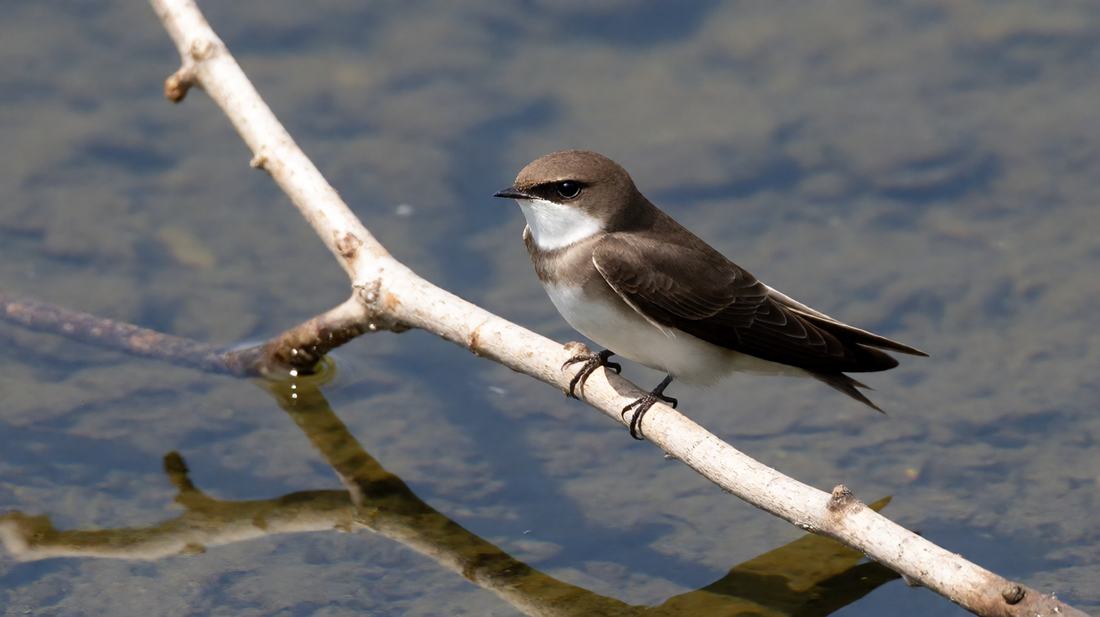
Riparia riparia | Sand Martin
Species Profile · Hirundinidae
Sand Martin
The smallest swallow of Europe returns first in spring — and digs a metre-long tunnel into a sand bank to raise its young in the dark.
IUCN: Least Concern
Range
Length
Weight
Nest
Incubation
The first swallow home
An aerial hunter of the river bank
The Sand Martin is the smallest of the European swallows. It is also the first to return in spring. It is a slim, brown-and-white bird. It arrives in Britain and northern Europe in March. The weather is still cold and insects are still scarce. It is one of the most distinctive birds of rivers, sand pits and quarries. That is because it excavates nesting tunnels in vertical banks of sand and gravel. The bird is 12 to 13 cm long. Its wings span 26 to 29 cm. It weighs 11 to 16 g. Its colouring and flight separate it from the other swallows of the region.
It is plain brown above and white below. A narrow brown band crosses the breast. Its tail is short and slightly forked. It lacks the glossy blue-black back and red throat of the Barn Swallow. It also lacks the sharply defined white rump of the House Martin. It feeds entirely on flying insects that it catches in the air. It hunts low over water and over open ground in fast, fluttering, wheeling flight. It is one of the most aerial birds in Europe. It spends a greater share of the day in the air than nearly any other small land bird. It is a migratory species and a true long-distance traveller. It breeds across Europe, North Africa, much of Asia and North America.
It winters in the Sahel and other parts of sub-Saharan Africa. It also winters in South America and the Indian subcontinent. Birds that nest in Britain and northern Europe cross the Sahara twice a year. Each way is over 4,000 km. It is assessed as Least Concern on the global Red List. Its range is very large and its population enormous. The species has declined seriously in parts of its range. In Canada it has lost almost the whole of its national population in 40 years. It is listed as Threatened under federal legislation there. The European population has been classified as depleted.
Family tree
Riparia, the brown-backed martins
The Sand Martin sits in the family Hirundinidae, with the swallows. This is a wide-ranging group of about 90 species. They are small, aerial, insect-eating birds. They have long pointed wings and a short bill with a wide gape. Their body is slender. Their feet are made for perching, not for walking. Within the family the bird sits in the genus Riparia. Those are the martins with plain brown backs and a breast band. The group holds between 4 and 6 species on every continent except Antarctica. Its closest kin take in the Pale Martin of central Asia. That bird is paler and greyer and was once treated as a form of the Sand Martin.
The Brown-throated Martin of Africa and Asia is another close kin. The best test is the Common Swift. That is another fast-flying bird of the summer sky. It is not closely related at all. Yet it lives in the same way, on insects in the air. It leaves in autumn as well. In the air it is separated by its longer, scythe-shaped wings. It is also all dark and gives a screaming call. The Sand Martin was described by Linnaeus in 1758. He first placed it in the genus Hirundo. Its scientific name says exactly what it is.
Riparia comes from the Latin ripa, meaning a riverbank. Riparia means of the riverbank. So the whole name can be read as the bird of the riverbank. That refers to the nest sites it favours. Many forms are recognised across the world. They differ slightly in size and in the shade of the upperparts. The bird is part of a wider group of martins. That group’s naming has been recast with the help of gene studies. The Australian and African birds have been moved into their own genera. The Sand Martin itself is still the model for the genus.
Brown back, breast band
How to identify one
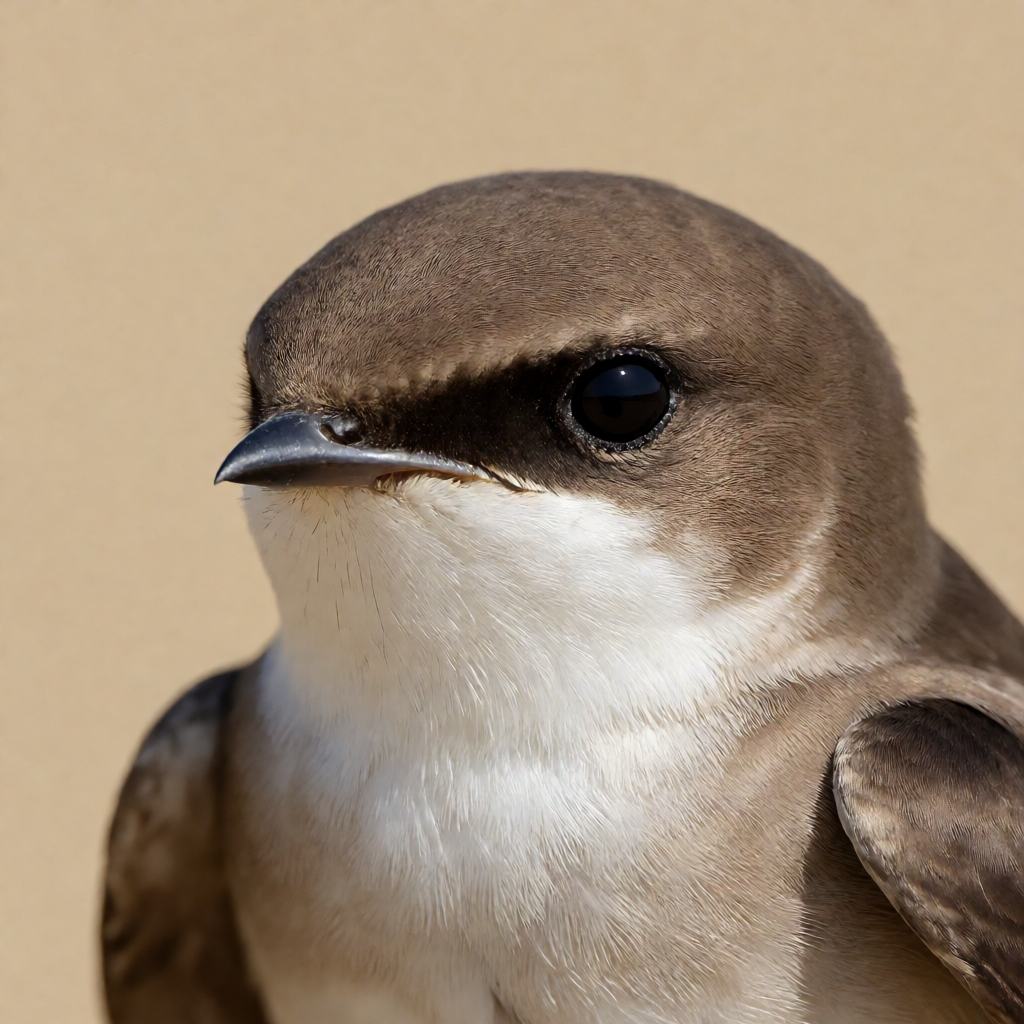
The Sand Martin is a small, slim swallow. It has long, pointed wings, a short, slightly forked tail and a body built for continuous flight. Its plumage is the plainest of any European swallow. It is a uniform earth brown above and clean white below. A distinct narrow brown band runs across the upper breast. The throat and the sides of the neck are white. The pale area round the throat extends upwards behind the cheeks. So the brown of the head and the white of the throat meet in a soft, blurred line. The upperparts are not glossy and carry no metallic sheen. There is no white rump patch and no red or blue in the plumage at all.
That makes an adult easy to name even at speed in good light. The brown of the back is often described as being like a paper bag or an unglazed pot. Pale fringes on the feathers of the fresh autumn plumage give the bird a slightly frosted look after the moult. Young birds are similar to adults. Their upperparts are warmer brown and the pale fringes are more obvious. The breast band is often less distinct and can be almost absent. That makes them confusing when seen against the light. The wings are long and sharply pointed. The tail is short and only shallowly forked. The legs are very short and covered in small feathers.
The feet are small and weak. The whole arrangement suits perching on a bank or a wire rather than walking. A Sand Martin on the ground looks awkward and moves with difficulty. That is one reason the species is almost never seen there. The sexes are alike in plumage and size. There is no seasonal change beyond the usual fresh and worn states. Small size, long wings and light weight combine to give it a fast, agile, flickering flight. That flight is quite unlike the slower, more deliberate flight of a Barn Swallow.
1
2
3
Sand bank, quarry and pit
Where it lives
The Sand Martin is odd among birds in one way. Its needs are almost wholly about the shape and feel of the ground. It needs a vertical face of soft, sandy or gravelly material. That face must be firm enough to hold a tunnel and loose enough to be dug. It must also be near water or open ground where insects are plentiful. In the wild the bird nests in the worn outer bends of rivers. It uses the steep banks of streams and lakes. It uses sea cliffs made of soft sand or glacial till. It uses the undercut faces of sand dunes and the crumbling peat edges. It will also use the walls of ravines and slips. Any natural exposure of soft soil will do. Natural sites are scattered and often short lived.
So the species has taken readily to man-made equivalents. It now breeds in sand pits, gravel pits and quarries. It uses cuttings beside roads and railways. It uses spoil heaps and drainage channels. It uses the levelled faces left by machinery. It will even use drainage pipes. It will use man made nest banks built just for it. In many parts of Europe such sites hold most of the birds. The species is colonial. It nests in groups from a few pairs to many 100. The size of the group is set by the length of the bank. Each pair needs its own clear spot on the wall.
The birds feed over a far wider area than they nest. The birds hunt over water, marshes, damp meadows and woodland edges. They also hunt over farmland and settlements. They often follow rivers and lakeshores where insects gather. In cold or wet weather they move to warm, sheltered spots where insects still fly. The species is a long-distance migrant. It winters south of the Sahara and in southern Asia and South America. The birds migrate during the day in loose flocks. They often follow river valleys and coastlines. They gather in large flocks at shared roosts in reedbeds on the way.
A catcher of flying insects
What it eats
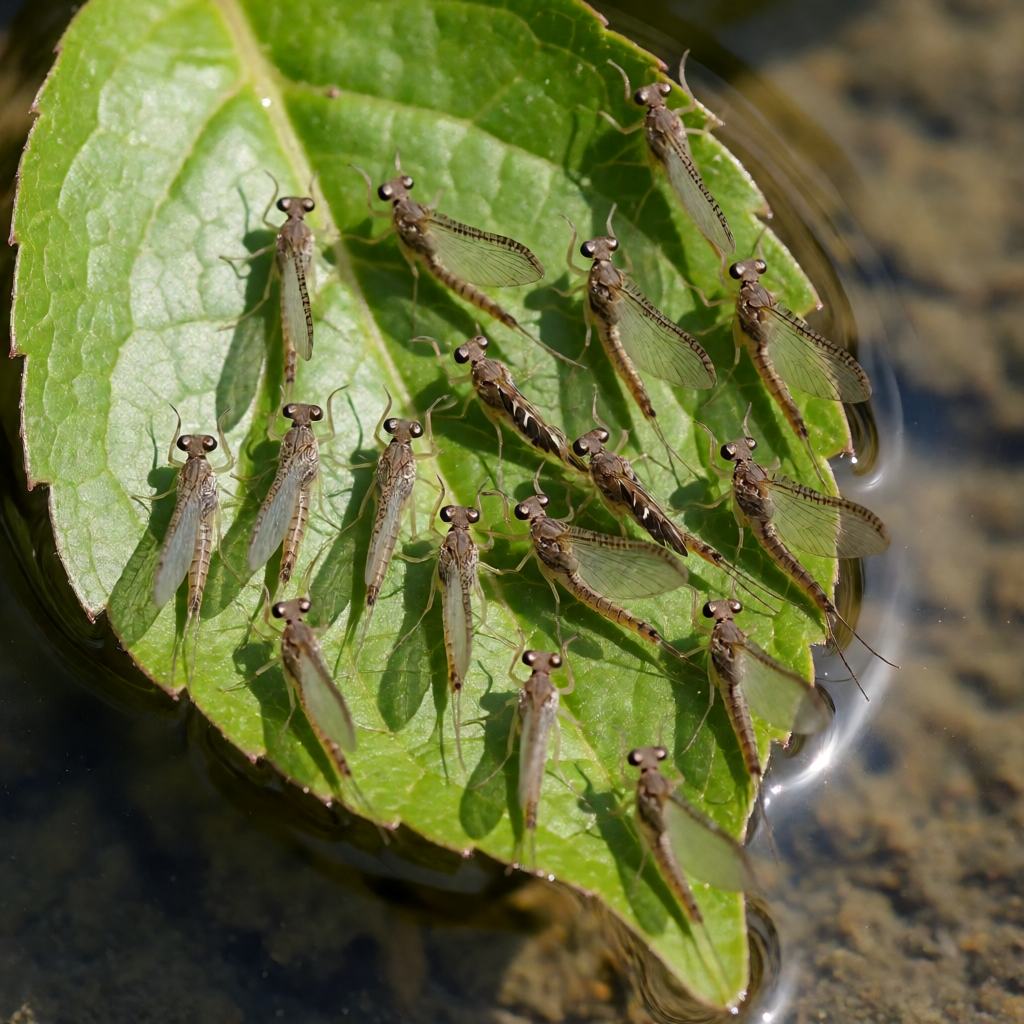
The Sand Martin is an aerial insectivore. It feeds exclusively on insects and other small invertebrates caught in flight. It does not feed on the ground or on the surface of water. It has no use for seeds, fruit or carrion. Its whole way of life is built around the availability of airborne prey. The main items are small to medium-sized flies. These include midges, mosquitoes, gnats, hoverflies, dance flies and house flies. It also takes small beetles and winged ants. It takes mayflies, caddisflies, lacewings and small moths. It eats aphids that have been lifted into the air. It takes a wide range of other small insects.
It will also take small spiders drifting on threads of silk. It even takes tiny shelled items such as small water snails carried into the air. The birds hunt by flying fast and low over water and open ground. They catch insects in the air with the wide gape of the bill. They will also take insects from the surface of water. They snatch them from vegetation too. They hunt at heights of between 1 and 30 m. They follow the insects up or down as the weather changes. In fine weather they fly high. In wet or windy weather they fly low. The species feeds in flocks and often joins other swallows and martins.
The flock moves as a loose, fluid, shifting group. It sweeps across a field or a lake and then turns and comes back. The birds follow the insects down to the water surface when a hatch takes place. That produces a frantic, low, glinting crowd of birds. It is one of the most characteristic sights of a river or lake in spring. Insects become inactive in cold, wet and windy weather. So the species is highly vulnerable to spells of bad weather. Cold spells in spring and autumn can cause large numbers of birds to starve or become torpid. The species also feeds on the wing during migration. It can hunt well after dusk and before dawn when the light is poor.
A tunnel in the sand
The breeding cycle
The breeding season is timed to the availability of insects and the state of the nesting bank. In the south of the range the birds arrive from February onwards. In the north they arrive in April or early May. The arrival of the first birds is one of the most eagerly awaited events of the European spring. The species nests in colonies in vertical banks. The birds excavate a tunnel that runs horizontally into the bank face. It reaches between 30 cm and 1 m or more. Both birds dig it using the feet and the bill. It ends in a wider chamber. That chamber is lined with a loose collection of straw, grass and feathers. Other plant material is used too. The whole nest is dug fresh each year.
A bird may return to an old tunnel or take one over from a previous occupant. Between 4 and 5 eggs are laid. Occasionally there are as few as 3 or as many as 7. They are pure white and unmarked. That is typical of species that nest in dark tunnels where camouflage is unnecessary. The eggs are laid in mid to late May. The female alone incubates them for between 12 and 16 days. The male brings food to the nest entrance. The chicks hatch naked and blind. Both parents feed them on insects brought to the tunnel mouth. They grow quickly and fledge after between 18 and 24 days. A second brood is common in the southern and central parts of the range.
It is unusual in the far north. The birds will lay replacement clutches if the first is lost. The young gather at the colony after fledging. Their parents keep feeding them for a few days before they become independent. They then join the growing flocks of post-breeding birds. Those flocks sweep over the local wetlands. The species returns to Africa in August and September. The birds gather in enormous roosts in reedbeds before departing. The whole population leaves Europe before the winter. The birds are usually absent from the northern breeding areas for over half the year.
Down 98 per cent in Canada
Conservation
The Sand Martin is assessed as Least Concern on the global Red List. The species has an extremely large range. Its numbers run to tens of millions of birds across 4 continents. That world picture hides big local problems. The species has fallen substantially in Europe. There the birds have been classed as depleted. In North America the picture is more serious still. Canadian numbers have fallen by around 98 per cent over 40 years. The species is listed as Threatened under the federal Species at Risk Act. It is also considered threatened in parts of the United States. The most important threat is the loss of nesting sites. The sheer faces of soft sand and gravel the bird needs soon crumble.
They are lost to wear and to fresh plant growth. They go when pits are flooded after extraction. They go when waste is tipped on them. They go when worked-out quarries are levelled and restored. So the bird needs a steady supply of new faces. Walls and river works now stop most natural wear on banks. A second big threat is the loss of the insect food supply. Harder farming and heavy use of bug sprays drive it. So does the draining of marshes. So does the loss of wet places where insects hatch in huge numbers. That pressure is likely to be worst on the way south and in the winter grounds. The third is climate and weather.
A bird that feeds only in the air suffers badly in cold, wet and windy weather. A run of poor springs or autumns can kill large numbers. There is some sign that the birds arrive at the wrong time for the insect peak. Conservation of the Sand Martin rests on 3 practical steps. Create and manage artificial nesting banks. Preserve the remaining natural river cliffs and soft coastal faces. Protect colonies from disturbance and from unsympathetic engineering work. It also means keeping the wet, insect rich places the bird needs on its way south. Wildlife groups and industry have built many good man made sand martin banks. The birds have readily colonised sites that suit them. That makes recovery a real aim where the bird has fallen away.
Quick hits
Five things to remember
- It is the smallest European swallow, weighing only about 11 to 16 g.
- It digs a nest tunnel up to 1 m long in a sand or gravel bank.
- Its eggs are pure white, which is typical of birds that nest in dark tunnels.
- It is usually the first swallow to return to Europe in spring.
- It crosses the Sahara twice a year, flying over 4,000 km each way.