 By Iris
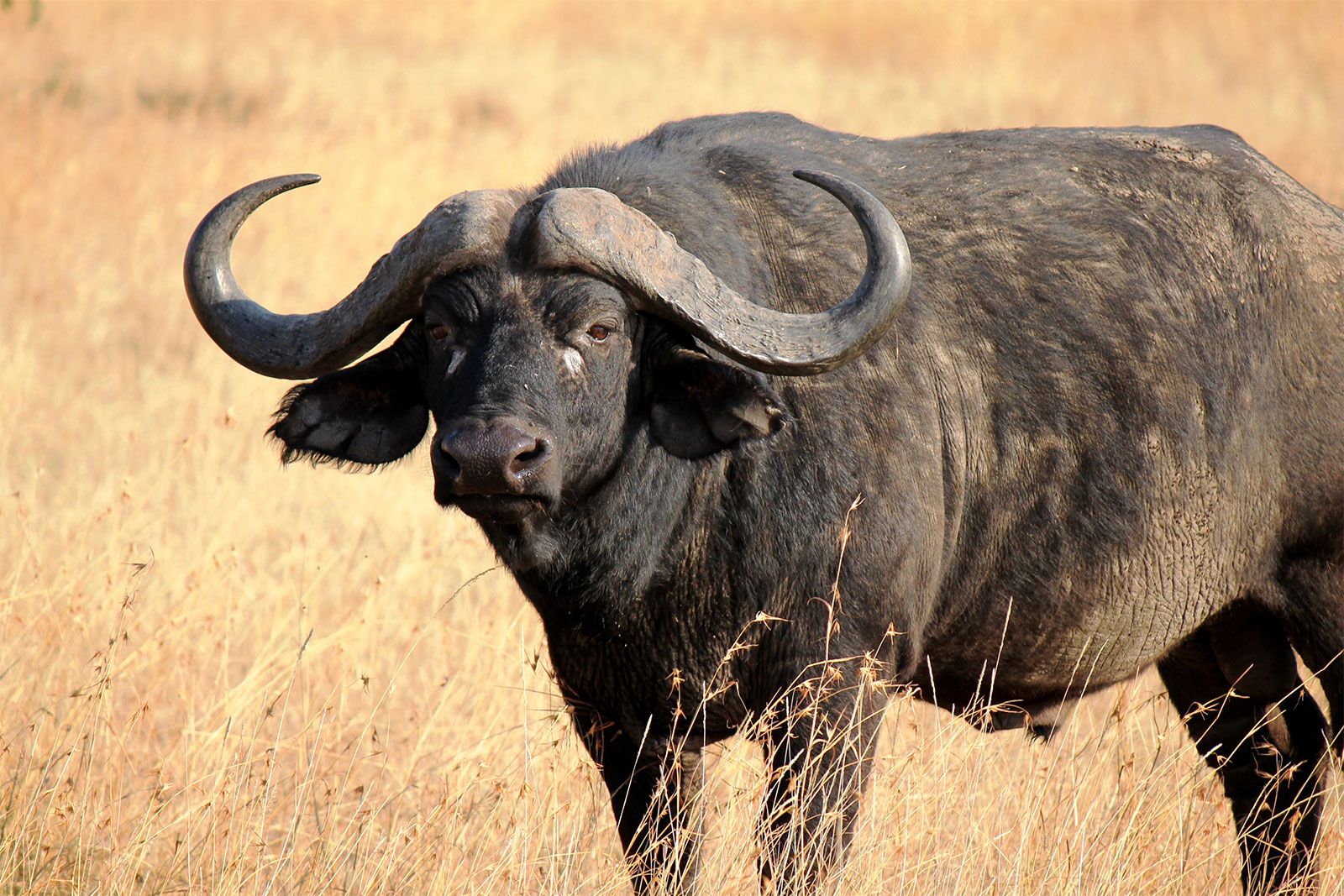
Syncerus caffer | Cape Buffalo
Species Profile · Bovidae
Cape Buffalo
Half a tonne of horn, grass and muscle that votes on where to walk, and wounds more hunters than any lion.
Near Threatened
Weight
Horn spread
Herd size
Subspecies
Gestation
Rating
Rifles made the list
The animal that charges instead of running
A herd animal with a memory for faces and a temper that never settles lives on the African plain. Cape buffalo sit on the list hunters call the Big Five. Rifles made that list, not biology.
Buffalo gore more hunters than lions do, and a wounded one will circle back. Few plant eaters are so hard to stop once they decide to charge. Adults weigh as much as a small car.
Herd members stand together, and that habit saves most of them. A lone bull has no such cover. That difference decides which animals a pride can take.
Four subspecies, one genus
Where buffalo sit in the cattle family
The species name is Syncerus caffer, and it belongs to the cattle subfamily inside Bovidae. Sheep, goats and antelope sit in that same family, yet they look nothing alike. Its genus stands alone.
Four subspecies are recognised, and they differ sharply in size and horn. Cape buffalo are the largest of the four, while forest buffalo are the smallest. Forest bulls weigh less than half as much as Cape bulls.
West African and savanna forms sit between those extremes. Cattle share the subfamily but sit in a separate genus. Crossing the two is possible, though nobody farms buffalo on purpose.
Boss, hide and drooping ears
How to read a buffalo at a glance
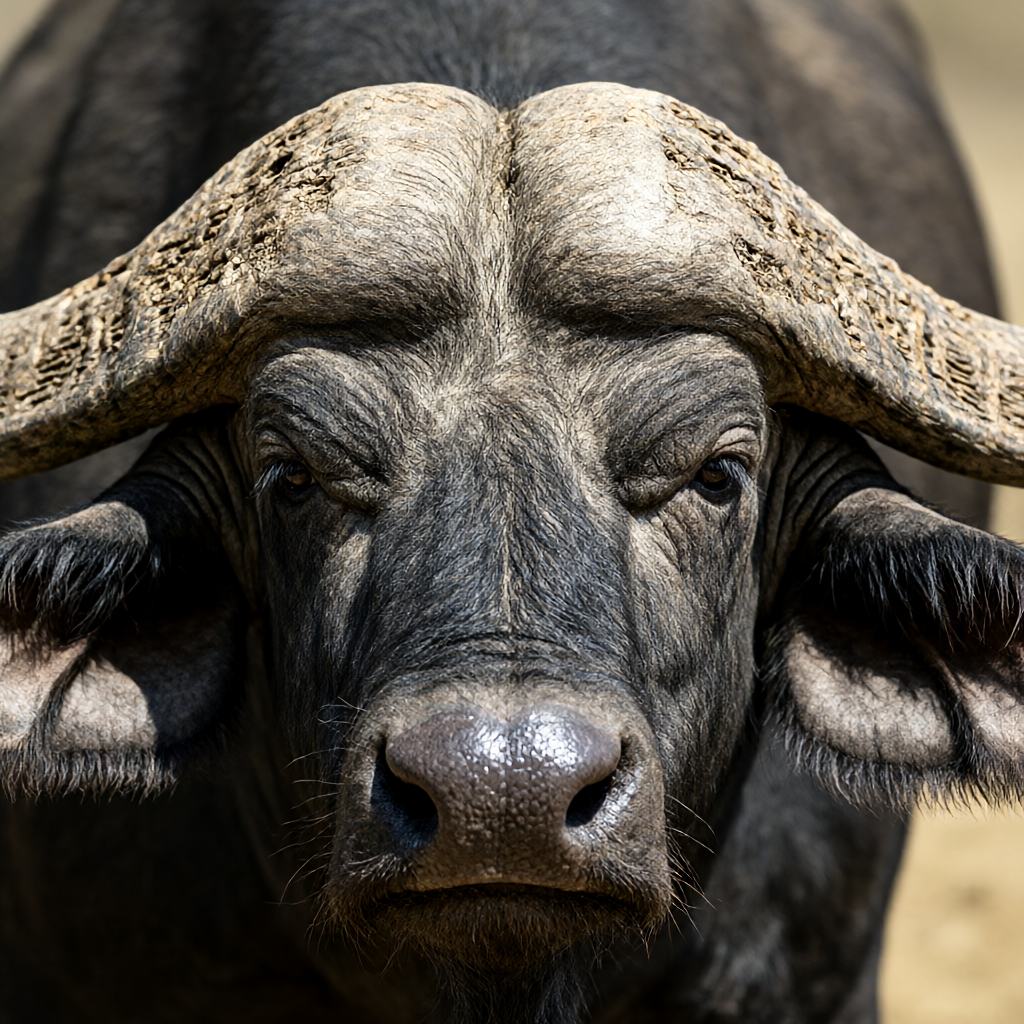
Bulls stand 1.5 to 1.7 m at the shoulder and weigh up to 900 kg. Cows are smaller, yet they carry the same heavy horn. Horn bases meet on a bull and fuse into a thick shield called a boss, which hardens with age. Age shows in that helmet, and a wide dark boss marks an old male.
Horn spread reaches a metre on the oldest animals, though most bulls never get close. Young bulls show a thin gap that closes as they grow. Hide is dark and coarse. Ears droop, and the fringe of hair along them is easy to see.
Its muzzle is broad, and the nose pad is always wet. Legs are short for the body, but they carry it a long way each day. Weight alone does not explain why a charge is so hard to turn.
1
2
3
Grass, water and a vote
Where herds live and how they move
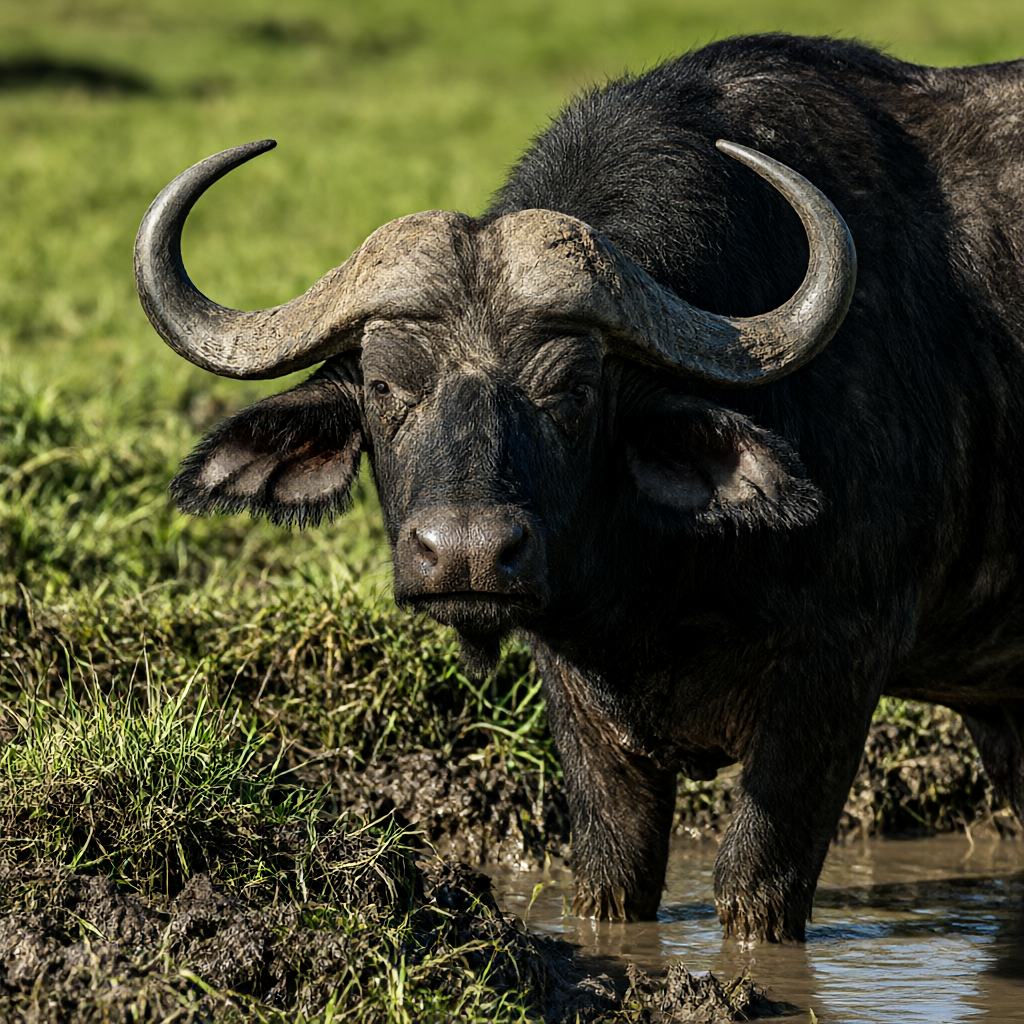
Grassland with water nearby is the whole requirement. Savanna and floodplain both work. Herds drink daily, so they never move far from a river or a pan. Dry season pushes the animals toward whatever water remains.
Thousands gather at one pool. Big herds still walk the Serengeti, the Okavango and the Kruger plains, although fences are spreading. Wet season spreads them out, because fresh grass appears far from the river. Movement is decided by the herd, and no animal leads it.
Females stand, turn and walk, and the direction most of them choose then becomes the route for the whole herd. A study of marked herds found that this simple vote settled most departures, with no leader involved at all. Fences cut old routes, and a blocked route can strand a herd in dry country.
A mower that walks
What it eats
Grass makes up almost the whole diet. Tall, coarse stems that cattle refuse still get eaten, because a buffalo jaw handles them. A wide mouth and a tough tongue cope with the roughage. Feeding runs in long bouts, and much of the work falls after dark, when the herd feels safer.
A grazing herd works like a mower. That grazing keeps the plain open and stops scrub from closing in. Short new growth after rain is the richest food of the year. Buffalo need water every day, and a herd crowds the bank rather than queue politely at the edge.
The African Lion takes calves and old animals most often, while a fit bull usually walks away. Thirsty herds must cross open ground, and open ground is exactly where a pride sits and waits for dark.
One calf at a time
The breeding cycle
Cows calve for the first time around five years old, and a single calf arrives after a gestation of about 11 months. Birth usually falls in the wet season, when grass is richest. Newborns stand within minutes and follow the herd within hours.
Calves stay close to their mothers, since a lost calf does not last long. Herd members form a circle around the young when danger comes. Horns face outward, and a wall of them stops most attacks.
Males leave the nursery group as they mature, and old bulls drift off alone. Solitary bulls are short tempered and very hard to move.
Near Threatened, 900,000 left
Conservation
The Red List calls the species Near Threatened. Roughly 900,000 animals remain, and most of them live inside protected areas. That number looks healthy, yet it hides a long decline. Rinderpest reached the continent in the 1890s and killed most of the buffalo across the whole savanna belt.
That virus arrived with imported cattle, and wildlife had no defence at all. Vaccination and control later removed the disease from wild herds. Habitat loss is the pressure now, since a herd needs grass and water within reach. Fences and farms cut the routes that let animals follow the rain.
Disease passes between buffalo and cattle in both directions, and one outbreak can empty a valley in weeks. Trophy hunting pays for patrols. Whether that money reaches the ground is still argued over. The American Bison came back from a few hundred animals, and buffalo never fell that far.
Side by side
How It Compares
| Trait | Cape Buffalo | African Lion |
|---|---|---|
| Weight | 500-900 kg | 150-225 kg |
| Weapon | horn boss, up to 1 m | claws and canine teeth |
| Group | herds of 50-500 | prides of 2-30 |
| Diet | grass, cut short | meat, taken by ambush |
| Defence | circle of horns | cover and a short rush |
| Standing | Near Threatened | Vulnerable |
Common misreadings
What People Get Wrong
- Many hunters say a buffalo charges only after it has been wounded by a rifle. Herds also charge to break a circle, yet the wounded animal is far more dangerous.
- Some accounts call the buffalo a wild kind of cattle that could be farmed easily. It shares a subfamily with cattle, but the two sit in separate genera.
- Popular writing often gives the species one uniform look across the whole continent. Forest and West African forms are far smaller, while Cape bulls carry the heaviest horn.
Going further
Sources and Further Reading
Five things to remember
Quick hits
- Herds run from 50 to 500 animals.
- Herd members vote by standing and walking.
- Old bulls carry the widest horn spread.
- Wounded bulls are said to circle a tracker.
- Rinderpest nearly erased the species in the 1890s.
Western gorillas belong to the family Hominidae, the great apes, alongside chimpanzees, orangutans, and humans. Their nearest living cousins are the common chimpanzee, Pan troglodytes, and the tree-dwelling orangutan of Southeast Asia. A close relative within the same genus is the mountain gorilla, Gorilla beringei, which lives at higher, cooler elevations to the east. Sharing the African landscape with them are giants such as the African elephant and the formidable Cape buffalo.
Nile crocodiles belong to the family Crocodylidae within the order Crocodilia, the group that also includes alligators, caimans, and gharials and that is closely related to birds and to the dinosaurs. Their closest living counterpart in size and habitat is the saltwater crocodile, Crocodylus porosus, of the Indo-Pacific. Sharing African waterways and coasts with them are the green sea turtle along the shoreline and iconic terrestrial mammals such as the African elephant and the dangerous Cape buffalo.
[…] ancestry despite clear differences in horn shape, body size, and behavior. The closely related African buffalo belongs to a different genus, while the American bison and the domestic yak share the same tribe […]