 By st20113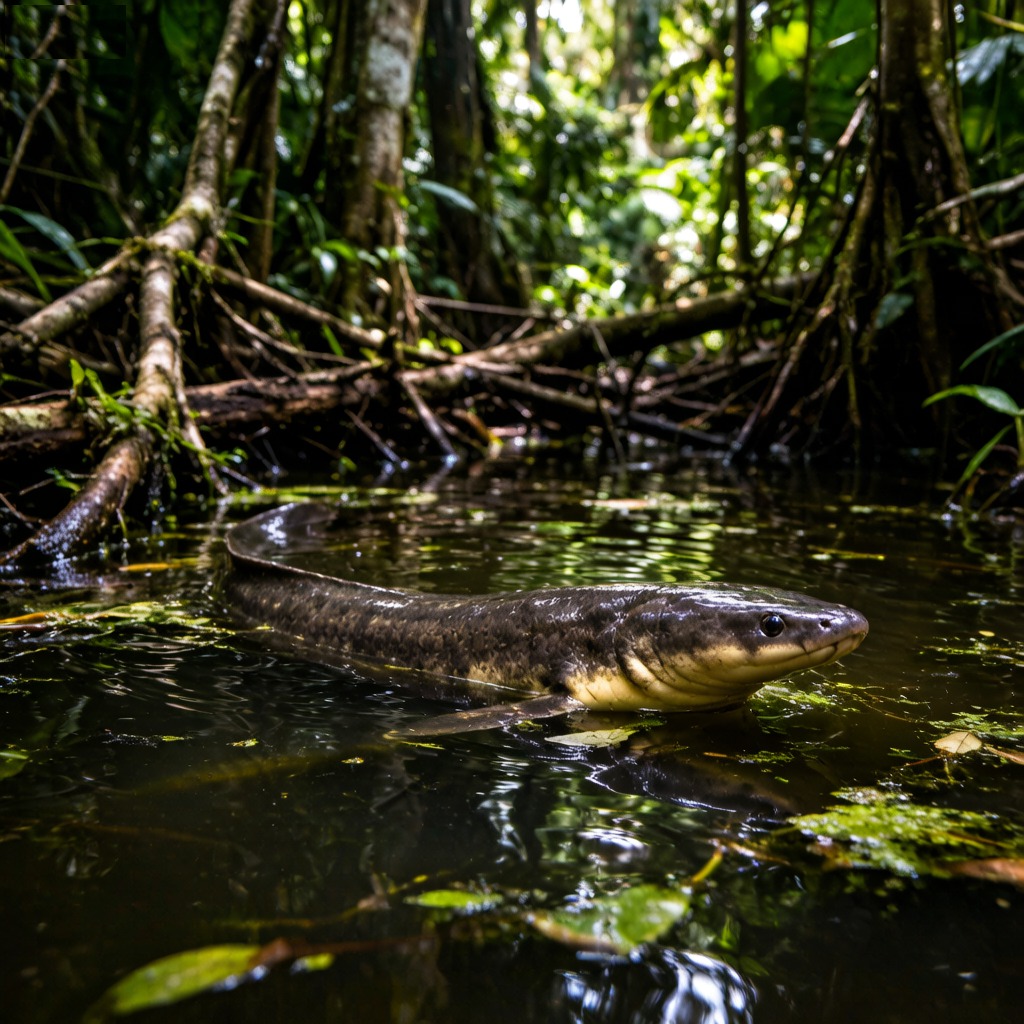
Introduction
The electric eel (Electrophorus electricus) is a South American freshwater fish famous for its ability to generate powerful electric discharges. Despite its common name, the electric eel is not a true eel but a knifefish related to catfish and characins. It inhabits the murky waters of the Amazon and Orinoco River basins, where it uses its bioelectric abilities both to stun prey and to navigate its dark aquatic environment. The electric eel represents one of nature’s most remarkable examples of a living biological battery.
Taxonomy and Classification
The electric eel belongs to the family Gymnotidae, the knifefishes, within the order Gymnotiformes. Originally classified as a single species (E. electricus), recent genetic and morphological research has identified three distinct species: E. electricus, E. voltai, and E. varii. E. voltai, discovered in 2019, is capable of discharges up to 860 volts — the strongest of any known bioelectric organism.
Physical Characteristics
Electric eels are elongated, snake-like fish that can reach lengths of 2 to 2.5 meters (6.5 to 8.2 feet). Despite the name, they are not eels but have a cylindrical, scale-less body that tapers toward the tail. The body is dark gray to brownish on the back and yellowish-orange on the belly.
Electric Organ
The electric eel’s most remarkable feature is its electrogenic organ, which occupies approximately four-fifths of its body length. This organ consists of thousands of disc-shaped cells called electrocytes. By activating thousands of these cells simultaneously through a nerve signal from the brain, the eel can generate a combined discharge of hundreds of volts.
Hunting and Defense
Electric eels use a two-phase hunting strategy. Low-voltage discharges are emitted continuously, creating an electric field that detects nearby objects. When prey is detected, the eel delivers high-voltage discharges that cause tetanic muscle contractions and temporary paralysis, allowing the eel to swallow its stunned prey whole.
Conservation Status
Electric eels are listed as a species of Least Concern by the IUCN. However, they face threats from habitat destruction, dam construction, and water pollution in the Amazon basin.