 By st20113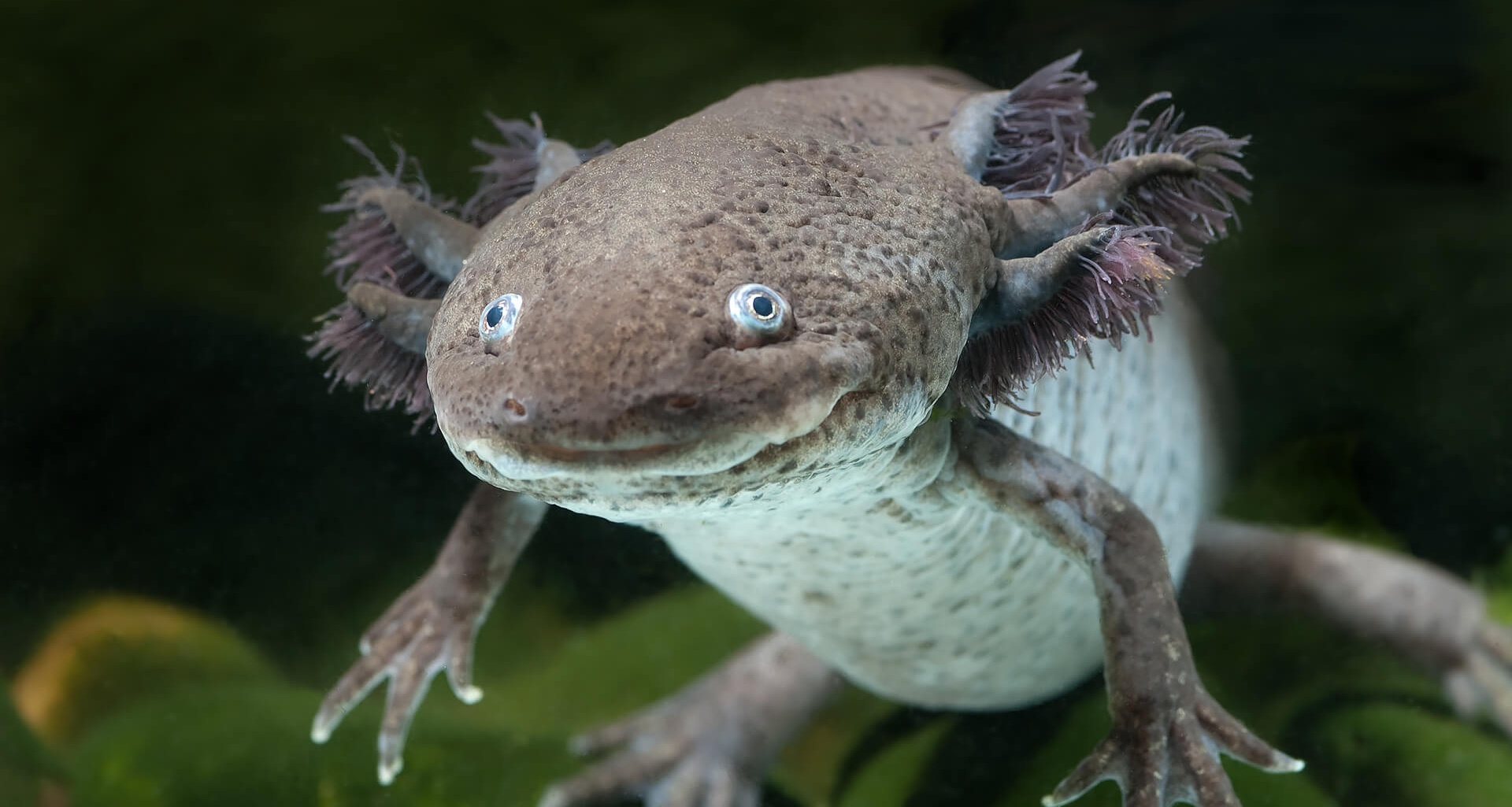
The axolotl (Ambystoma mexicanum), often called the Mexican walking fish, is a neotenic aquatic salamander endemic to the ancient lake systems of Mexico, particularly Lake Xochimilco in the Mexico City basin. Despite its common name, it is not a fish but an amphibian, retaining its larval features throughout its entire life – a phenomenon known as neoteny.
The axolotl’s most distinctive feature is its external gills, which appear as three feathery stalks on each side of the head. Axolotls also possess a wide, flat head with a smiling mouth, lidless dark eyes, four limbs with distinct toes, and a long lateral fin running along the back.
Unlike most amphibians, the axolotl never undergoes complete metamorphosis. It reaches sexual maturity and reproduces while still in its larval form, a neotenic state maintained by the absence of thyroid-stimulating hormone in its system.
Axolotls are renowned for their extraordinary regenerative abilities. They can regenerate lost limbs, tail sections, portions of the heart, lungs, liver, and even parts of the brain and spinal cord – without scarring. This remarkable capacity has made them one of the most studied animals in regenerative biology and medical research.
In the wild, axolotls are found only in Lake Xochimilco, where they inhabit the shallow, muddy waters with abundant vegetation. Their diet consists of small prey including worms, insects, crustaceans, and small fish.
The axolotl is critically endangered in the wild, with population estimates of fewer than 100 to 1,000 individuals. Major threats include water pollution, habitat degradation, and invasive species (particularly tilapia and carp that compete for food and predate on axolotls). Conservation efforts in Xochimilco focus on water quality improvement and captive breeding programs.