 By st20113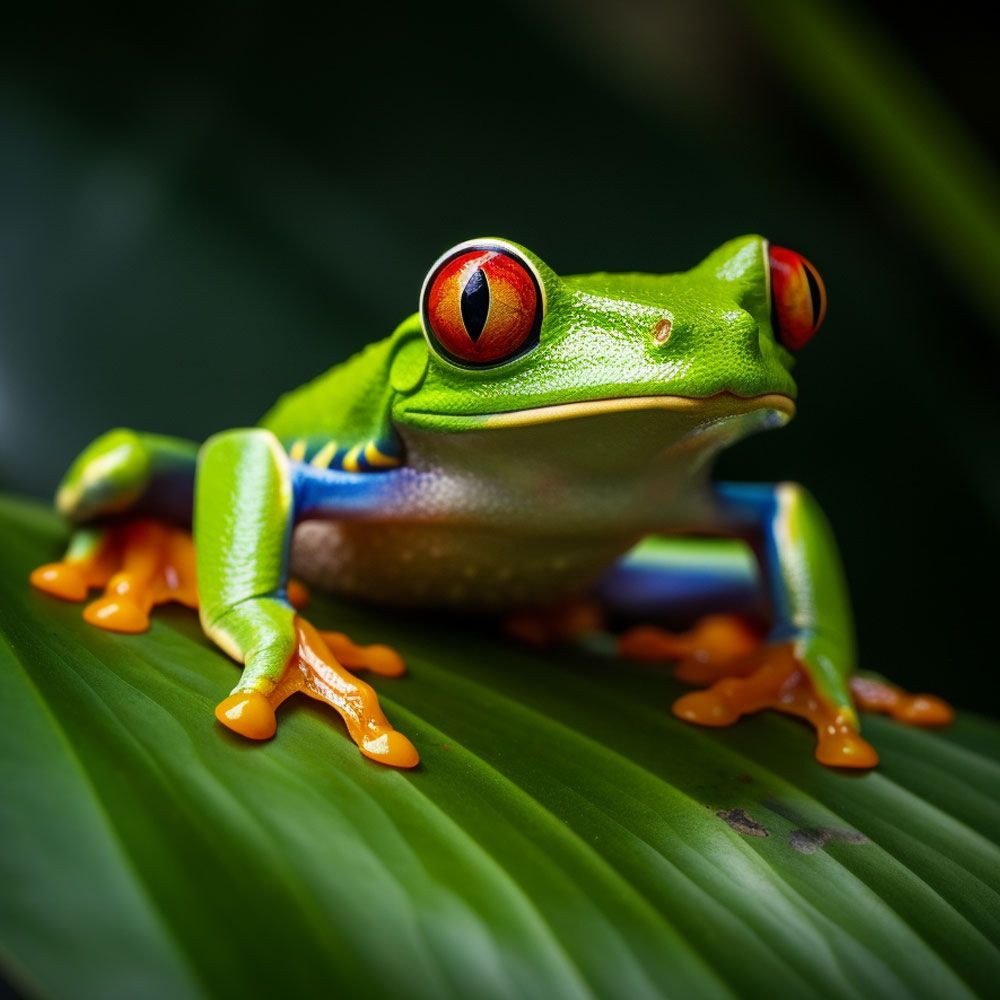
The Red-Eyed Tree Frog (Agalychnis callidryas) is one of the most visually spectacular animals in the tropical rainforest – a vivid emerald-green frog the size of a tennis ball, with electric blue flanks, bright yellow stripes down the sides of the body, and – most distinctively – enormous cherry-red eyes that flash open to reveal a striking orange iris, an aposematic display that startles predators and has made this species one of the most photographed animals in the tropical world. Native to the lowland rainforests of Central America – from southern Mexico through Guatemala, Belize, Honduras, Nicaragua, Costa Rica, and Panama – the Red-Eyed Tree Frog inhabits the humid tropical ecosystems of the region, where it spends most of its life in the canopy, descending to ponds and temporary pools only during the breeding season to mate and deposit eggs. Its striking coloration – a striking example of camouflage (the green dorsal surface blends perfectly with the green leaves of the rainforest canopy) combined with startle coloration (the red eyes and blue flanks flash open to momentarily freeze or confuse predators) – has made it an iconic symbol of rainforest biodiversity and a flagship species for tropical conservation.
Reproduction and the Tadpole Journey
The Red-Eyed Tree Frog’s breeding cycle is intimately tied to the Water Cycle of the tropical rainforest. Breeding occurs during the rainy season (typically May to November in Central America), when heavy rains create the temporary pools – in bromeliad leaf axils, on broad leaves, and in small ground-level depressions – that serve as breeding sites. The female – significantly larger than the male – carries the male on her back (amplexus) for hours or days before selecting a suitable leaf above a pool and depositing a clutch of 20-50 eggs, which the male fertilizes externally as they are deposited. The jelly-like egg clutch is attached to a leaf, typically 1-3 meters above the water surface. When the tadpoles inside the eggs are ready to hatch – typically 5-7 days after deposition – they release enzymes that dissolve the egg membrane and drop into the water below, beginning their aquatic larval phase. If the rains fail or the pool dries up before the tadpoles can complete their development, the entire clutch is lost – making the Red-Eyed Tree Frog’s reproductive success directly dependent on the Water Cycle.
The tadpoles spend 6-12 weeks in the water, feeding on algae, detritus, and small aquatic invertebrates, before undergoing metamorphosis – a process in which the aquatic tadpole transforms into the terrestrial frog, developing legs, absorbing the tail, and transitioning from gill-based to lung-based respiration. During metamorphosis, the frog’s skin changes from the uniformly dark color of the tadpole to the vivid green of the adult, and the distinctive red eyes develop their characteristic brilliant coloration. The metamorphosing froglets then leave the water to take up life in the rainforest canopy, where they will spend the next 1-2 years maturing before returning to the breeding ponds as adults. The Red-Eyed Tree Frog’s life cycle thus spans both aquatic and terrestrial phases, linking the freshwater ecosystems of tropical forest pools to the arboreal world of the rainforest canopy.
Predators and Defensive Adaptations
Red-Eyed Tree Frogs face a wide range of predators across their life stages and microhabitats. Eggs are preyed upon by wasps, ants, dragonfly larvae, and snakes; tadpoles are consumed by fish, dragonfly larvae, water beetles, and birds; and adults face predation from snakes, birds, bats, and small mammals. Their extraordinary visual alarm system – the startling red-eyed startle response – is one of several defensive adaptations that have evolved in response to this intense predation pressure. When a predator approaches a resting Red-Eyed Tree Frog, the frog typically remains motionless with its eyes closed (the eyelids are translucent green, maintaining camouflage), until the predator is dangerously close – at which point the frog suddenly opens its brilliant red eyes and flashes its blue flanks, creating a sudden, unexpected visual stimulus that often causes the predator to hesitate or retreat for the fraction of a second needed for the frog to leap to safety. This startling effect is enhanced by the fact that most of the Red-Eyed Tree Frog’s common predators – snakes and birds – are visually oriented hunters that rely on detecting motionless prey, making a sudden flash of color a particularly effective anti-predator defense.
Climate Change and Chytrid Fungus
The Red-Eyed Tree Frog is classified as a species of Least Concern by the IUCN – but its classification masks significant underlying population declines and the severe threats it faces from emerging infectious disease and habitat change. The primary biological threat is chytridiomycosis – a devastating fungal disease caused by the pathogen Batrachochytrium dendrobatidis (Bd) – which has caused the decline and extinction of hundreds of amphibian species worldwide and is one of the most severe wildlife diseases ever documented. The Red-Eyed Tree Frog’s dependence on small, discrete breeding pools makes it particularly vulnerable to drought and altered precipitation patterns caused by climate change – changes to the Water Cycle that affect the availability of the aquatic habitat required for breeding. The same tropical rainforest ecosystems that support Red-Eyed Tree Frog populations also support Komodo Dragons (in the Indonesian rainforests that extend across the Wallace Line), and the conservation of both species depends on protecting the vast, interconnected forest landscapes that sustain tropical ecosystem biodiversity globally.
[…] modest in size, it shares the broader world of amphibians with flamboyant relatives such as the red-eyed tree frog of Central America. Children across Europe often encounter them during pond-dipping activities in […]
[…] is one of the most visually striking amphibians alive and a favorite among enthusiasts who keep the red-eyed tree frog and related species. Its common name comes from historical accounts that indigenous people used its […]
[…] that provide effective camouflage among wet vegetation. Unlike many tropical relatives such as the red-eyed tree frog, the common frog relies on subdued earth tones rather than bright warning colours. It is one of the […]
[…] The dyeing poison dart frog (Dendrobates tinctorius) is a strikingly colourful amphibian native to the humid forests of the Guiana Shield in South America, including parts of Guyana, Suriname, French Guiana, and northern Brazil. Renowned for its vivid blue, yellow, and black patterns, it is one of the larger and most variable poison dart frogs. Like its relatives, it derives skin toxins from its arthropod diet, a defence advertised by its bright warning colours. Popular in the pet trade and among hobbyists, it has become an ambassador for rainforest conservation, alongside other vivid amphibians such as the red-eyed tree frog. […]