 By st20113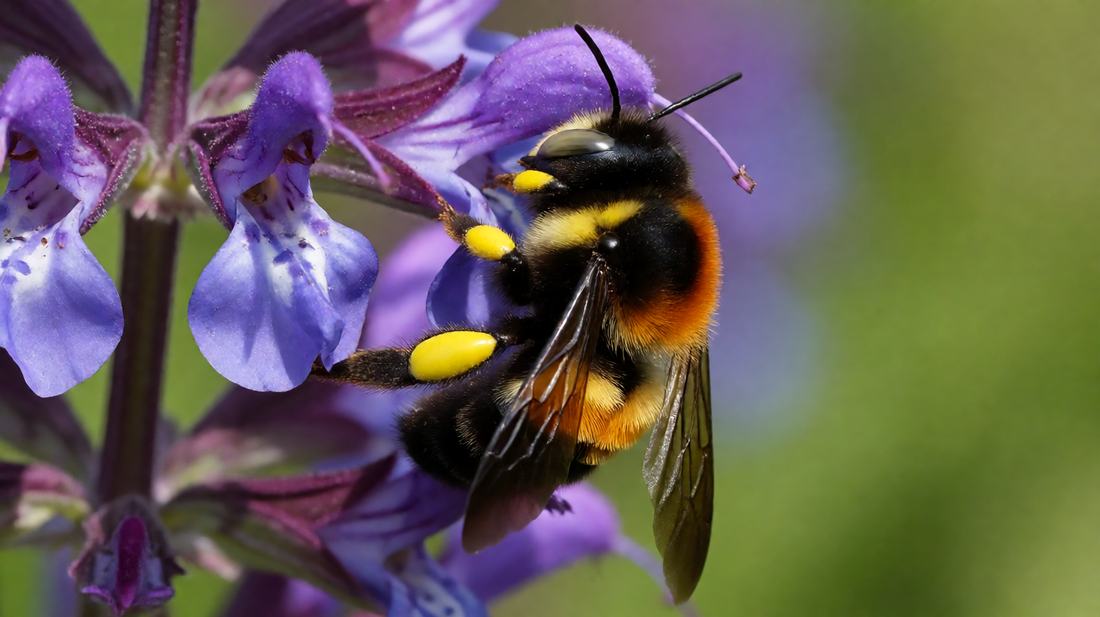
Anthidium manicatum | Wool Carder Bee
Species Profile · Megachilidae
Wool Carder Bee
A stout, boldly banded bee that shaves wool from leaves to line its nest, while the larger male guards a patch of flowers.
The bee that gathers wool
Length
Nest
Wool
Season
Pollen
The wool carder
A bee with a building trade
The Wool Carder Bee is a stout and boldly banded bee of gardens. It is one of the few European insects that gathers a building material. It is a solitary bee, so it has no queen and no workers. Yet it is far from shy. The body is black with bright yellow bands. It also carries patches of yellow on the sides. Those patches give the insect a broad heavy look.
The female is 11 to 12 mm long. The male is larger and reaches 15 mm. That size gap is unusual, because most female bees are the bigger ones. The male also carries 5 sharp spines at the tip of his abdomen. He uses them in the fierce disputes of his short life. He does not guard a nest. He guards a patch of flowers instead.
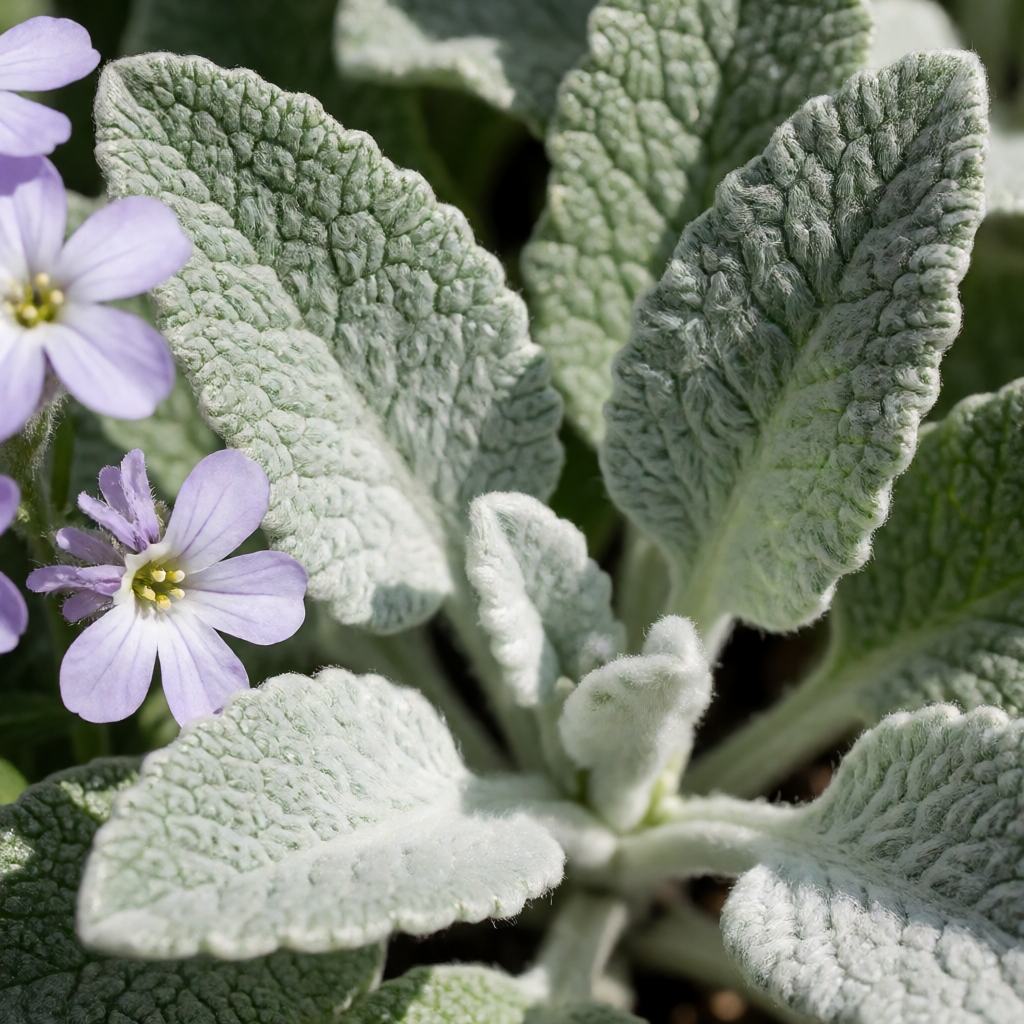
He drives off other bees, wasps and hoverflies that come to feed there. The female has a gentler task. She finds a woolly plant such as lamb’s ear. She shaves the soft hairs from the leaves with her jaws. She rolls the fibres into a ball and carries it to her nest.
Family tree
Hymenoptera, Megachilidae
This insect belongs to the order Hymenoptera, which holds the bees, wasps and ants. It sits in the family Megachilidae, the solitary bees. Its family members line their nest cells with cut leaves, mud or plant hairs. The family includes the leafcutter bees and the mason bees. It is one of the largest bee families in the world. Its members carry pollen on the underside of the abdomen rather than on the hind legs.
Within the family our species sits in the genus Anthidium. That group holds about 100 species. They live in most warm parts of the world. Linnaeus named the species in 1758 as Apis manicata. It was later placed in its own genus. The species name comes from the Latin word for muffled.
It refers to the yellow patches on the sides of the body. Our insect shares its family with the Red Mason Bee, a common garden bee that lines its nest with mud. That species nests in tubes and holes and is gentle to watch. The Wool Carder Bee uses the same kinds of holes. It lines them with plant wool instead of mud. It also guards its flowers with far more energy.
Bands, patches and 5 spines
How to tell one
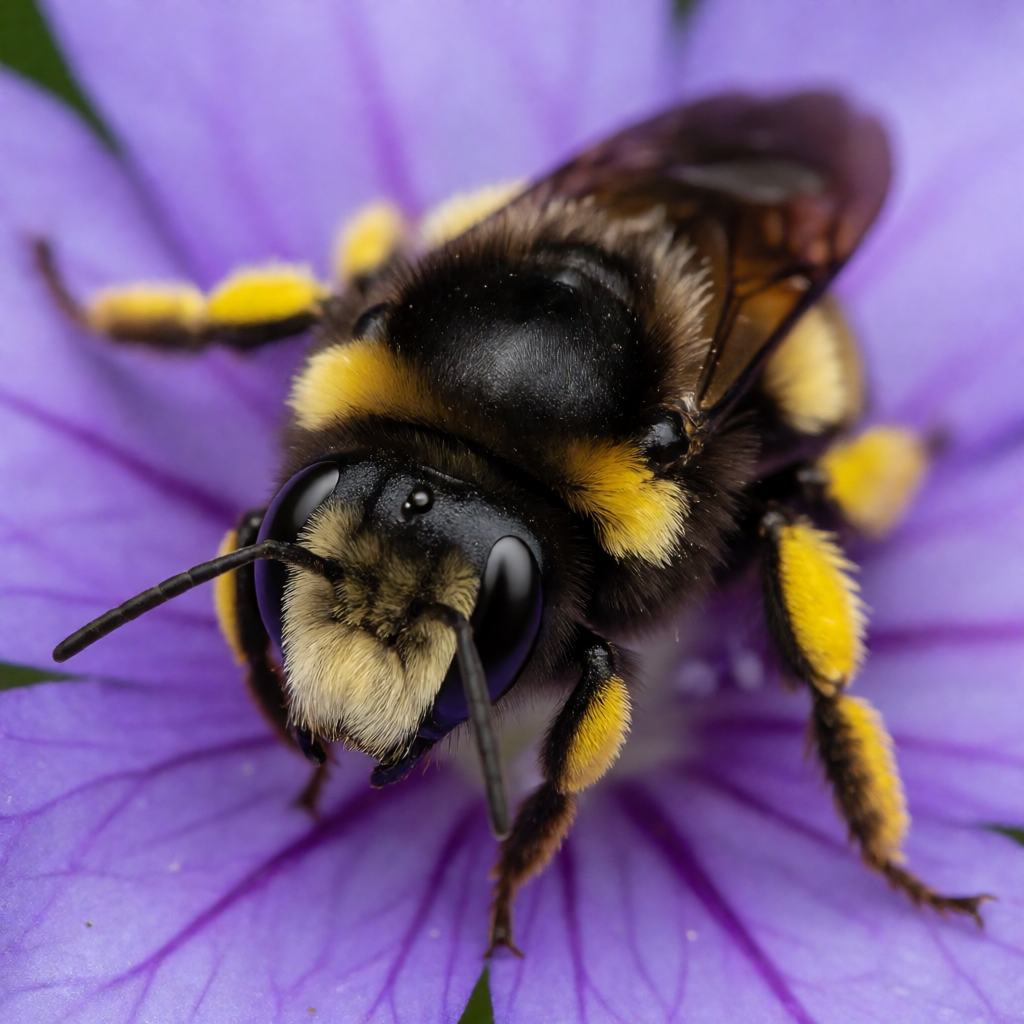
This insect is stout, with a body 11 to 15 mm long. The female is 11 to 12 mm and the male is the larger of the 2. That is the opposite of the usual pattern among bees. The colour is black with bold yellow markings. Broad yellow bands cross the abdomen. Yellow patches also sit on the sides of the thorax.
These side patches give the insect its broad heavy outline. The head is large. The face of the male carries a dense brush of pale hairs. The jaws of the female are strong and toothed. They work like small shears on the wool of a leaf. The male has a row of 5 sharp spines at the tip of his abdomen.
He uses them as weapons in fights with other insects. The wings are dark and fold along the back at rest. The female carries pollen in a brush under her abdomen. She does not use baskets on her legs. The larva is a pale legless grub inside a wool lined cell.
1
2
3
Sunny gardens and old walls
Where it lives
This insect lives in warm sunny places with 2 things in reach. The first is a supply of flowers for food. The second is a supply of woolly leaves for the nest. Gardens, allotments, flowery verges and old sand pits all suit it. It is often found in towns. It needs bare ground, old walls or dead wood with holes.
It does not dig out a nest of its own. Old fence posts, beetle holes in timber and hollow plant stems are all used. Gaps behind loose bricks work too. The female searches widely for wool. A single garden with a clump of lamb’s ear may draw bees from several hundred metres away. The species lives across Europe, North Africa and western Asia.
It is common in southern England and much of central Europe. It was carried to North America, where it was first found in 1963 in New York State. It has since spread across that continent. In the north of its range it is local and tied to the sunniest gardens.
Pollen and a long tongue
What it eats
The adult feeds on nectar and on pollen. It takes both from a wide range of flowers. It is not tied to a single plant. It does favour flowers with a long tube, because its tongue is long for its size. Lavender, sage, catmint, lamb’s ear, woundwort and vetch are all used.
The bee works a flower head quickly and then moves on. The pollen is gathered on the underside of the abdomen. The female packs it with nectar into a ball. She then seals each nest cell. A single cell holds enough food to feed 1 larva from egg to full size.
The larva eats the whole store and then spins a cocoon. It never leaves its wool lined chamber until it becomes an adult. The adults take nectar for their own energy. They need a steady supply of flowers from early summer until late August. A garden with a good patch of catmint will often hold the same few males for weeks.
Wool, cells and a guard
The breeding cycle
This insect has 1 generation a year in the north of its range. It has 2 in the warmer south. Adults appear in late May and fly until August or September. The male holds a territory of flowers. He patrols it by hovering and by chasing away every other insect. He will attack bees larger than himself. He uses the 5 spines at the tip of his abdomen as weapons.
When a female enters the patch, the male mates with her. He may then guard her as she feeds. The female builds her own nest. She finds a hole in wood, a hollow stem or a crack in a wall. She lines it with plant wool. She gathers the wool by shaving hairs from the leaves of lamb’s ear and yarrow. She rolls the fibres into a ball and carries it under her body.
One ball may take several trips to complete. Inside the lined hole she builds a row of cells. In each one she places an egg on a ball of pollen and nectar. She then seals the cell with more wool. The eggs hatch in a few days. The larvae feed for about 3 weeks. The new adults come out in the following summer.
A bee that likes towns
Conservation
This insect is not at risk, and it is common in the warm parts of Europe. In Britain it is well established in the south and centre of England. It has spread north in recent decades as summers have grown warmer. It is a bee of warm, open, flower rich places. It has adapted well to towns and gardens. Its main needs are simple.
It must have a long season of flowers. It must also have small holes in wood, stems or walls for its nest. Both of these are easy to supply. The loss of flowery verges has reduced its sites in some areas. The tidying of gardens and the removal of old timber have done the same. But the bee has moved into the gaps.
Gardeners can help it by planting catmint, lavender, sage and lamb’s ear. Leaving a few old posts and dry walls in place also helps. It is worth saying that this insect is not dangerous. The female can sting, but she will do so only if she is trapped. The males cannot sting at all.
Quick hits
Five things to remember
- The female shaves the soft hairs off lamb’s ear leaves and rolls them into a ball to line her nest.
- The male is larger than the female, which is unusual among bees, and he carries 5 sharp spines at the tip of his abdomen.
- Males hold small territories of flowers and will chase off bumblebees several times their own size.
- The species is native to Europe and was first found in North America in 1963, in New York State.
- The bee carries pollen on a brush under its abdomen rather than in baskets on its hind legs.