 By st20113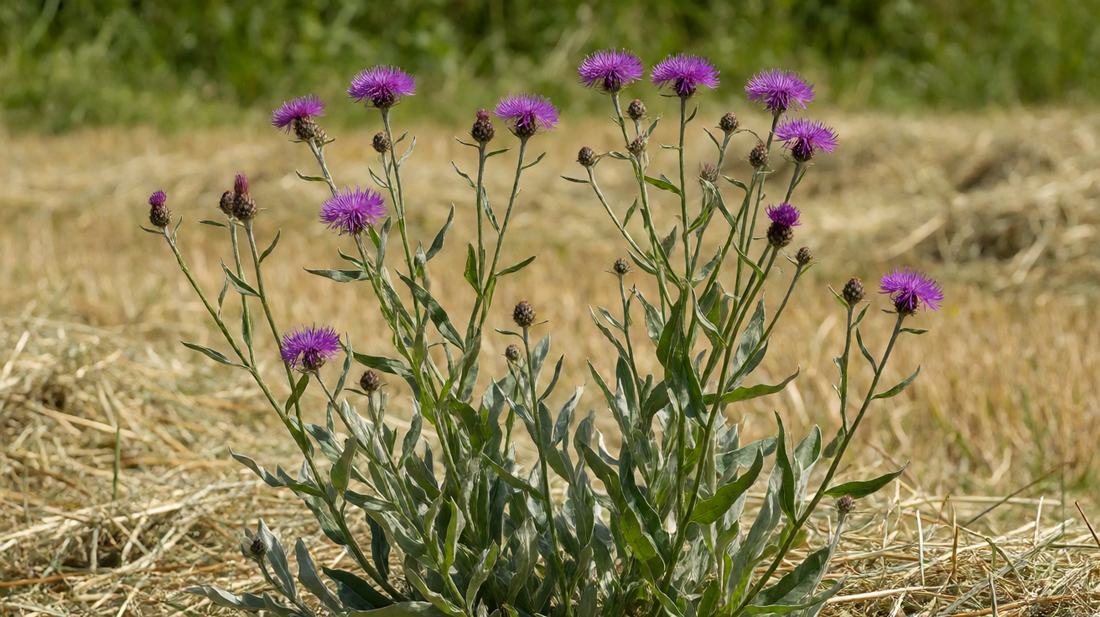
Centaurea nigra | Common Knapweed
Species Profile · Asteraceae
Common Knapweed
A purple headed perennial of old hay meadows whose swollen, fringed base is the surest way to name it.
A purple head that looks like a thistle
Height
Flower head
Life
Seeds a plant
Family size
Genus
The common knapweed
A purple head without a single spine
The Common Knapweed is a tall plant of hay meadows. It carries a purple flower head that looks like a small thistle. The head has no spines at all. It sits on a hard, swollen base. That base gives the plant its name. In old English the word knap meant a knob.
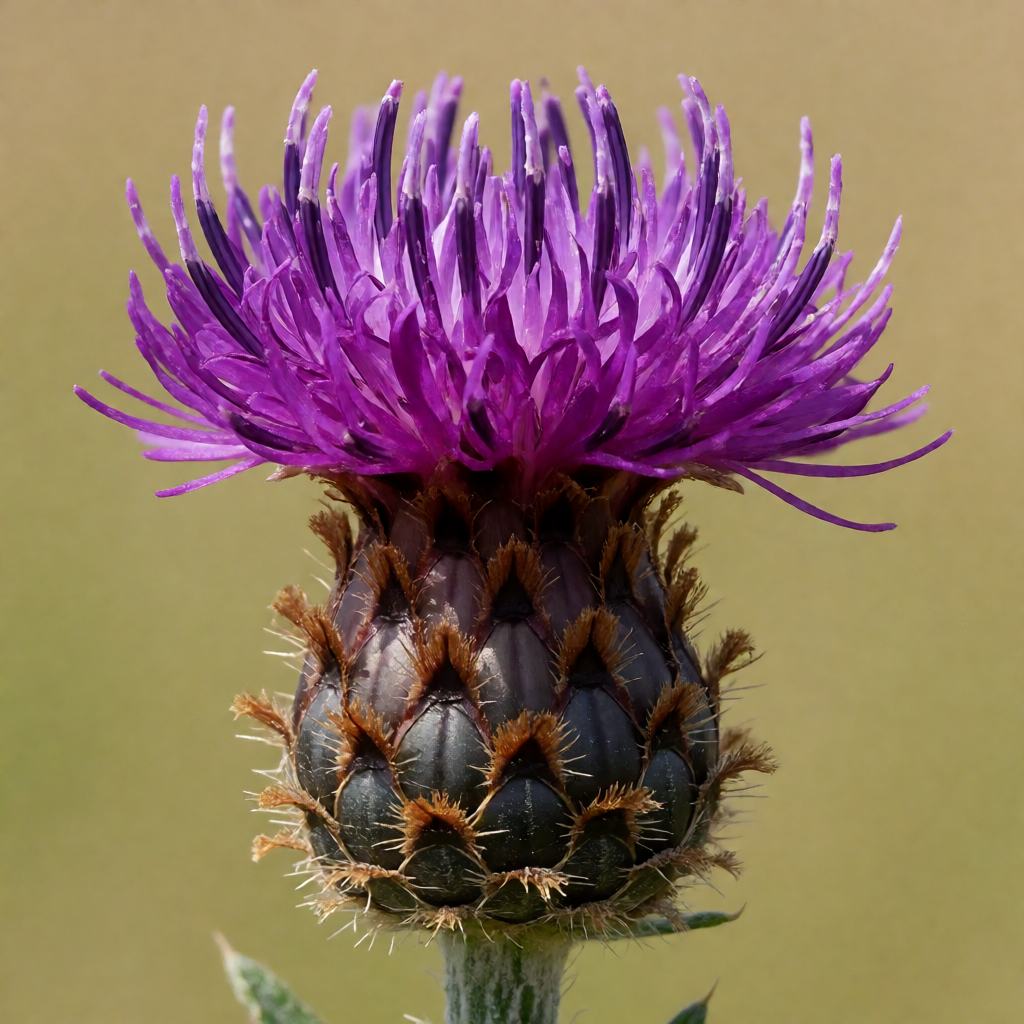
The base carries overlapping scales. Each scale is dark brown with a comb like fringe. Those scales are the surest way to name the plant. The heads open from early summer until early autumn. They are rich in nectar and pollen. They draw bees, butterflies and hoverflies from far off.
The plant is a perennial. It comes back each year from the same root. It is a fine plant for a meadow. It is a poor plant for a farmer. Cattle and sheep leave it alone. It has become less common as old meadows were ploughed or sprayed.
Family tree
Asterales, Asteraceae
The Common Knapweed sits in the order Asterales. It belongs to the family Asteraceae, the daisy family. That family is the largest family of flowering plants. It holds about 25000 species. Its members are told by the flower head. The head is not a single flower. It is a tight group of many small flowers. The family holds the daisies, the dandelions and the thistles.
Our plant sits in the genus Centaurea, the knapweeds. That genus holds about 500 species. Most of them live in Europe and around the Mediterranean. Several are grown in gardens. A few are serious weeds of farmland. The species was named in 1753. The word nigra means black. It describes the dark scales at the base of the head.
The Common Knapweed shares its family with the Daisy. That plant grows in lawns and short grass. It keeps its leaves flat to the ground. It grows only a few centimetres tall. The 2 plants look nothing alike. They do share the same trick, though. In both, the head looks like a single flower. In fact it is a crowd of small ones.
A fringed base and no spines
How to tell one
The plant grows 30 to 80 cm high. On rich ground it may reach 100 cm. It is a perennial. It returns each spring from a thick, woody rootstock. The stems are stiff and upright. They branch near the top. They carry a few leaves. They are slightly rough to the touch. The lower leaves are long and deeply divided.
They form a loose rosette at ground level. The upper leaves are smaller and narrower. They sit close to the stem. The flower head measures 2 to 3 cm across. It is made of many thin purple florets. Each floret is a tube. It opens at the top into a small star. The base of the head is a hard, swollen cup. That cup carries rows of overlapping scales.
Each scale is dark brown or black. It ends in a comb like fringe of small teeth. The plant has no spines, unlike a true thistle. In some plants the outer florets are longer. Those plants look fuller and paler. The rootstock helps the plant survive cutting and grazing. It also holds a store of food for the next spring.
1
2
3
Old meadows and verges
Where it lives
The Common Knapweed is a plant of unimproved grassland. It grows in hay meadows, rough pasture, road verges and churchyards. It also grows on railway banks and the edges of woods. It favours soil that is neutral or rich in lime. It does best in a sward that is not too tall. It needs light. It disappears from ground that is shaded or heavily fertilised. The species is native to Europe.
It is found from Britain and Ireland east into Russia. It has been carried to North America and to Australia. There it grows as a weed. In Britain it is still common, but its strongholds have shrunk. The best sites are old meadows that were never ploughed. Those meadows are cut late in the year. The plant spreads in 2 ways. It sends up new shoots from its rootstock.
It also sets a great deal of seed. The seed carries a small tuft of hairs. The wind blows it along the ground. A single plant can shed about 1000 seeds in a season. The seed stays alive in the soil for several years. It grows when the ground is opened.
A plant that feeds insects
What it eats
The Common Knapweed makes its own food, as all green plants do. Its leaves take in light. The plant builds sugar from water and from the gas in the air. It draws water and minerals from the soil through its roots. The plant does not need rich soil. It does better without it. Where fertiliser is spread, the grass grows tall.
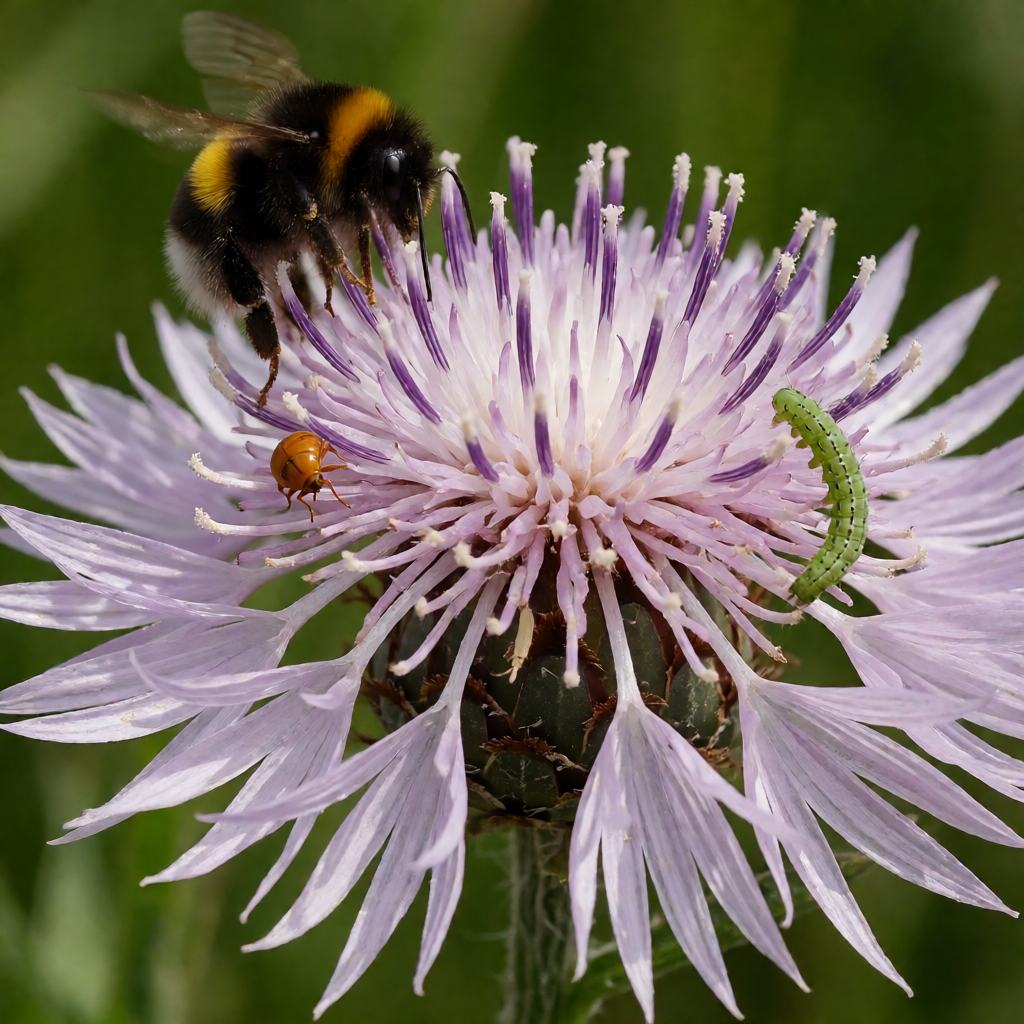
Then the knapweed is shaded out. So the species is 1 of the signs of an old meadow. The plant does need insects, but not for food. It needs them to carry its pollen. The purple heads give a great deal of nectar. The pollen is rich too. Bumblebees, honeybees, solitary bees and butterflies visit the heads.
Day flying moths, hoverflies and beetles visit them too. A single head may hold 3 or 4 insects at once. The plant is therefore better for insects than most wild flowers. It is also eaten by animals. Cattle and sheep dislike the rough stems. They leave the plant standing when the field is grazed short. Rabbits and some insects eat the leaves.
1000 seeds a season
The breeding cycle
The plant flowers from early summer until September. It is a perennial. It may flower for several years. Some plants live for 5 years or more. Each head carries both male and female parts. Insects carry pollen from head to head. The purple florets are the source of both. A visiting bee collects pollen on its body.
It then carries the pollen to the next head. The seed that forms is a small hard fruit. It carries a tuft of hairs at one end. The tuft helps it to catch the wind. A plant may shed about 1000 seeds in a season. The seed falls close to the parent unless the wind is strong. The seed can stay alive in the soil for years. It waits for the ground to be disturbed.
The plant also spreads by its rootstock. New shoots rise from the thick root. A patch of knapweed slowly widens. That is why the plant often grows in a clump. There is 1 strange detail. A small fly lays its eggs in the flower head. The young fly forms a hard gall there. The gall stops the head from making seed.
Losing its unimproved grassland
Conservation
The Common Knapweed is not a threatened species. It is still common over much of Britain and Europe. It has no legal protection. Even so, its position has weakened. The plant depends on unimproved grassland. That habitat has shrunk a great deal. Old meadows have been ploughed, drained or sprayed with fertiliser. Where the grass is cut early for silage, the knapweed is cut too.
It is cut before it can set seed. Where a verge is mown to the ground every few weeks, the plant is destroyed. The species also needs insects. Insect numbers have fallen in many places. Those 2 facts are linked. A plant that gives nectar and pollen supports the insects. The insects then pollinate the plant. If either side fails, both suffer.
The best support for the species is simple. Leave a strip of long grass at the edge of a field. Cut it once a year in late summer. That strip will hold knapweed. The knapweed will hold bees. A verge treated in the same way does the same job.
Quick hits
Five things to remember
- The head looks like a thistle, yet the plant carries no spines.
- The dark scales at its base end in a comb like fringe, and that fringe names the plant.
- One plant may drop around 1000 seeds in a single season.
- The seed can wait in the soil for years before it grows.
- A tiny fly lays its eggs in the head, and the gall it makes blocks all seed.