 By st20113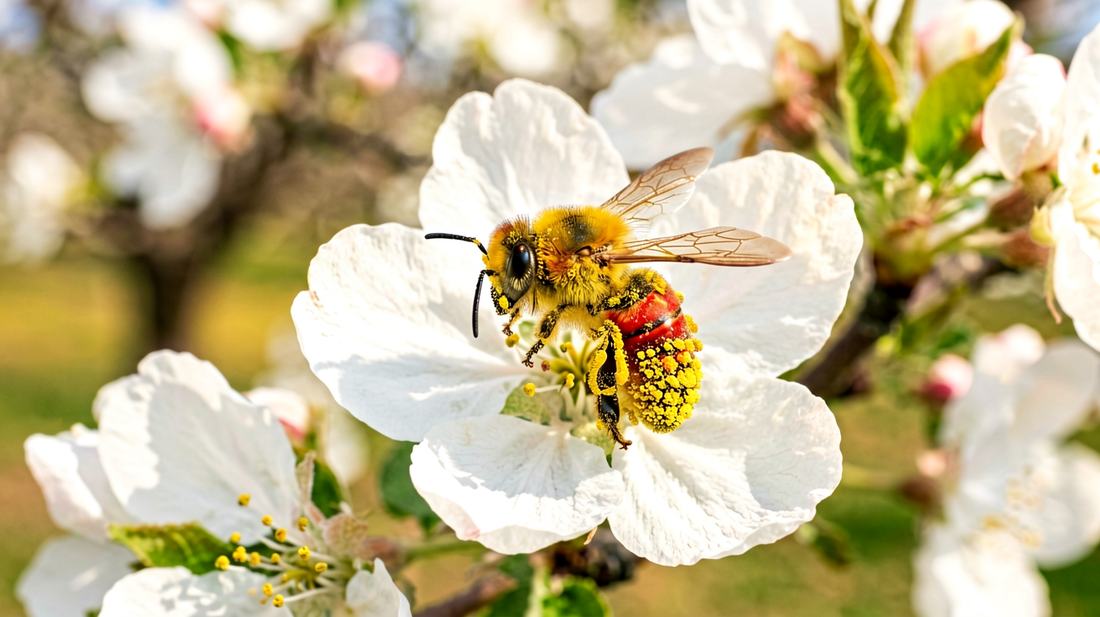
Osmia bicornis | Red Mason Bee
Species Profile · Megachilidae
Red Mason Bee
A gentle solitary bee that nests in holes, carries pollen on its belly and pollinates spring orchards.
IUCN: Least Concern
Range
Size
Flight
Broods
Status
A bee without a hive
The red mason bee
The red mason bee is a small, gingery lone bee. It nests in holes. It does not build a hive. It does not make honey. It has no queen. Each female works alone.
She lines a hollow stem with mud. She also uses a crack in an old wall. She stocks it with pollen for her young. The bee cannot dig its own burrow. It depends on holes that other animals provide. Old buildings provide holes too.
It takes kindly to bundles of hollow canes in a garden. It flies for only about eight weeks in spring. It flies just as apple, pear and plum trees bloom. That timing makes it a valued orchard bee. It is one of the most valued in Europe.
Family tree
One of the mason bees
The red mason bee is in the order Hymenoptera. Hymenoptera holds the bees, wasps and ants. It is in the family Megachilidae. Megachilidae are the leafcutter and mason bees. Its nearest kin is the European Honey Bee. It shares the same basic Hymenopteran body plan. The honey bee is social.
It lives in a colony. Megachilids carry pollen on a brush of hairs. The brush is under the abdomen. They do not use baskets on the hind legs. This difference is easy to see in the field. The genus Osmia has about 11 species in Britain. It has many more across Europe and Asia.
The species has a tangled past. Carl Linnaeus named the male and female under two names. This was in 1758. The older name rufa was used for two centuries. The right name today is Osmia bicornis. It refers to the two small horns on the female’s face. Many books still call it Osmia rufa.
Ginger, stout and small
What a mason bee looks like
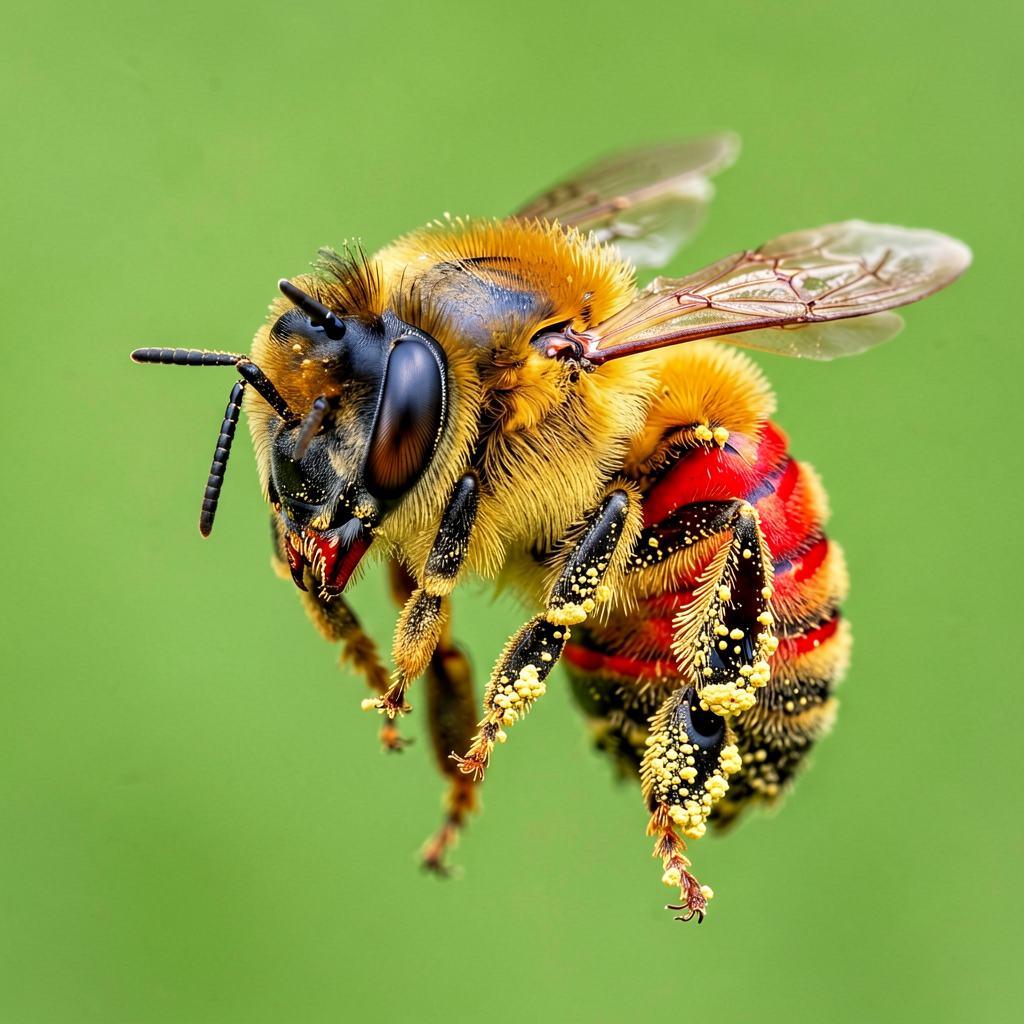
The red mason bee is about the size of a honey bee. It measures 6 to 11 millimetres. Males are smaller than females. Both sexes wear dense ginger hair. Some wear reddish-brown hair. This gives the species its common name. The female has a black head. She has two short horns on the front.
No other common British mason bee shares this trait. The male is slimmer. He has a white tuft of hair on the face. The wings are clear. They fold flat over the back at rest. The body is stouter than a typical lone wasp. It is less wasp-waisted. Adults are gentle.
They sting only if handled very roughly. They have colour vision. The females are polylectic. They gather pollen from many plants. They do not specialise in one. Pollen is packed onto the underside of the abdomen. When the brush is full, the belly takes on the flower’s colour.
1
2
3
Walls, gardens and orchards
Where it nests
The red mason bee is widespread across Europe. It is common in England and Wales. It is scarcer in Scotland, Ireland and the far north. It lives almost anywhere people live. It needs flowers and holes nearby. Gardens, allotments and orchards suit it. So do churchyards and old walls.
Woodland edges, hedgerows and brownfield land suit it too. Its key need is a hole with a dry, sunny entrance. Crumbling mortar in old walls is used. So are beetle tunnels in dead wood. Hollow plant stems and bamboo canes are used. The species takes to made bee hotels. It does so as readily as to natural holes.
It is on the wing from late March to June. The timing tracks the bloom of fruit trees. These include apple and pear. The life cycle runs for one brood a year. The bee depends on spring flowers. They must grow within a few hundred metres of its nest.
What it eats
Pollen from spring blossom
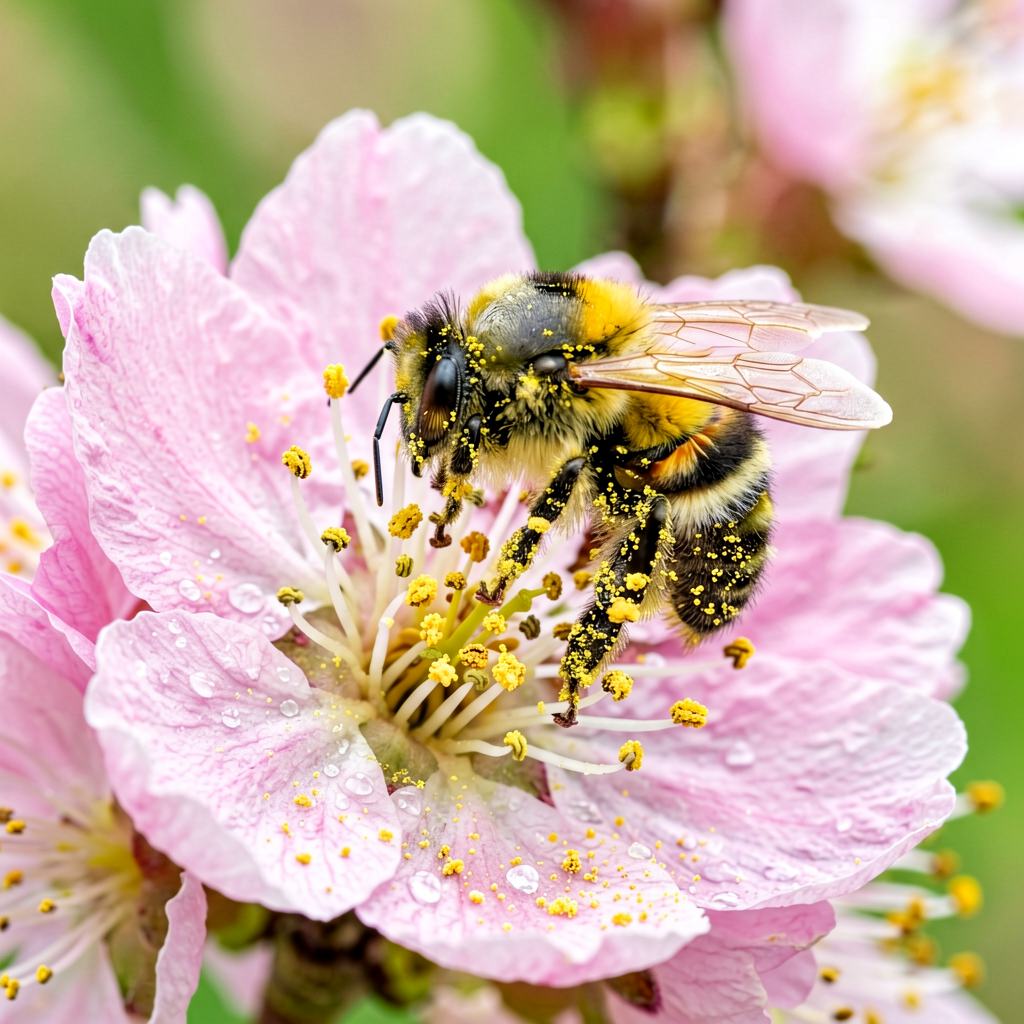
Adults eat only pollen and nectar. They take these from many spring flowers. Fruit blossom is visited. So are dandelions, buttercups and hawthorn. Willow, dead-nettle and forget-me-not are visited too. Many garden shrubs are visited. The bee gathers pollen to fill its nest cells. It does not gather it only to feed itself.
Each cell gets a ball of pollen and nectar. The egg is laid on top of it. The egg hatches into a larva. The larva eats the whole supply. The female gathers from many plant kinds. A mixed garden or hedgerow is far better for her. A single crop is worse. She needs a steady supply of flowers.
This must last the whole flight season. Nectar gives energy for flight. Pollen gives protein for the growing larva. In the garden these bees are good neighbours. They pollinate fruit and vegetables well. They do not defend a nest. They are safe near children and pets.
Eight weeks of work
Eggs, mud and a winter wait
The red mason bee has one brood a year. Males come out first, in early spring. They wait for females to appear. The females leave the nest tunnels. A female usually mates only once. She often mates with a close male kin. After mating she picks a cavity. She starts to build. Each cell is lined with mud.
It is filled with pollen and nectar. It is sealed with a mud plug. A single egg is laid inside. She picks the sex of each egg. Joined eggs become females. They go in the larger inner cells. Unjoined eggs become males. They go in the smaller cells near the entrance. The eggs hatch after about a week.
The larvae spin cocoons about a month later. New adults form in autumn. They do not come out then. They stay asleep through winter in their cocoons. They appear the next spring. The species has natural foes. A mite lives in the nests. The fly Cacoxenus indagator is another. Its larvae eat the bee’s pollen store.
Valued but under pressure
A pollinator to look after
The red mason bee is Least Concern on the European Red List. It has not been rated worldwide. It is common and widespread. The main pressures are loss of flower-rich habitat. Tidying old walls removes nest sites. Loss of dead wood is another pressure. So is the use of pesticides in farms and gardens.
It is a lone bee. It nests in small, scattered groups. It suffers when good holes are few and far apart. Its willingness to use made nests made it a favourite. Gardeners and orchard growers like it. They buy cocoons and place them in orchards. This is done at bloom time.
The bees then pollinate fruit crops. This trade brings its own risks. These include the spread of disease. They also include the mixing of groups. Researchers advise careful care of nests. They advise cleaning the cocoons. They also advise planting local flowers.
Quick hits
Five things to remember
- The female’s two small face horns give the species its name bicornis.
- Red mason bees carry pollen on belly hairs, not in leg baskets.
- The female sets the sex of each egg. Joined eggs that become females go in larger cells.
- Adults fly for only about eight weeks a year and do not make honey.
- The species nests in hollow cane bundles, so it is sold for orchards.
[…] refers to the yellow patches on the sides of the body. Our insect shares its family with the Red Mason Bee, a common garden bee that lines its nest with mud. That species nests in tubes and holes and is […]