 By st20113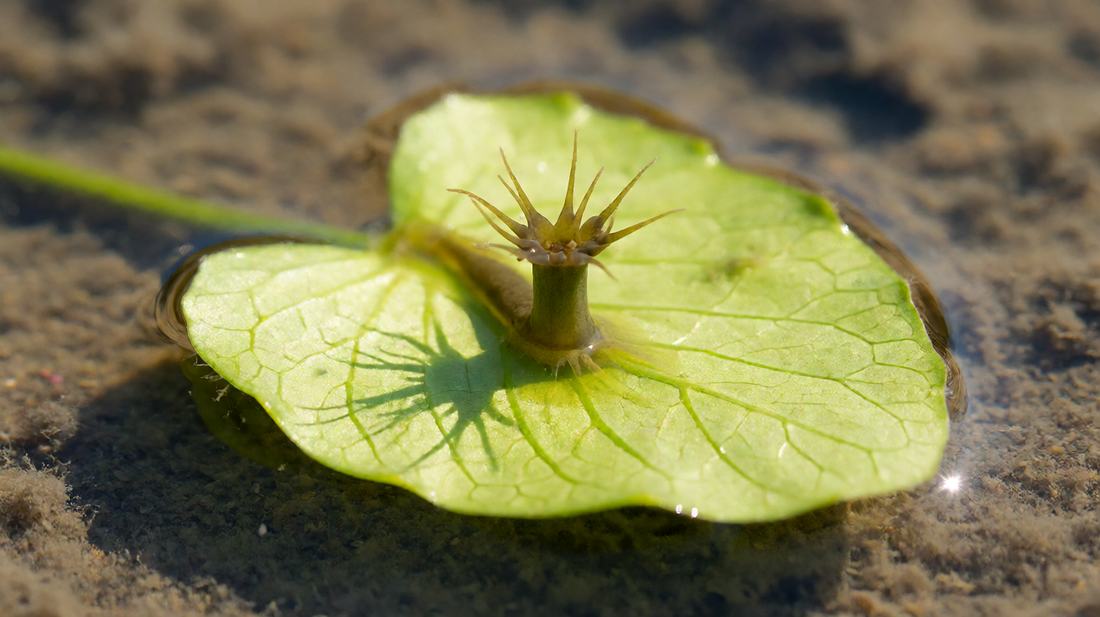
Hydra vulgaris | Common Hydra
Species Profile · Hydridae
Common Hydra
A tiny fresh water hunter built from just 2 layers of tissue, and able to grow a whole new body from a piece of itself.
A hunter with no brain
Length
Tentacles
Tissue
Budding
Resting egg
The common hydra
2 layers of tissue and no brain
The Common Hydra is one of the simplest animals that a pond dipper can find. It also looks very strange. It looks like a tiny tube with a crown of thin threads. It is usually only 1 to 20 mm long, so it is easily missed. It has no head, no brain, no heart and no blood. Its body is a hollow bag made of only 2 layers of tissue.
Its mouth is the same opening that passes out waste. The crown at the top is a ring of 6 to 8 tentacles. Each of them is armed with hundreds of stinging cells. When a water flea brushes against a tentacle, the cells fire tiny harpoons. The prey is paralysed and dragged into the mouth. The hydra then swallows it whole and digests it inside the hollow body.
The animal can crawl slowly on its base. It can also somersault along by bending over and letting go. Most of the time it stays fixed to a leaf or a stem. Its most famous trick is regrowth. If a hydra is cut into pieces, each piece can grow into a whole new animal.
Family tree
Cnidaria, Hydridae
This animal belongs to the phylum Cnidaria. That group also holds the jellyfish, the sea anemones and the corals. Most of the group live in the sea. The hydras are unusual because they live in fresh water. They sit in the class Hydrozoa and in the family Hydridae. All of the members of that family belong to the genus Hydra.
There are about 30 species in it. The Common Hydra was named by Pallas in 1766. It is the species that most people mean when they talk about a hydra. The body of every member of the group has the same plan. There is a single opening, a ring of tentacles and a base for holding on. The name of the phylum comes from the Greek word for nettle.
It refers to the stinging cells shared by the whole group. Our animal shares its genus with the Green Hydra, a close relative that looks almost the same. That species carries tiny algae inside its cells. The algae give it its colour and make sugar for their host. The Common Hydra has no such partner, so it is a plain pale brown or grey.
A tube with a crown
How to tell one
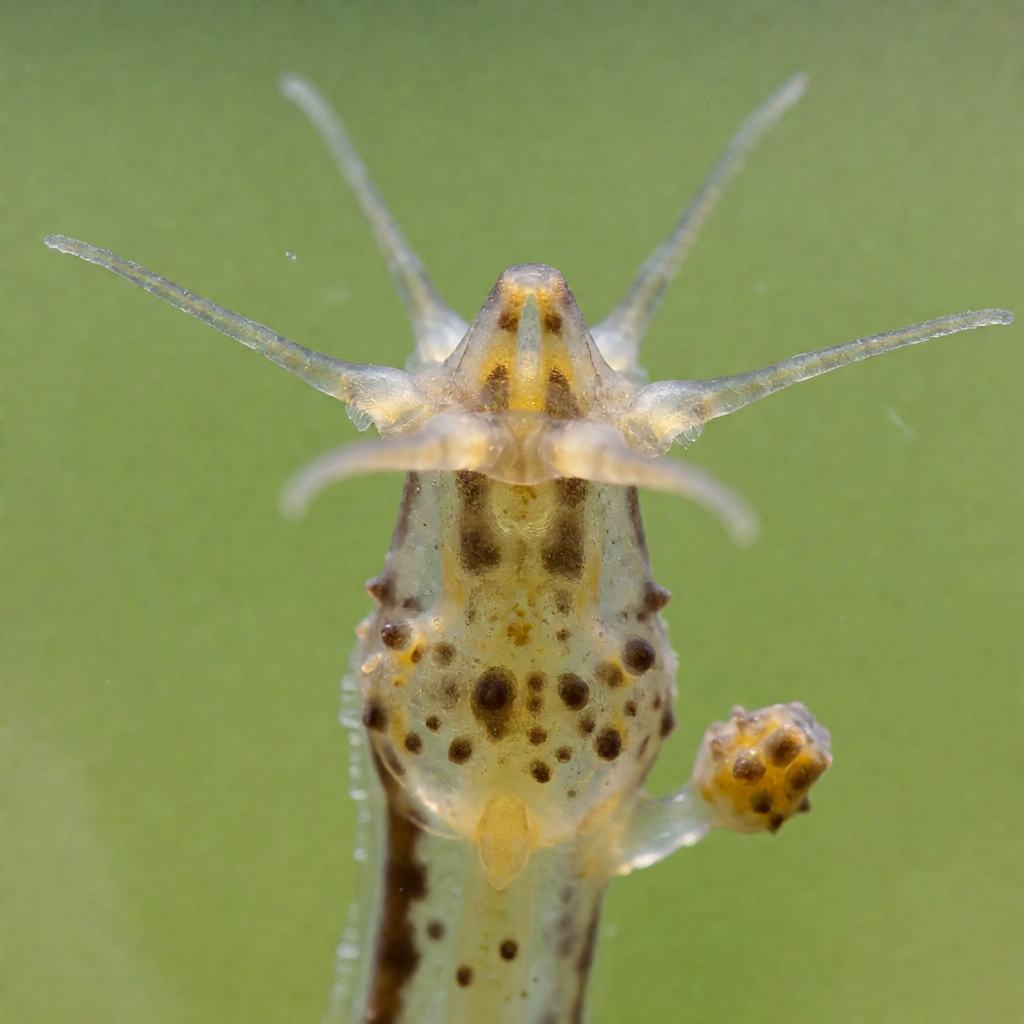
This animal has a soft tubular body 1 to 20 mm long. Most individuals are between 2 and 10 mm. The lower end carries a sticky disc called the basal disc. It is used to hold on to a leaf or a stone. The upper end is the crown. It carries a ring of 6 to 8 thin tentacles. They can be stretched to several times the length of the body.
They can also be pulled in to short stubs. The mouth lies at the very tip, in the middle of the ring. The body wall is made of only 2 layers of cells. A thin sheet of jelly lies between them and gives the animal its shape. There is no brain. A simple net of nerve cells spread through the body lets it react to touch. The stinging cells are the most remarkable part.
Each one holds a coiled thread in a small capsule. When the trigger is touched, the capsule fires its thread. The whole move takes less than a thousandth of a second. It is one of the fastest moves known in any living cell. The body is often a little greener in bright light.
1
2
3
Clean water and pondweed
Where it lives
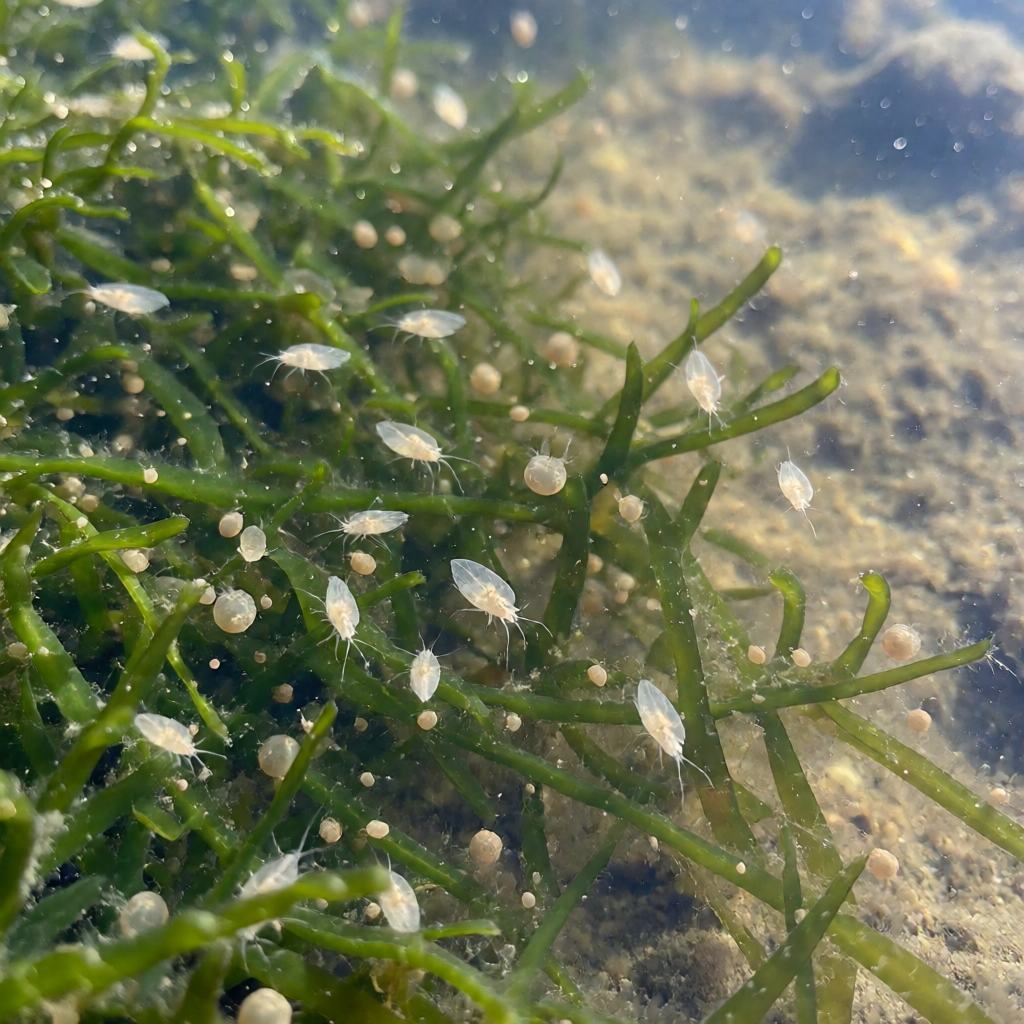
This animal lives in fresh water. It is found in ponds, ditches, canals, slow streams and lakes. It even lives in the water butts of a garden. It needs clean well aired water with plenty of light. It is most often seen under the leaves of pondweed. It also sits on the shaded side of stones and stems.
It does not swim in open water and is never found in fast currents. The species is very sensitive to pollution. It reacts to even small amounts of heavy metals and insecticide in the water. Because of that it is used as a sign of water quality. A pond that holds hydras is usually a healthy pond. The animal can move when it needs to.
It glides slowly on its base, at a few millimetres a day. It can also leave its hold, bend over and take a new grip. That carries it along in a series of somersaults. If the water becomes poor, it can make a gas bubble and float away.
Firing a harpoon
What it eats
This animal is a hunter. It eats almost any small animal that it can reach. Water fleas, small copepods, tiny larvae and rotifers are all taken. The hunting method is always the same. The animal stretches out its tentacles and waits. When a small animal touches one of them, the stinging cells fire.
The prey is paralysed within seconds. The tentacles then bend towards the mouth and push it in. There is no chewing, because there are no jaws. The hydra swallows its food whole. The inner layer of cells digests it in the hollow body. The waste is pushed out through the same opening.
One hydra can eat several small animals in a day. It can also live without food for a week or more. It cannot eat anything with a hard shell. It cannot manage prey much wider than its own body. Flatworms, small fish, water beetles and larger hydras feed on it. It can regrow a lost tentacle in a few days.
Budding and resting eggs
The breeding cycle
This animal has 2 ways of making new animals. It uses the first one for most of the year. In the warm months it buds. A small copy grows out of the side of the body wall. It slowly takes on the shape of a small hydra with its own crown. When it is fully formed it pinches off and settles nearby.
A healthy adult can produce a new bud every few days. So one animal can build a large group in a pond over a summer. The second method is sexual. In the autumn the water grows cold and food becomes scarce. Some hydras then produce eggs and sperm. One animal carries both kinds of cell in its own body, so it does not need a partner.
The embryo that forms is wrapped in a tough case. This case sinks to the bottom of the pond and waits through the winter. It can survive drying out and freezing. When the water warms in the spring the case splits and a small hydra comes out. The animal also lives a long time. Studies have found that the death rate hardly changes as it grows older.
A test of clean water
Conservation
This animal is not at risk, and it lives in fresh water across Europe and Asia. Its fortunes are tied to the quality of the water. It is so sensitive to pollution that it has become rare in many rivers and ponds. Insecticides, heavy metals and the runoff of fertiliser all damage it. The drainage and the clearing of ponds remove the plants it needs for cover.
The loss of the small animals it eats is also a problem. It cannot live in water that has been stripped of its plankton. Water birds help it to spread, because they carry the resting cases on their feet. The moving of water plants between garden ponds helps it too. It is also an accidental traveller in aquariums.
In a fish tank it can build up large numbers on the glass. There it eats the tiny live food that is used to raise fish fry. The best support for the species in the wild is clean water with plenty of plants and no insecticide. In most cases that means leaving a pond alone.
Quick hits
Five things to remember
- The body is made of only 2 layers of tissue, and the animal has no brain, no heart and no blood.
- A stinging cell fires its little harpoon in less than a thousandth of a second, one of the fastest moves known in any cell.
- Cut a hydra into pieces, and each piece can grow into a whole new animal, a trick found in the 1740s.
- In warm weather the animal makes copies of itself by budding, and 1 adult can add a new bud every few days.
- Studies suggest that a hydra hardly ages at all, and its chance of dying stays much the same as it grows older.