 By st20113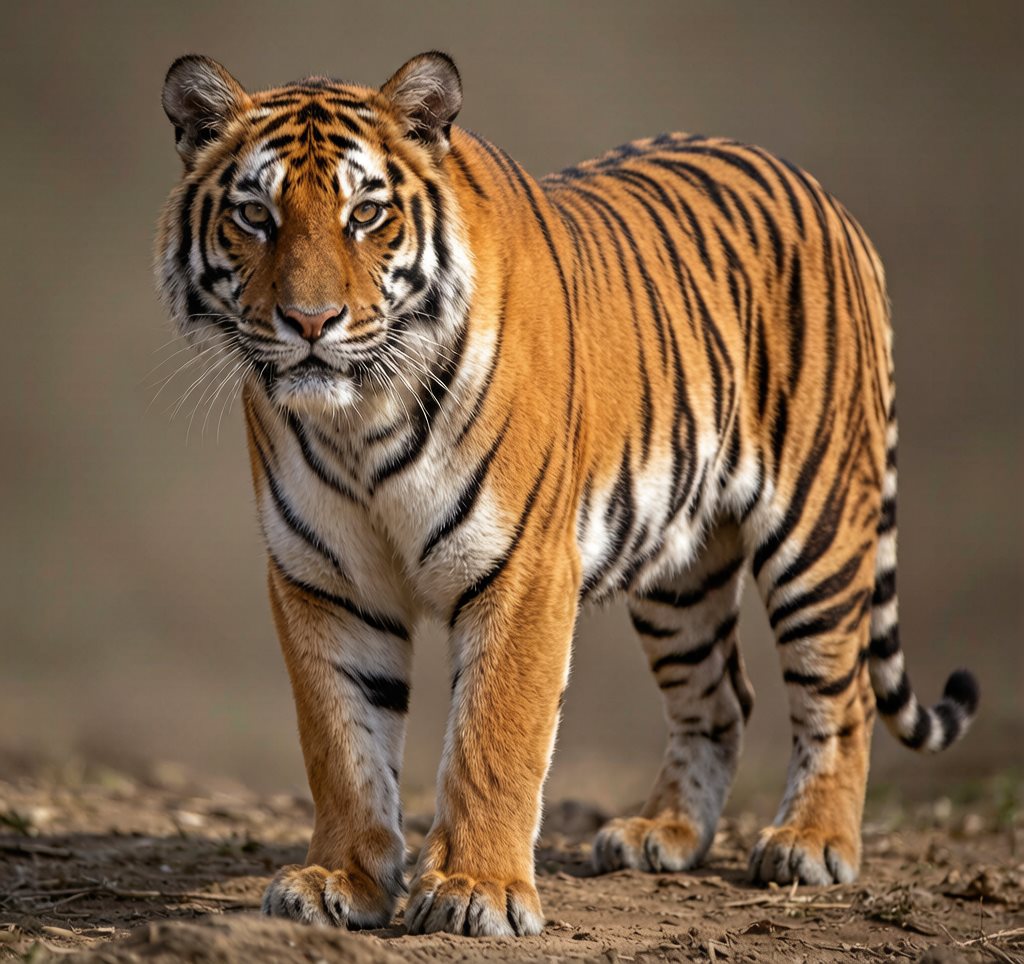
Introduction
The Bengal tiger, Panthera tigris, is the most numerous of all tiger subspecies and one of the largest living cats on Earth. Native to the Indian subcontinent, it has become an enduring symbol of wilderness and strength across cultures. As a flagship species, the Bengal tiger draws public attention and conservation funding to the broader health of the forests, grasslands, and wetlands it inhabits.
This solitary predator commands the top of its food web, and its presence signals a balanced ecosystem with enough prey and cover to support such a large carnivore. Its deep roar can carry for several kilometres, a territorial announcement that rivals learn to respect. Few animals inspire the mixture of awe and caution that a wild Bengal tiger does in the people who share its landscape.
Taxonomy
The Bengal tiger belongs to the genus Panthera, which includes the other great roaring cats of the Old World. It is classified within the family Felidae and shares a recent common ancestry with the African lion, Panthera leo, of the savannas. Closer relatives adapted to cold mountain habitats include the snow leopard, Panthera uncia, while the open plains are home to the supremely fast cheetah, Acinonyx jubatus.
Smaller spotted cats represent a more distant branch of the family, yet they share the same basic body plan of a retractable-clawed hunter. A good example is the secretive ocelot, Leopardus pardalis, a nocturnal cat of the Americas. Genetic studies confirm that all members of Panthera descended from a common ancestor that lived several million years ago, with the tiger lineage diverging relatively early.
Physical Characteristics
Adult male Bengal tigers can exceed 3 metres in total length from nose to tail tip and weigh more than 220 kilograms, while females are noticeably smaller. Their coats range from yellow to light orange with bold black stripes, and each pattern is as unique to the individual as a human fingerprint. A pale belly, massively muscled forelimbs, and broad paws support explosive power, and the animal’s retractable claws and enlarged canine teeth make it a formidable hunter.
Beneath the fur, the skin itself carries the stripe pattern, a detail that helps researchers identify individuals from photographs. Tigers also possess highly sensitive whiskers and an excellent sense of hearing, though their daytime vision is only modest. Thick neck muscles power the crushing bite used to seize the throat or neck of large prey.
Habitat
Bengal tigers occupy a remarkable variety of habitats, from the tidal mangrove forests of the Sundarbans to dry deciduous woodlands, tall elephant grass, and tropical rainforests. They require sufficient cover for stalking prey, reliable access to water, and large home ranges that can span many square kilometres for a single male. Riparian corridors of trees and reed beds let them move between hunting areas without crossing open ground.
Habitat loss and fragmentation remain the greatest long-term threats to these ranges, isolating populations from one another and reducing genetic exchange. Where protected reserves are large and connected, tigers can persist alongside human communities, but elsewhere farmland and roads steadily erode the wild spaces they need to roam and breed.
Diet
These tigers are carnivorous ambush predators that prey primarily on large and medium-sized ungulates such as chital and sambar deer and wild boar. They hunt alone, using cover and silence to approach within a few metres before a final burst of speed. A successful kill can feed a tiger for several days, and they often drag heavy carcasses into dense cover to guard against scavengers and to feed undisturbed.
When preferred prey is scarce, tigers will take smaller animals, birds, reptiles, or even fish, and they sometimes cache a kill in water to keep it fresh. Cubs learn the craft of hunting by shadowing their mother for up to two years, practising on small live prey before attempting dangerous adult quarry on their own.
Reproduction
Female Bengal tigers reach sexual maturity at about three to four years of age, and males slightly later. After a gestation of roughly 100 days, a litter of two to four cubs is born blind and helpless in a sheltered den. The mother raises them alone, moving them between hiding places to avoid leopards, dholes, and other threats, and teaching them to hunt over the following eighteen months to two years before they disperse.
Conservation
The Bengal tiger is listed as Endangered, though concentrated protection efforts in India and neighbouring countries have stabilised and even increased some populations in recent decades. Anti-poaching patrols, well-managed reserves, and community conservation programmes all play a role in this recovery. Continued human pressure on land and on the prey base means that vigilance and funding remain essential to secure the species’ future.
Fun Facts
A tiger’s stripes are found on its skin, not just its fur, and no two tigers share the same pattern anywhere in the world. Bengal tigers are strong swimmers that often cool off in rivers and lakes during hot weather, sometimes swimming long distances between islands. They can consume more than 30 kilograms of meat in a single feeding, and their night vision is roughly six times better than that of a human being.
Unlike most cats, tigers readily enter water and have been recorded crossing wide rivers with ease. A tiger’s roar contains an infrasound component that can be felt as much as heard, allowing communication across great distances in dense forest.
[…] 23 kilograms, with males significantly larger than females. Unlike the more familiar pattern of the Bengal tiger, clouded leopard markings are uniquely adapted for camouflage in the dappled light of the forest […]
[…] able to tackle large ungulates cooperatively. They often compete with and occasionally displace Bengal Tiger and leopards, sometimes driving bigger cats off kills. Packs use incredible stamina to chase prey […]
[…] wetlands to agriculture has severely fragmented its range, pushing it into closer contact with the Bengal tiger and other wetland predators such as the saltwater […]