 By st20113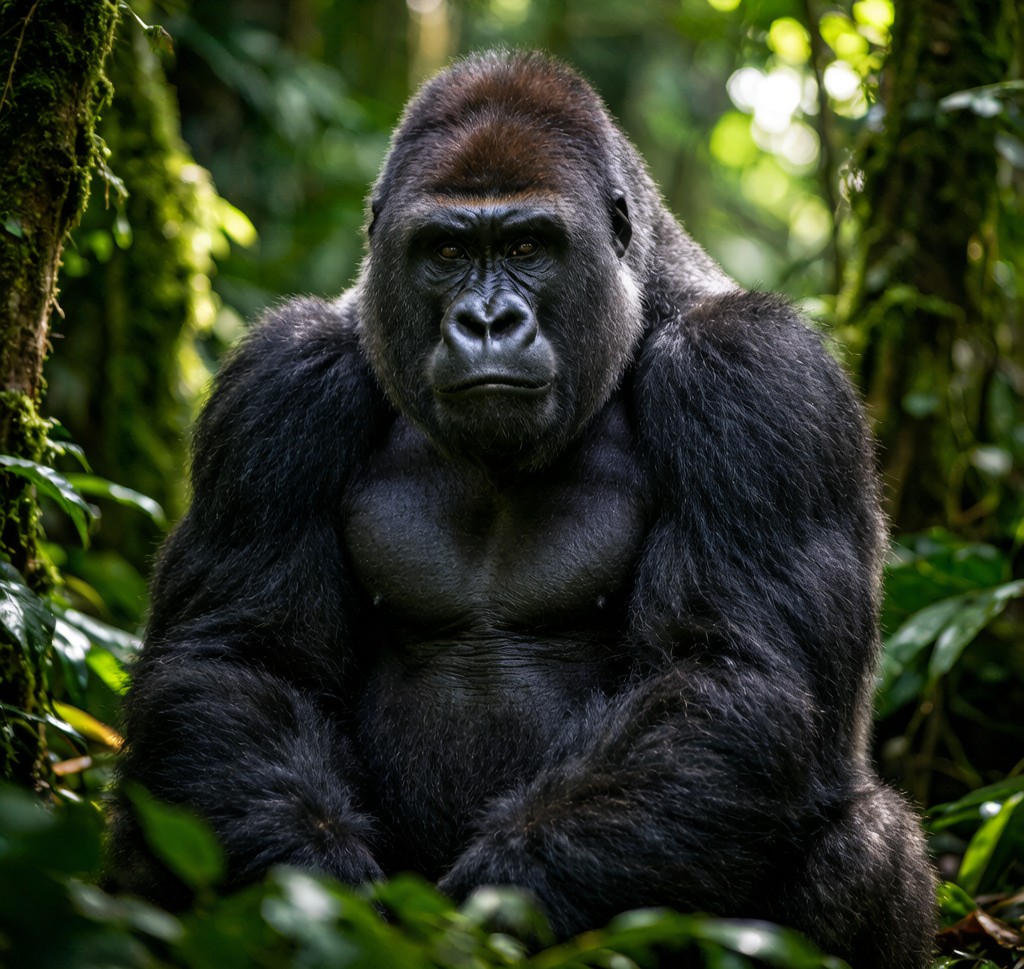
The western gorilla (Gorilla gorilla) is the most populous and widely distributed of the two gorilla species and one of the closest living relatives to human beings after the chimpanzee. Found in the tropical forests of west-central Africa — primarily in Cameroon, the Central African Republic, the Democratic Republic of Congo, Equatorial Guinea, Gabon, and the Republic of Congo — the western gorilla inhabits lowland tropical forests, swamp forests, and secondary growth forests where it plays a keystone role as a seed disperser and forest engineer. The species exists in two subspecies: the western lowland gorilla (Gorilla gorilla gorilla), the most numerous and best known, and the critically endangered Cross River gorilla (Gorilla gorilla diehli), confined to a small region on the border between Nigeria and Cameroon. Western gorillas are highly intelligent, tool-using primates that live in social family groups led by a dominant silverback male, and their gentle, complex social behaviour has captivated researchers and conservationists worldwide. Their populations have declined by more than 60 percent over the past quarter-century, making them one of the most endangered great apes on Earth.
## Physical Characteristics
The western gorilla is the smaller of the two gorilla species, with adult males standing approximately 1.6 to 1.7 metres tall when upright and weighing between 140 and 180 kilograms, while females are considerably smaller at 1.4 to 1.5 metres and 60 to 100 kilograms. The most distinctive feature of the adult male is the silver saddle of hair across his back and hips — earning him the title “silverback” — which typically develops at around 12 to 15 years of age and signals full maturity and social dominance. Western lowland gorillas have a more reddish-brown or auburn chest and skull shape that is more pronounced than that of the mountain gorilla. The face is broad with prominent brow ridges, large dark eyes, and a short, protruding muzzle. The hands and feet are broad with short digits and opposable thumbs and big toes, adapted for both manipulation and locomotion. Despite their massive, powerful build, gorillas are primarily peaceful and non-aggressive by nature.
## Habitat and Distribution
Western lowland gorillas inhabit the lowland tropical forests of west-central Africa, ranging from sea level to altitudes of approximately 1,600 metres. Their range encompasses the Congo Basin rainforest — the world’s second-largest tropical rainforest — as well as swamp forests, forest edge habitats, and secondary forest areas that have regrown after disturbance. The Cross River gorilla is restricted to a small highland area of approximately 11,700 square kilometres straddling the Nigeria-Cameroon border, where it inhabits a fragmented landscape of montane and submontane forest patches surrounded by farmland and human settlement. Western lowland gorillas are largely frugivorous, with fruit comprising 60 to 90 percent of their diet during seasons when fruit is abundant, supplemented with leaves, stems, bark, pith, and occasional invertebrates such as ants and termites. This dependence on fruit makes them particularly vulnerable to habitat disturbance that alters fruit availability.
## Diet and Behavior
Western gorillas live in cohesive family groups typically numbering between 5 and 15 individuals, centered around a dominant silverback male who leads the group, makes all major decisions about where to travel and forage, mediates social conflicts, and provides protection against predators and rival silverbacks. Younger blackback males and adult females form a secondary social layer within the group, and bonds between mothers and their dependent offspring are the strongest and most enduring of all social relationships. Western gorillas spend approximately 30 percent of their day foraging and feeding, 30 percent resting, and the remainder traveling and engaging in social activities. Unlike the mountain gorilla, which primarily terrestrially knuckle-walks, western lowland gorillas frequently climb trees to feed on fruit, especially when fruit availability is high. They construct sleeping nests each night — either on the ground or in trees — which are built by bending and weaving surrounding vegetation.
## Conservation
The western gorilla is classified as Critically Endangered on the IUCN Red List, with population estimates of between 100,000 and 200,000 for the western lowland subspecies and fewer than 300 individuals for the Cross River subspecies. The primary threats include commercial hunting for bushmeat — which has emerged as the single greatest threat as Ebola virus and habitat loss have reduced their numbers — disease, particularly the devastating impact of Ebola hemorrhagic fever, which has caused mortality rates of up to 95 percent in some populations, and habitat destruction through logging, agricultural expansion, and mining. Ebola hemorrhagic fever represents an existential threat to wild gorilla populations, and the disease has wiped out large portions of populations in several national parks across central Africa.