 By st20113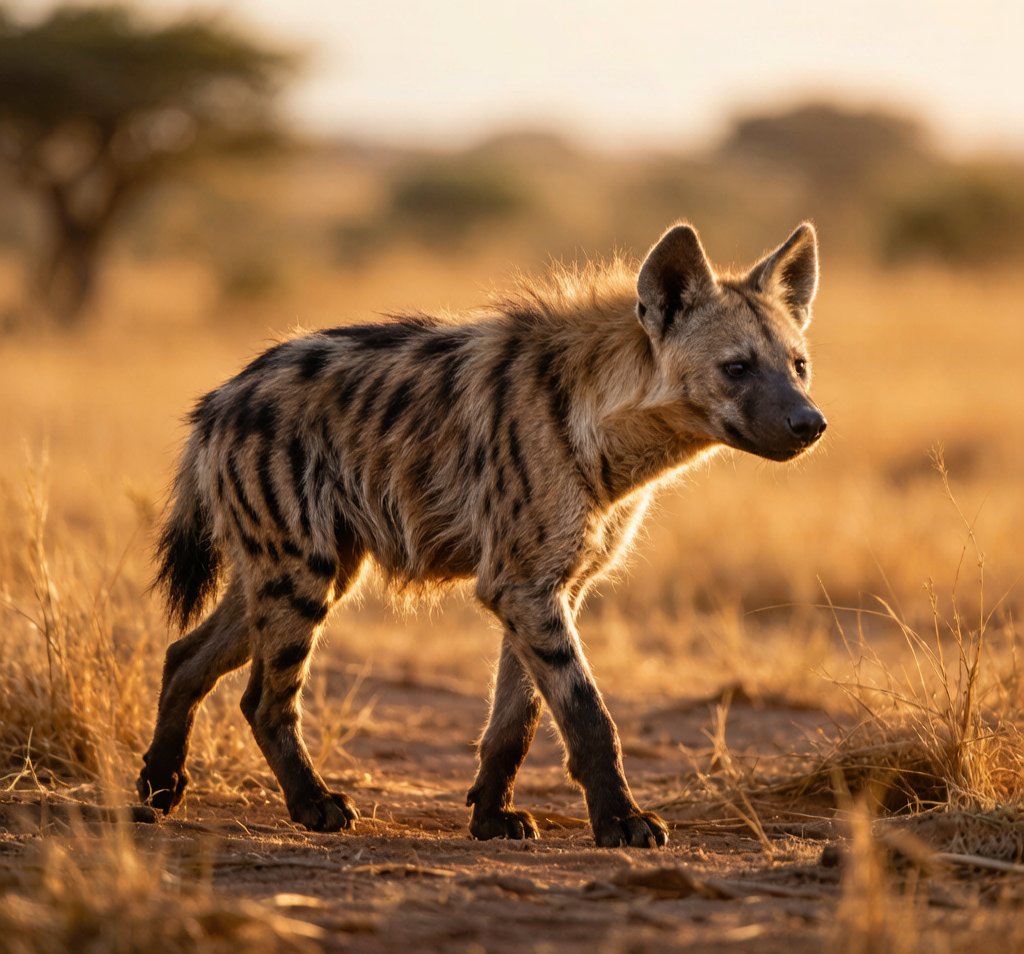
Introduction
The Striped Hyena is a fascinating carnivore native to North and East Africa, the Middle East, the Caucasus, Central Asia, and the Indian subcontinent. Unlike its more famous cousin the Spotted Hyena, the Striped Hyena is primarily a solitary scavenger with a nocturnal lifestyle. This species has been part of human folklore for centuries, often portrayed as a mysterious creature of the night.
Despite their reputation in traditional stories, Striped Hyenas play a crucial ecological role as nature’s cleanup crew. By consuming carrion and organic waste, they help prevent disease spread and maintain ecosystem health. Their powerful jaws allow them to process bones and tough materials that most other animals cannot handle.
Taxonomy
The Striped Hyena belongs to the family Hyaenidae, which includes four extant species: the Spotted Hyena, the Brown Hyena, the Striped Hyena, and the Aardwolf. Its scientific name is Hyaena hyaena, reflecting its status as the type species of the genus Hyaena. First described by Carl Linnaeus in 1758, the Striped Hyena has undergone several taxonomic revisions.
Within the order Carnivora, hyenas are more closely related to cats and mongooses than to dogs, despite their dog-like appearance. The Hyaenidae family diverged from the Feliformia suborder approximately 22 million years ago. Several subspecies have been proposed based on geographic distribution, though the exact number remains debated.
Physical Characteristics
The Striped Hyena is a medium-sized carnivore with a distinctive sloping back, large pointed ears, and a prominent mane of coarse hair running from the neck to the tail. Adults typically weigh between 25 to 55 kilograms, with males slightly larger than females. Their body length.
As their name suggests, Striped Hyenas display prominent vertical stripes on their flanks and legs. Their coat color varies from grayish-beige to grayish-brown, providing excellent camouflage in arid environments. The long, shaggy mane can be erected when the animal.
Habitat
Striped Hyenas occupy diverse habitats across their extensive distribution. They are commonly found in arid and semi-arid environments, including savannas, grasslands, scrub forests, and rocky mountainous regions. Unlike the African Lion, which prefers open savannas, Striped Hyenas thrive in more rugged landscapes where they can find suitable den sites.
These adaptable animals can survive in human-modified landscapes, including agricultural areas and village outskirts. They typically rest in caves, rock crevices, or burrows during the day, emerging at dusk to begin nightly activities. Their ability to survive with limited water makes them well-suited to desert environments.
Diet
As opportunistic scavengers, Striped Hyenas have a highly varied diet consisting primarily of carrion. They consume remains of animals killed by larger predators or those that died naturally. Their powerful digestive system can process decaying meat and bones that would be toxic for many other animals. Beyond carrion, they hunt small to medium-sized prey when opportunities arise, including rodents, birds, lizards, and insects.
They also consume fruits, seeds, and vegetation, particularly during seasons when animal prey is scarce. In areas near human settlements, they readily scavenge from garbage dumps, demonstrating remarkable dietary flexibility. The Red Fox shares this adaptable approach to finding food in varied environments.
Reproduction
Striped Hyenas are solitary for most of the year, coming together primarily for mating. Breeding can occur throughout the year, though peaks may vary by region. After a gestation period of approximately 90 to.
Young Striped Hyenas remain in the den for several weeks, relying entirely on their mother’s milk. They begin eating solid food at around two to three months but continue nursing for up to a year. The mother is solely.
Conservation
The IUCN classifies the Striped Hyena as Near Threatened, reflecting concerns about population declines across much of its range. The species faces threats including habitat loss, persecution by humans, depletion of prey species, and road accidents. In many areas, they are killed due to superstitions or the mistaken belief that they attack livestock.
Conservation efforts remain limited compared to more charismatic species. Protected areas across their range provide some refuge, but many populations exist outside formal conservation zones. Education programs aimed at reducing human-wildlife conflict and dispelling myths about hyenas are important for their long-term survival.
Fun Facts
Striped Hyenas can produce over a dozen different vocalizations, including howls, grunts, and giggles, though they are generally quieter than Spotted Hyenas. They communicate extensively through scent marking, using secretions from their anal gland to mark territory. Their distinctive laugh-like call has contributed to their reputation in folklore as eerie creatures.
In Middle Eastern and South Asian folklore, Striped Hyenas appear frequently as symbols of darkness and transformation. Some cultures believed witches could transform into hyenas. Unlike the social Gray Wolf, the Striped Hyena maintains a solitary and secretive lifestyle that has contributed to its mysterious reputation throughout human history.