 By st20113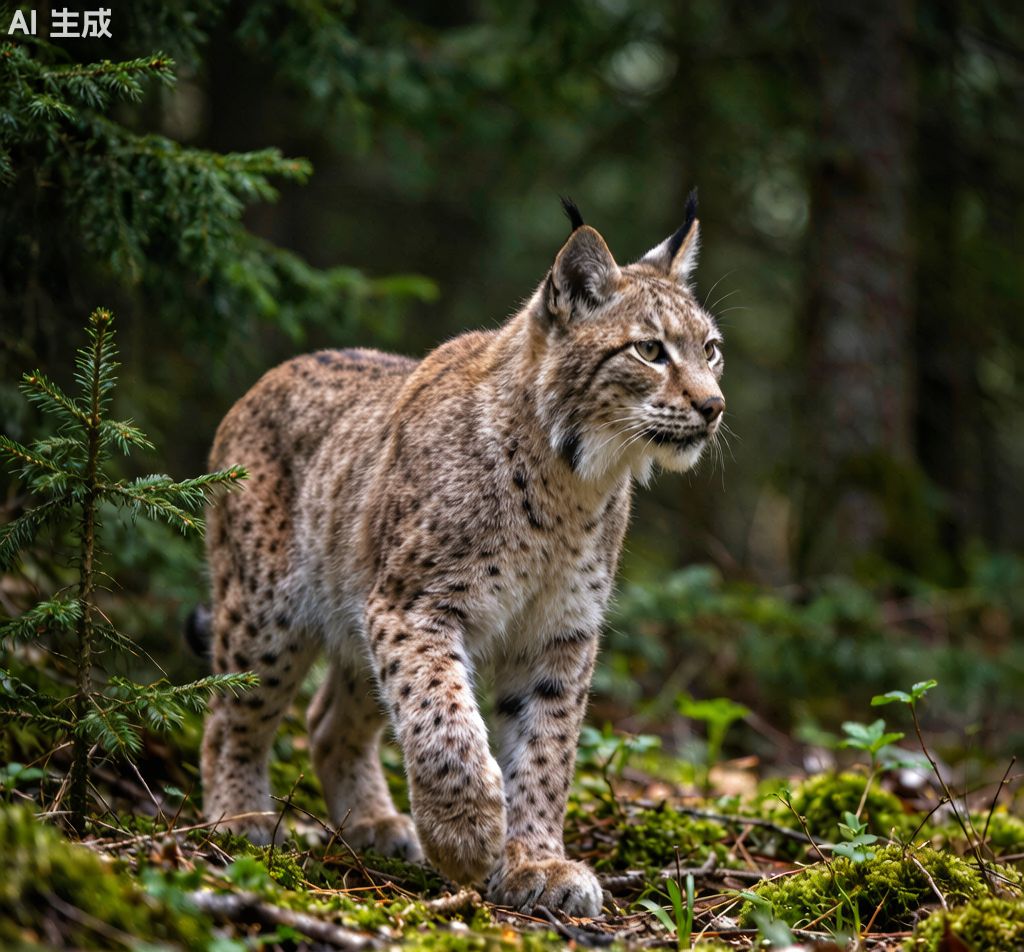
Introduction
The Eurasian Lynx (Lynx lynx) is the largest wild cat native to Europe and one of the continent’s most elusive predators. With its distinctive short tail, tufted ears, and spotted coat, the lynx is perfectly adapted to forested landscapes where it hunts primarily on ungulates and smaller mammals. Once driven to extinction across much of western and central Europe, the Eurasian lynx has been successfully reintroduced to several regions and now maintains fragmented populations across the continent. This solitary carnivore plays a vital role in regulating prey populations and maintaining healthy forest ecosystems.
The species’ secretive nature has made it a subject of myth and reverence in many European cultures, where it was often associated with forest spirits. Modern monitoring using camera traps and genetic analysis has greatly improved our understanding of lynx ecology. Conservation translocation remains a vital tool for restoring the species to its former range.
Taxonomy
Lynx lynx belongs to the family Felidae within the order Carnivora. The genus Lynx contains four species, with the Eurasian lynx being the most widespread and largest. Several subspecies have been described across its vast range from western Europe to eastern Siberia. Genetic studies have revealed distinct population structures corresponding to geographic regions. The species is closely related to the Canadian lynx and the bobcat of North America.
Physical Characteristics
Eurasian lynxes are robust cats measuring 80 to 130 centimeters in body length with a shoulder height of 55 to 75 centimeters. Males are significantly larger than females, weighing 18 to 30 kilograms compared to 12 to 20 kilograms. The coat is yellowish-grey to reddish-brown with dark spots that vary in density between individuals. The species has long legs, large padded paws that act as snowshoes, and distinctive black ear tufts. The short tail with a black tip is a key identifying feature. The red fox shares some habitat but is far smaller.
Habitat
The Eurasian lynx inhabits a range of forested habitats including coniferous, mixed, and deciduous woodlands, as well as rocky mountainous areas and forest-steppe transitions. The species requires large contiguous forest tracts with adequate prey and minimal human disturbance. In Europe, lynx populations are found in the Carpathians, the Alps, the Balkans, and reintroduced populations in Germany, France, and Switzerland. The species is territorial, with home ranges varying from 100 to 400 square kilometers depending on prey density.
Diet
The lynx is a specialized predator that feeds primarily on medium-sized ungulates such as roe deer and red deer. In areas with low deer density, the species supplements its diet with smaller prey including hares, rabbits, foxes, and birds. The lynx is an ambush hunter that uses cover to stalk prey before launching a short, powerful chase. A single lynx may kill one deer every one to two weeks, with surplus cached for later consumption. The species’ reliance on deer makes forest management practices critical to its survival.
Reproduction
Mating occurs in late winter, typically February and March. After a gestation of about 70 days, females give birth to one to four kittens in a sheltered den among rocks, roots, or dense vegetation. Kittens are born blind and helpless, opening their eyes after about ten days. They remain with the mother for nearly a year, learning to hunt before dispersing. The red fox may prey on unattended young lynx kittens.
Conservation
The Eurasian lynx is classified as Least Concern globally but remains threatened or extinct in many parts of its former European range. Reintroduction programs have reestablished populations in several countries, though genetic isolation and illegal hunting remain concerns. Conservation efforts focus on habitat connectivity, public education, and compensation for livestock losses. The species benefits from protected forest areas and wildlife corridors that connect fragmented populations.
Fun Facts
The lynx’s large paws function as natural snowshoes, allowing it to move effortlessly across deep snow where prey sinks. The species can leap up to 4 meters horizontally when hunting. Lynx kittens are born with faint spots that become more pronounced with age. The Eurasian lynx is largely silent, communicating through scent marks and occasional calls during the breeding season. The species’ elusiveness makes it a symbol of wild forest conservation across Europe.
Interestingly, the lynx’s spotted coat provides excellent camouflage in dappled forest light, breaking up its outline for both hunting and avoiding detection. The species can survive in surprisingly human-modified landscapes if sufficient forest cover and prey remain. Ongoing research continues to reveal the complexity of lynx social communication through scent and vocal signals.