 By st20113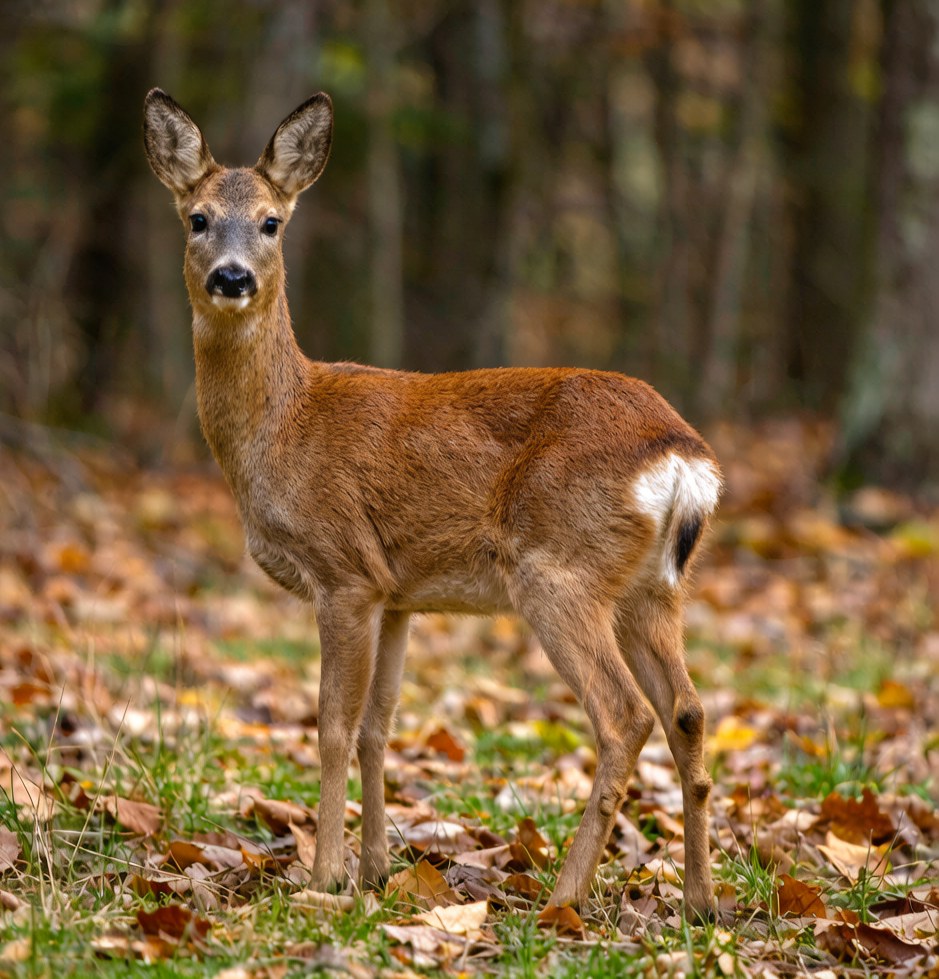
Introduction
The Roe Deer (Capreolus capreolus) is the most widespread and abundant native deer species across Europe, with a range that stretches from the British Isles in the west to the Caucasus mountains in the east. Small, agile and secretive, this elegant animal is a familiar sight in forests, woodland edges, farmland hedgerows and even suburban parks and gardens, where it has become increasingly bold in its adaptation to human presence. The Roe Deer plays a crucial role in shaping the vegetation dynamics
Taxonomy
Scientifically classified as Capreolus capreolus within the family Cervidae, the deer family, the Roe Deer belongs to the order Artiodactyla, the order of even-toed ungulates. The genus Capreolus contains only two extant species: the European Roe Deer and the larger Siberian Roe Deer (Capreolus pygargus) found from eastern Europe to the Russian Far East and Korea. Despite being the most common deer in Europe, the Roe Deer has one of the smallest genomes among deer species and has been extensively studied as
Physical Characteristics
The Roe Deer is a small, slender deer with a body weight typically ranging from 10 to 30 kg, depending on season, sex and age, with males averaging slightly heavier than females. Summer coats are a rich reddish-brown, while winter coats are considerably greyer and thicker, providing better insulation against the cold. A distinctive black chin and pale rump patch are visible at all times, and the rump patch is spread conspicuously when the deer is alarmed as a warning signal to
Habitat
Roe Deer are habitat generalists that thrive in the mosaic of woodland, farmland and heathland that characterises much of the European landscape. They prefer areas with a mix of dense woody cover for shelter and rest, and open areas for feeding, typically selecting habitat edges and transitional zones rather than the interior of dense forest or open farmland. Agricultural landscapes with hedgerows, woodlots and field margins provide excellent year-round habitat, and Roe Deer have also adapted remarkably well to suburban parks and
Diet
The Red Deer (cervus-elaphus-red-deer) is the largest and most abundant competitor with the Roe Deer for foraging space and seasonal resources across the forests and woodlands of Europe. As a concentrate selector feeding on high-quality plant material rather than coarse grasses, the Roe Deer prefers the tender shoots, leaves, buds, berries and fruits of herbs and woody plants over grass, which forms only a small part of its diet even in open habitats. It browses selectively on a wide variety of plant
Reproduction
Reproduction in Roe Deer is characterised by embryonic diapause, one of the most remarkable reproductive strategies of any mammal. After mating occurs in July and August, the fertilised egg develops to the blastocyst stage and then pauses, remaining dormant in the uterus for approximately 150 days before implanting and resuming normal development in January. This extraordinary delay means that the single fawn, or rarely twins, is not born until May or June of the following year, after a total gestational period of
Conservation
The Roe Deer is one of the few large mammal species in Europe that has expanded its range and increased in number in modern times, benefiting from the regrowth of woodland following agricultural abandonment, reduced hunting pressure in many areas, and the virtual elimination of large predators across most of its range. It is classified as Least Concern by the IUCN. However, local populations can be significantly affected by severe winters, forest management practices, and vehicle collisions on the many roads that
Fun Facts
Male Roe Deer emit a distinctive barking call during the autumn breeding season to attract mates and deter rivals, a sound that carries considerable distances through autumn woodlands. The antlers of Roe Deer are unusual among deer in that they are relatively simple and barely branched, growing to only about 20 to 30 cm in length. Roe Deer are crepuscular, being most active at dawn and dusk, and spend much of the midday resting in dense cover. When alarmed, a Roe Deer
[…] the eyes to the muzzle. Both sexes bear short, hook-shaped horns that are ridged at the base. The roe deer shares mountain forests but is more […]