 By st20113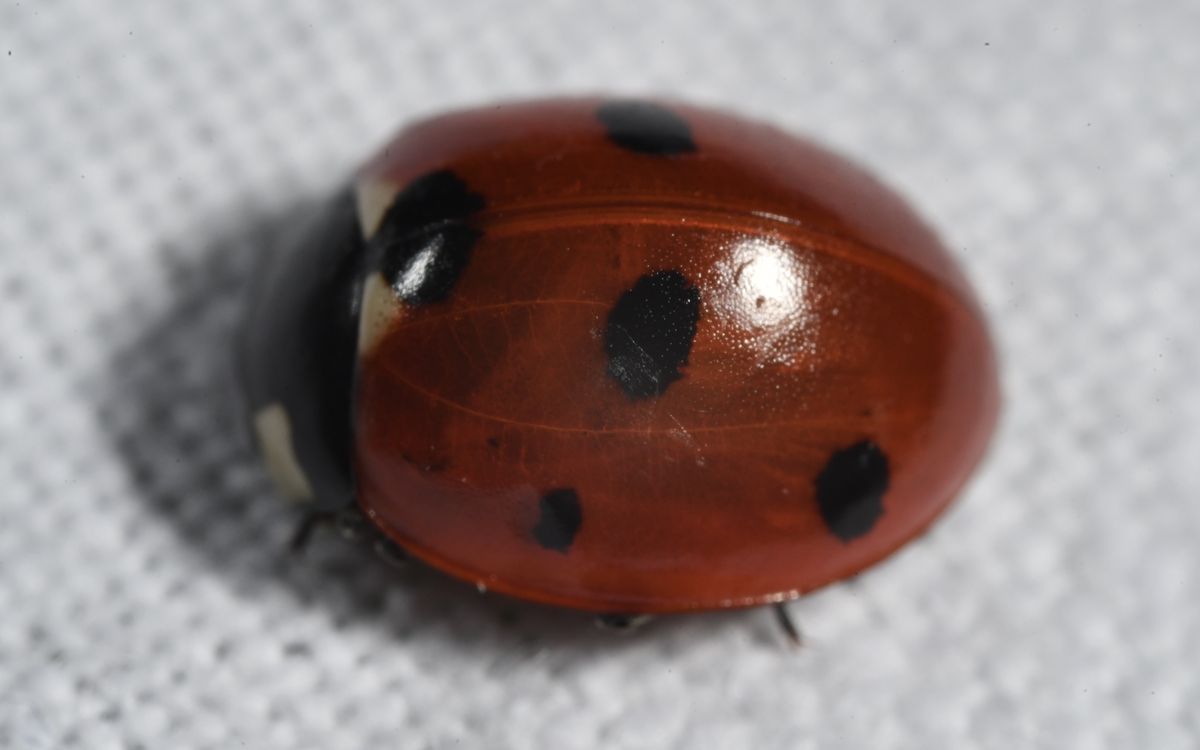
Introduction
The Seven-spot Ladybird (Coccinella septempunctata) is perhaps the most familiar beetle in Europe, the classic red-and-black insect of gardens, meadows, and fields. Beloved by farmers and gardeners alike, it is a voracious predator of aphids and a natural ally of anyone growing plants. Its cheerful appearance hides a serious appetite, and a single individual can devour thousands of pests in its lifetime, making it one of the most valuable insects in the agricultural landscape. Children across Europe learn to recognize it before almost any other insect, and it often features in the first nature lessons of childhood.
Taxonomy
Ladybirds belong to the family Coccinellidae, a large group of beetles known as ladybugs or ladybirds. Described by Linnaeus in 1758, Coccinella septempunctata is among the best-known members of the genus. The species name refers directly to the seven black spots on its red wing cases. Close relatives include many other spotted and striped ladybirds, some of which are also aphid hunters while others feed on plants.
Physical Characteristics
Adults are small, typically 5 to 8 millimeters long, with a rounded, dome-shaped body. The wing cases, or elytra, are bright red or orange and bear three spots on each side plus one shared spot at the center, totaling seven. The head and the small shield behind it are black with two white patches that look like eyespots. Short legs and antennae tuck beneath the body, and the delicate hind wings fold away under the colorful elytra for flight. The bright coloring is a warning to predators that the beetle tastes unpleasant, a classic example of aposematism in insects.
Habitat
Seven-spot ladybirds occupy almost any sunny, flower-rich place: grasslands, hedgerows, orchards, arable fields, gardens, and woodland edges. They track aphid outbreaks, moving into crops when prey is abundant. In spring they awaken from winter refuge and migrate among habitats following food. Their presence is a useful sign of a balanced, pesticide-light environment where beneficial insects can still thrive.
Diet
Both adults and larvae are dedicated predators of soft-bodied insects, especially aphids but also scale insects, mites, and small caterpillars. A ladybird can consume dozens of aphids a day, and the spiky larva is if anything an even more efficient hunter than the adult. By suppressing pest numbers they protect crops and garden plants, reducing the need for chemical sprays. They also eat pollen and nectar when prey is scarce, linking them loosely to pollinators such as bees, and in autumn they switch to feasting on abundance, building fat reserves before the cold sets in. Honey Bee.
Reproduction
Females lay clusters of tiny yellow eggs on leaves near aphid colonies, ensuring the hatching larvae have immediate food. The larvae pass through several growth stages before pupating on a leaf, transforming into the familiar round adult. Several generations can be produced in a single warm season, allowing populations to explode when aphids are plentiful and crash when food runs out.
Conservation
The Seven-spot Ladybird remains common and is not of conservation concern. However, widespread pesticide use and the spread of invasive non-native ladybirds can pressure local populations. Planting flower-rich margins, avoiding broad-spectrum insecticides, and tolerating a few aphids early in the season all help these beneficial beetles persist in farmland and gardens. Citizen science counts of ladybirds now help track changes in farmland biodiversity across the continent, turning a familiar beetle into a useful indicator.
Fun Facts
1. A single ladybird may eat more than five thousand aphids in its lifetime. 2. When threatened it secretes a foul yellow fluid from its legs, a defense called reflex bleeding. 3. They gather in large clusters to hibernate through winter. 4. The seven spots are fixed in number, unlike some variable relatives. 5. Gardeners have valued them as pest control for centuries, long before modern ecology explained why. 6. A hungry ladybird can devour an entire aphid colony on a single rose bush in the space of a few days, sparing the plant serious damage.
[…] cases and a glossy appearance. The large size and striking mandibles make males unmistakable. The seven-spot ladybird represents a much smaller but equally familiar European […]
[…] rate exceeding 90 percent. The species name depressa refers to the unusually flattened body shape. Seven-spot ladybird populations share the same garden habitats where banded demoiselles patrol. Dragonflies including […]
[…] in workers. Drones are larger with bigger eyes, while the queen is elongated for egg laying. The seven-spot ladybird shares garden habitats as a beneficial […]
[…] with eyes at the tips. The species produces mucus to aid movement and reduce dehydration. The seven-spot ladybird shares garden habitats as a beneficial […]
[…] to challenging environments, from high-altitude foraging to seasonal hibernation or migration. the seven-spot ladybird frequently coexist with the small white across shared landscapes, creating complex ecological […]
[…] to challenging environments, from high-altitude foraging to seasonal hibernation or migration. the seven-spot ladybird, the red admiral, and the buff-tailed bumblebee frequently coexist with the bombus pascuorum across […]
[…] feed on the tropical fruits. The fruit fly shares the order with the seven-spot ladybird. That is a very different order and a very different kind of insect. The two live in the same […]