 By st20113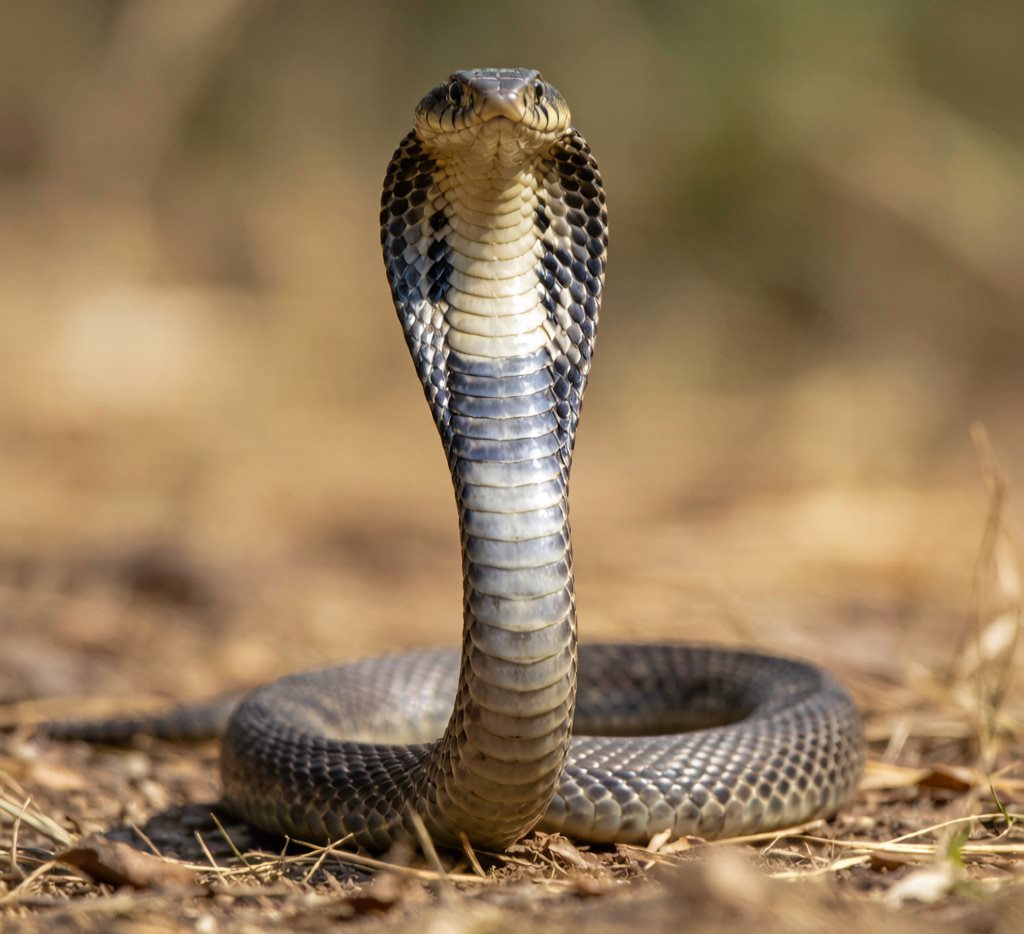
Introduction
The Indian Cobra (Naja naja), or spectacled cobra, is a famed venomous snake of the Indian subcontinent. Revered in Hindu tradition as Shiva’s vehicle and a protector, it is also feared for potent neurotoxic venom. A terrestrial elapid 1 to 1.5 meters long, it ranges across India, Pakistan, Bangladesh, Sri Lanka, and Nepal. It is a “Big Four” species causing most regional snakebites, yet stays an iconic animal woven into the region’s art, religion, and living folklore.
Taxonomy
Described by Linnaeus in 1758 as Coluber naja, it became type species of Naja (Laurenti, 1768), family Elapidae, with cobras, kraits, mambas, and corals sharing fixed front fangs and strong venom. Older works lumped Asian populations under Naja naja, but revisions now split several species, keeping N. naja s. s. to the subcontinent. Relatives include the king cobra and other venomous snakes such as the western diamondback rattlesnake once treated as close in old literature. Naja holds about thirty African and Asian species.
Physical Characteristics
Adults measure 1 to 1.5 meters, occasionally over 2. The hood forms when neck ribs spread, showing a spectacle-like mark. Color varies from yellow, brown, and gray to near black, often with light speckling. The body is muscular and cylindrical with a broad flattened head and round snout. Like all elapids it has short fixed hollow fangs injecting venom. Eyes have round pupils; scales are smooth. Juveniles show more banding. At rest it is placid but rises and flares its hood at once when disturbed, a clear warning to back away.
Habitat
Highly adaptable, the Indian Cobra lives from dense forest and wetland to farms, grassland, and crowded towns. It associates with people, hunting rats around homes, granaries, and villages. It favors shelter: termite mounds, rodent burrows, rock piles, dense grass. Found from sea level to about 2,000 meters, it tolerates dry and humid climates but avoids true deserts. Close living brings frequent encounters, underpinning its role in snakebite medicine and the traditional performances of snake charmers across the region.
Diet
Cobras eat small vertebrates, mainly rats and mice found by scent and heat sensing, plus frogs, toads, lizards, birds, and occasional snakes. As ambush and active foragers they use venom to subdue prey before swallowing it whole. Their taste for rodents ties them to homes as natural pest control. In the wild prey is bitten, envenomated, and tracked until paralyzed. Young start on frogs and shift to mammals as they grow, helping check rodent crops and the diseases that rodents can spread among people.
Reproduction
Oviparous, females lay 10 to 30 eggs in humid shelter such as termite mounds, burrows, or rot. Eggs are leathery; the female usually guards them 45 to 70 days, unusual among snakes. Hatchlings are venomous and 20 to 30 centimeters long, independent at birth. Mating is in cooler months, shaped by monsoon and temperature. Maturity comes at three to four years. Adults have predators including mongooses, birds of prey such as the golden eagle, and bigger snakes that can overpower them.
Conservation
The IUCN lists it Least Concern for its wide range and tolerance of altered land. Yet locals face persecution, roadkill, habitat change, and collection for pets, pressures shared by many reptiles including the Nile crocodile. In India it is protected by the Wildlife Protection Act and benefits from cultural reverence. Education on first aid and ecological value cuts needless kills. Common and adaptable, it needs less broad action than threatened reptiles, but monitoring and humane conflict steps matter where people and cobras meet.
Fun Facts
The hood’s spectacle mark gave the nickname. The cobra appears in the Hindu ocean-churning myth and is honored at Nag Panchami. Shy by nature, it prefers flight to fight. Charmers’ flutes do not hypnotize; the snake reacts to movement and sight. It can give warning dry bites without venom. Venom is studied for medicines, including painkillers. Hatchlings are venomous at once, and captives may exceed twenty years, making them long-lived among venomous snakes of the region.