 By st20113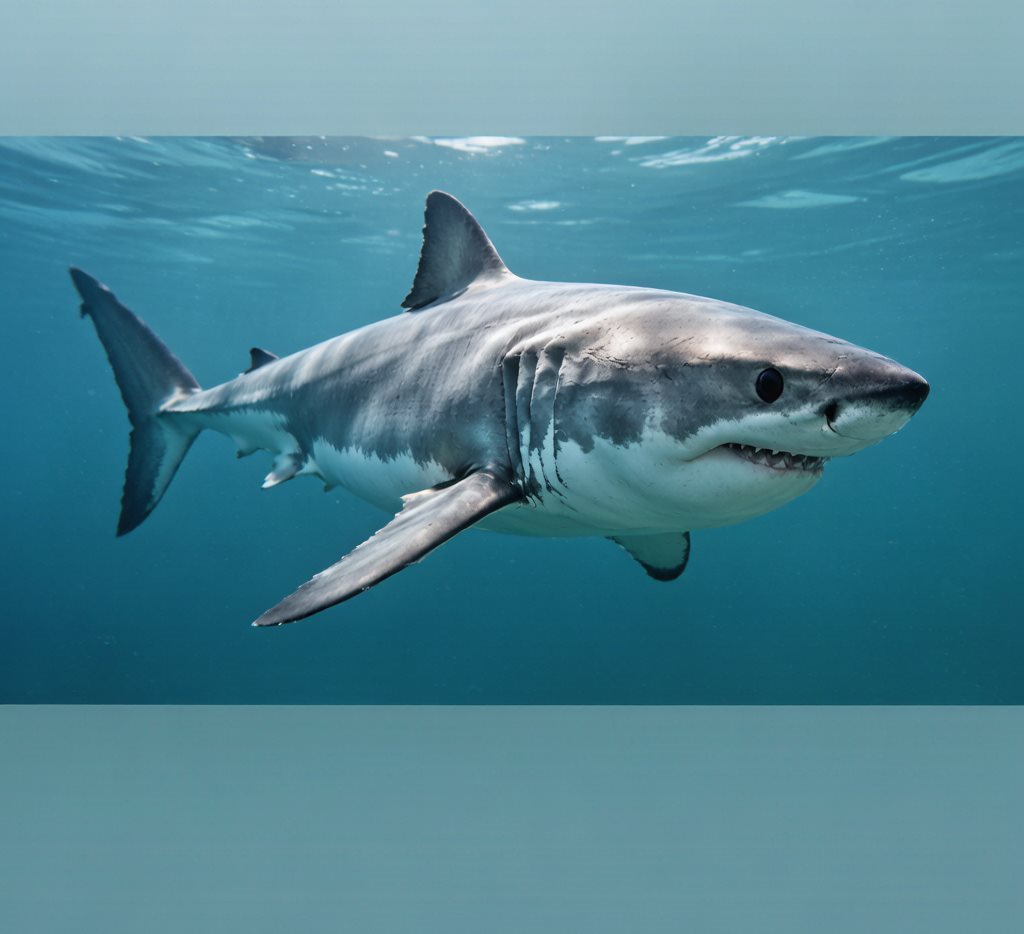
Introduction
The Great White Shark (Carcharodon carcharias) is a powerful apex predator of coastal seas, famed for size, intelligence, and hunting role. Reaching 6 meters and over 2,000 kilograms, this cartilaginous fish awes and frightens people. Despite its image, it is vulnerable and key to ecosystem balance by regulating seals, fish, and more. Found in temperate and subtropical shelves except Antarctic, it is among the most studied yet least understood large sharks in the ocean.
Taxonomy
Described by Latreille in 1798 as Carcharodon carcharias, it is the only living member of genus Carcharodon, family Lamnidae (mackerel sharks) with mako and porbeagle and relatives such as the tiger shark. Surprisingly, its closest kin are not big sharks but the filter-feeding whale shark and, distantly, extinct mega-toothed forms like Otodus megalodon. The name means “jagged tooth,” for its serrated triangles, and fossils show large lamniform lineages span tens of millions of years.
Physical Characteristics
Built for speed, its torpedo body is slate-gray above, white below, countershading that hides it from prey above and below. Adults are 3.5 to 5 meters, rarely over 6. Jaws hold rows of triangular serrated teeth to 7 centimeters, replaced continually. It has keen smell, ampullary organs sensing prey electricity, and a lateral line. A heat-exchange system keeps body warmth above water for bursts of pursuit. The crescent tail drives ambush strikes, and the bulky trunk stores energy for sudden explosive lunges at the surface.
Habitat
Great Whites inhabit temperate and subtropical coastal and offshore waters, notably off South Africa, Australia, California, Mexico, and the Mediterranean. They favor shelves, seamounts, and island coasts near seal colonies. Though linked to shallows, they migrate across basins and dive past 1,000 meters. Young stay in shallow warm nurseries; adults range wider. Seasonal moves track prey and temperature, and some show strong fidelity to feeding grounds, making certain regions critical to conserve for the whole population.
Diet
Apex and age-shifting in diet, young eat schooling fish and small elasmobranchs; adults take seals, sea lions, small whales, big bony fish, rays, and carrion. They also eat smaller cetaceans including bottlenose dolphins and pinnipeds such as the leopard seal where present. As ambush hunters they strike from below, bite to disable, then wait for weakness. Strong jaws and serrated teeth shear flesh and blubber. Energy-rich prey lets adults fast days or weeks, and they also scavenge whale falls when available in their range.
Reproduction
Ovoviviparous, embryos develop in eggs hatching in the uterus, nourished until birth. Litters are two to ten pups 1.2 to 1.5 meters, already hunting. No placenta; early embryos eat yolk, later ones may eat unfertilized eggs or siblings (oophagy). Gestation is 12 to 18 months; females breed every two to three years, slowing recovery. Males mature at 9 to 10 years, females at 14 to 16. This slow life history makes it sensitive to fishing and bycatch mortality wherever it ranges.
Conservation
The IUCN lists it Vulnerable, some regions Endangered or Critically Endangered. Once hunted as a menace, it is now protected in many nations by fishing bans, CITES trade limits, and shark sanctuaries. Threats are bycatch in gillnets and longlines, illegal finning, and nursery habitat loss. Eco-tourism aids appreciation and research, but unregulated chumming alters behavior. As it crosses borders, global protection and monitoring are essential to secure the future of this apex predator for coming generations.
Fun Facts
It detects a drop of blood in vast seawater. Teeth regenerate by the thousands over a life. The skeleton is all cartilage, lighter and flexible. Whites breach fully from water when ambushing surface seals. Ampullae of Lorenzini give a sixth sense of prey electricity. Fatal attacks are rare versus many causes. Female great whites generally grow larger than males and are thought to be more solitary, spending less time in groups at shared feeding sites. Individuals cross ocean basins, and some may live over seventy years wild, making them among the longest-lived of the large sharks.
[…] distant relative is the much larger Great White Shark. Both are cartilaginous fishes. Their skeletons are made of soft cartilage, not bone. But the two […]
[…] shark family. This family is Lamnidae. It is in the order Lamniformes. Its famous kin include the Great White Shark. They also include the shortfin mako and longfin mako. All of them have a spindle-shaped […]