 By Iris
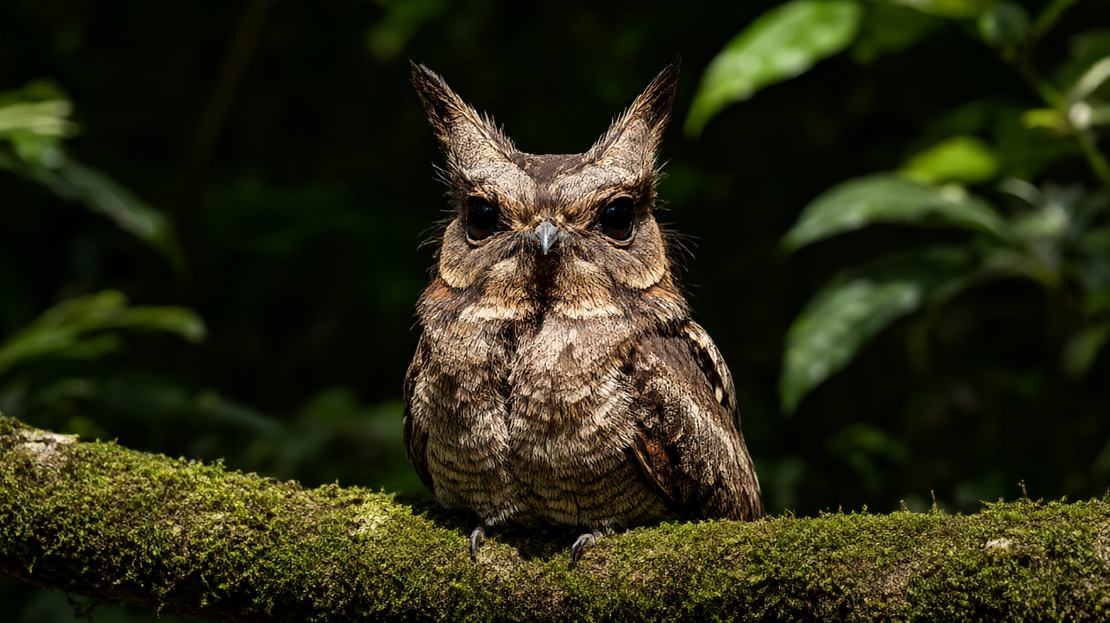
Lyncornis macrotis | Great Eared Nightjar
Species Profile · Caprimulgidae
Great Eared Nightjar
A bird sits on a branch and looks like a piece of dead wood.
Least Concern
Length
Weight
Ear tufts
Nest
Hunting
Rating
The Great Eared Nightjar
A stump that breathes
A bird sits on a branch and looks like a piece of dead wood. Two tufts rise from its head like ears. They are feathers, not ears.
The great eared nightjar hunts after dark, and it spends the day frozen in plain sight. Its call carries through the forest at dusk, and it sounds like a whistle with a bounce. Because the bird is so well hidden by day, most people hear it and never find it at all.
Family tree
Caprimulgidae, the night hunters
Its proper name is Lyncornis macrotis, one of two birds in its genus. Caprimulgidae is the family, the nightjars and nighthawks. A European Nightjar migrates thousands of kilometres each year between Europe and Africa.
Both share the flat face, the wide gape and the soft plumage. Its closest relatives live across southern Asia, and the group has changed little in a long time.
Tufts that are not ears
How to tell one
The bird runs 31 to 41 cm from beak to tail. Weight stays near 130 g. Its plumage mixes grey, brown and black in a pattern that copies bark and leaf litter.
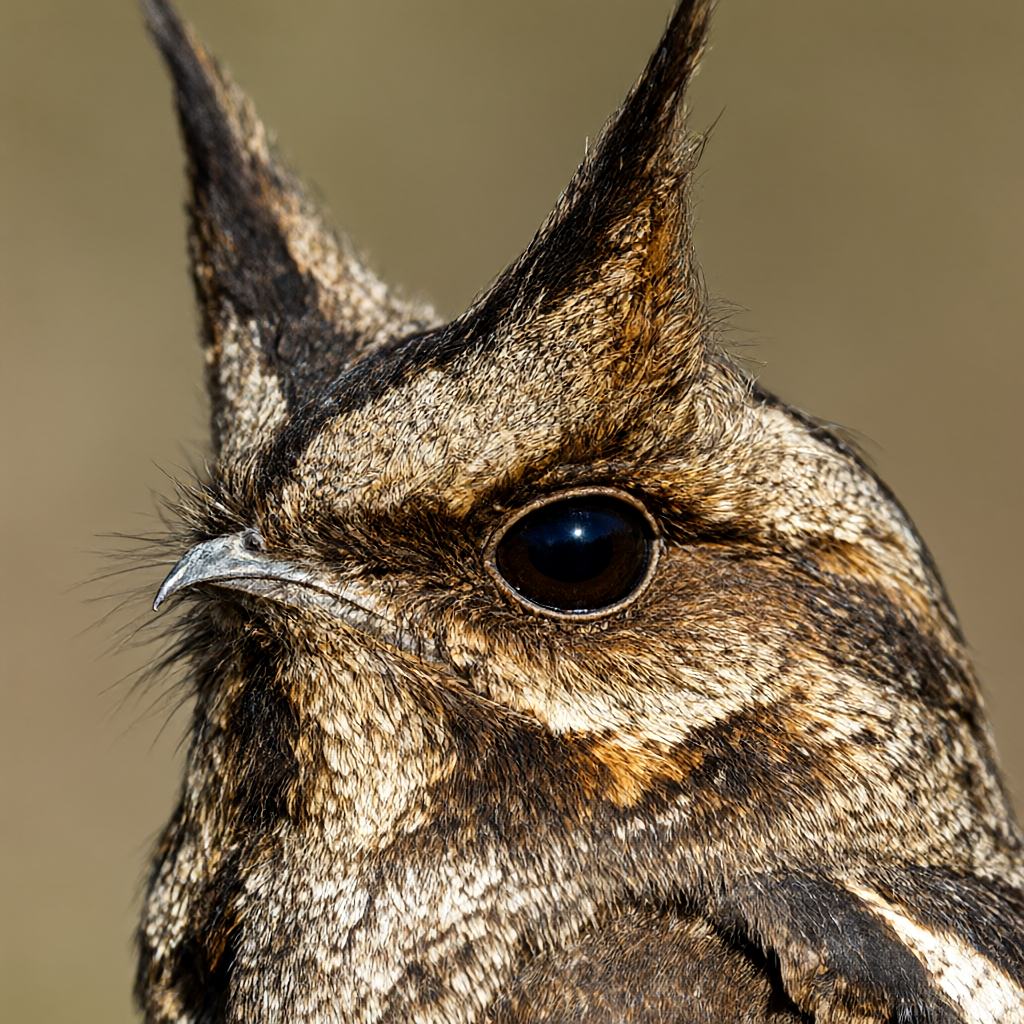
Two feather tufts stand up behind the eyes and give the head its eared look. Because the tufts break the outline of the skull, the resting bird reads as a stump. The beak is tiny, but the gape behind it opens very wide.
Stiff bristles line the mouth, and they help funnel insects inward. Cover does the rest.
1
2
3
Gaps in the canopy
Where it lives
Forest edge and clearings across Southeast Asia hold the species. Plantations, gardens and riverbanks also suit it. Because it hunts on the wing in open air, it needs gaps in the canopy rather than dense timber.
It perches along branches at mid height, usually in shade, and it returns to the same perch night after night. That perch still matters. Lowland records dominate, though some birds appear at moderate elevation.
Moths and beetles
What it eats
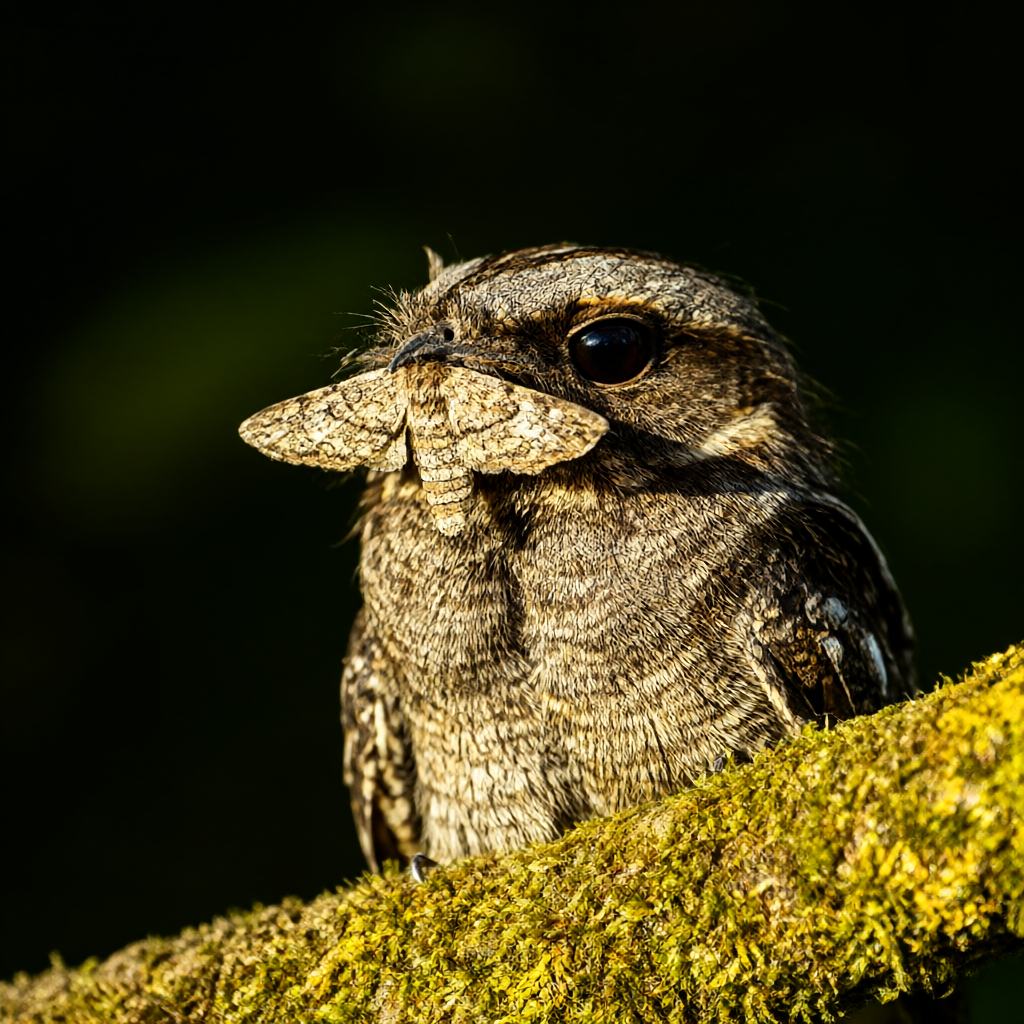
Flying insects supply the whole diet. Moths, beetles and winged termites come first. The bird hunts at dusk and again before dawn.
Because the mouth opens so wide, it can take large prey in mid flight without slowing down. Its flight is silent, and the bird turns without much effort. Most feeding happens in the hour after sunset, and the bird rests between bursts.
One egg, no nest
The breeding cycle
No nest gets built. One egg goes straight onto bare ground or leaf litter. Because the egg matches the litter, a sitting bird is almost impossible to spot.
Both parents share incubation, and the changeover happens at dusk. The chick can move within hours of hatching. Fledging takes about three weeks, and the young bird flies well from the first attempt.
Road traffic
Conservation
Red List status is Least Concern. Its range covers a huge area of Southeast Asia. Because the bird uses plantations and forest edge, it survives where many forest specialists have already gone.
Clearance still removes the old trees that provide perch sites, and a nightjar has nowhere to sit once those branches go. Nothing replaces them. Road traffic takes birds that rest on warm surfaces at night.
Side by side
How It Compares
| Trait | Great Eared Nightjar | European Nightjar |
|---|---|---|
| Family | Caprimulgidae | Caprimulgidae |
| Length | 31-41 cm | 24-28 cm |
| Migration | none | Europe to Africa |
| Nest | none | none |
| Diet | flying insects | flying insects |
| Rating | Least Concern | Least Concern |
Common misreadings
What People Get Wrong
- Not an owl, despite the eyes. The beak and gape differ. Caprimulgidae opens a mouth wider than the head suggests, and that gape catches insects instead of anything with bones.
- Not a bird with real ears on top. Tufts are feathers. The two points above the skull carry no hearing at all, and the actual ears sit lower and stay almost invisible.
- Not a nest builder in any sense. One egg goes on the ground. Leaf litter and bare soil hold the clutch, and the pattern on the shell matches the ground closely enough to defeat a searching predator.
Going further
Sources and Further Reading
Quick hits
Five things to remember
- The ear tufts are pure decoration, and the real ears sit lower on the skull.
- Its eyes reflect light so strongly that a torch beam finds birds from far away.
- The bird’s mouth opens wider than its head looks, which lets it swallow large moths.
- A nightjar can sit still for hours and never draw a second glance.
- The chick can shuffle away from the nest site on its first day.