 By st20113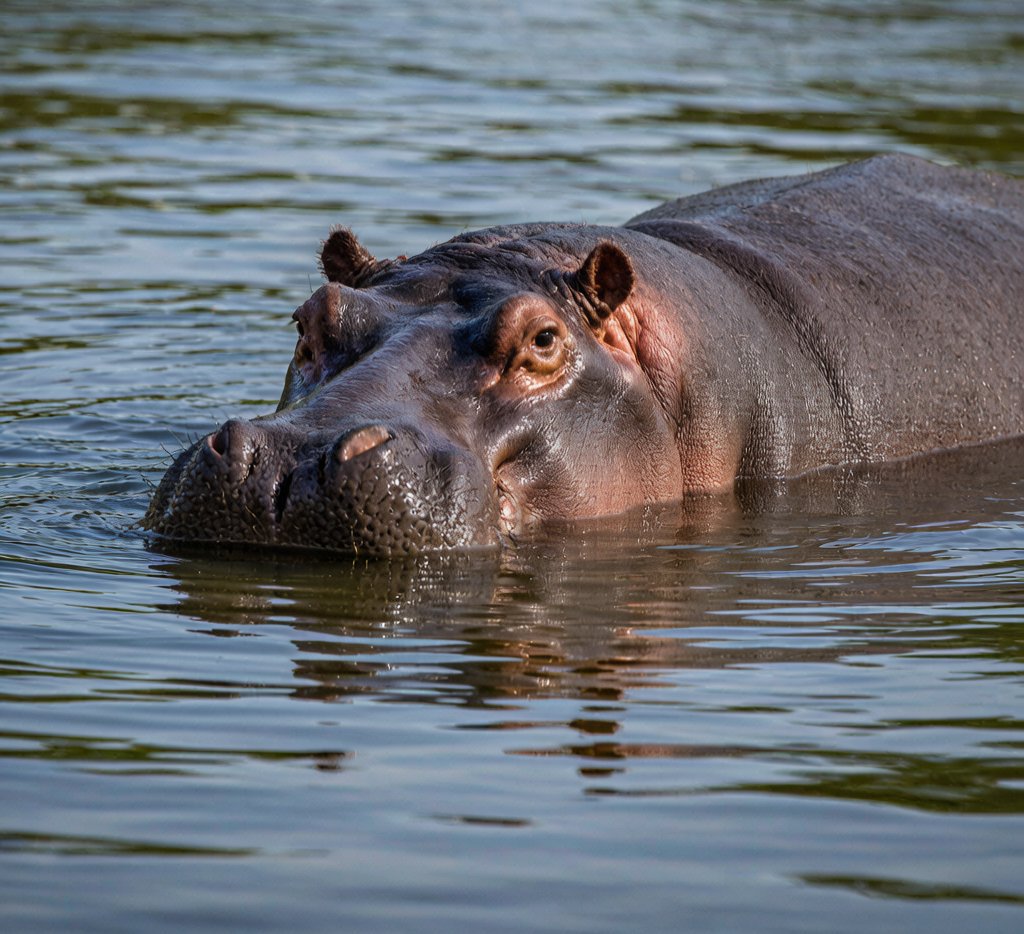
Introduction
The hippopotamus is one of the largest land animals on Earth and one of the most dangerous creatures in Africa. Despite its bulky, placid appearance, this semi-aquatic mammal is surprisingly fast, aggressive, and powerful. Hippopotamuses spend their days cooling off in rivers and lakes, emerging at night to graze on grassland. Few animals better illustrate the unexpected power hidden in a seemingly peaceful form.
Taxonomy
The hippopotamus belongs to the family Hippopotamidae, and its scientific name is Hippopotamus amphibius. The name comes from ancient Greek and means river horse, though the hippo is not related to horses. Genetic studies show that the closest living relatives of the hippopotamus are whales and dolphins, and the two groups shared a common ancestor millions of years ago. A second, smaller species, the pygmy hippopotamus, lives in the forests of West Africa. There are five recognized subspecies of the common hippopotamus, distributed across sub-Saharan Africa.
Physical Characteristics
Hippopotamuses are enormous, barrel-shaped animals with short legs and a massive head. Adult males can weigh up to 3,200 kilograms, while females are somewhat smaller. Despite their size, hippos can run at speeds of up to 30 kilometers per hour over short distances. Their skin is nearly hairless, very thick, and secretes a red, oily substance that acts as a natural sunscreen and antibiotic. The eyes, ears, and nostrils are positioned high on the skull, allowing the hippo to see, hear, and breathe while almost entirely submerged. Their canine teeth can grow to 50 centimeters in length and are used in fights between rival males.
Habitat
Hippopotamuses live in rivers, lakes, and swamps across sub-Saharan Africa, from the Nile basin to South Africa. They require water deep enough to submerge their bodies and nearby grassland for grazing. A hippo can stay underwater for up to five minutes and can even sleep underwater, rising automatically to breathe without waking. During the day, groups of hippos crowd together in pools, often with dozens of individuals packed shoulder to shoulder. When rivers dry up during droughts, hippos may travel long distances overland in search of new water sources.
Diet
Hippopotamuses are herbivores and feed almost entirely on grass. They leave the water at dusk and travel along well-worn paths to grazing grounds, sometimes walking several kilometers from the river. An adult hippo can consume up to 40 kilograms of grass in a single night. Because grass is low in nutrients, hippos have a slow metabolism and spend most of the day resting in the water to conserve energy. Despite their plant-based diet, hippos are extremely aggressive and will attack anything that threatens them, including boats and humans.
Reproduction
Hippopotamuses mate in the water, and females give birth to a single calf after a gestation period of about eight months. Births occur most often during the rainy season, when grazing is best. The newborn calf weighs around 50 kilograms and can swim almost immediately, nursing underwater. The mother keeps her calf close and often isolates herself from the herd for the first few weeks. Calves nurse for about a year but begin eating grass within months. Young males leave their mother’s group at around seven years of age and live alone or in bachelor herds until they are strong enough to challenge dominant males.
Conservation
The hippopotamus is listed as Vulnerable by the International Union for Conservation of Nature. Its population has declined because of habitat loss, drought, and hunting for meat and ivory teeth. Conflict with humans is increasing as expanding settlements and farms encroach on riverbanks, and hippos are sometimes killed in retaliation for crop damage. Conservation efforts focus on protecting wetland habitats and managing populations in national parks. The hippopotamus shares these protected rivers with many other iconic African species, including the Nile crocodile and the African elephant.
Fun Facts
Despite their huge size, hippopotamuses can float and walk along the bottom of rivers, moving in a bouncing gait. Their skin produces a natural sunscreen that appears reddish, which once led people to believe hippos sweated blood. A hippo’s jaw can open wide enough to fit a small car, and its bite force is among the strongest of any land animal. Hippos cannot swim in the usual sense; they simply walk or bounce along the riverbed. They also communicate with grunts, honks, and wheezes, and can make sounds both above and below the water. Although they look gentle, hippos kill more people in Africa each year than lions do.
[…] in several regions. Among living relatives, the wild boar is most comparable in body plan to the hippopotamus only distantly, while true close kin are other Sus species of Southeast […]