 By st20113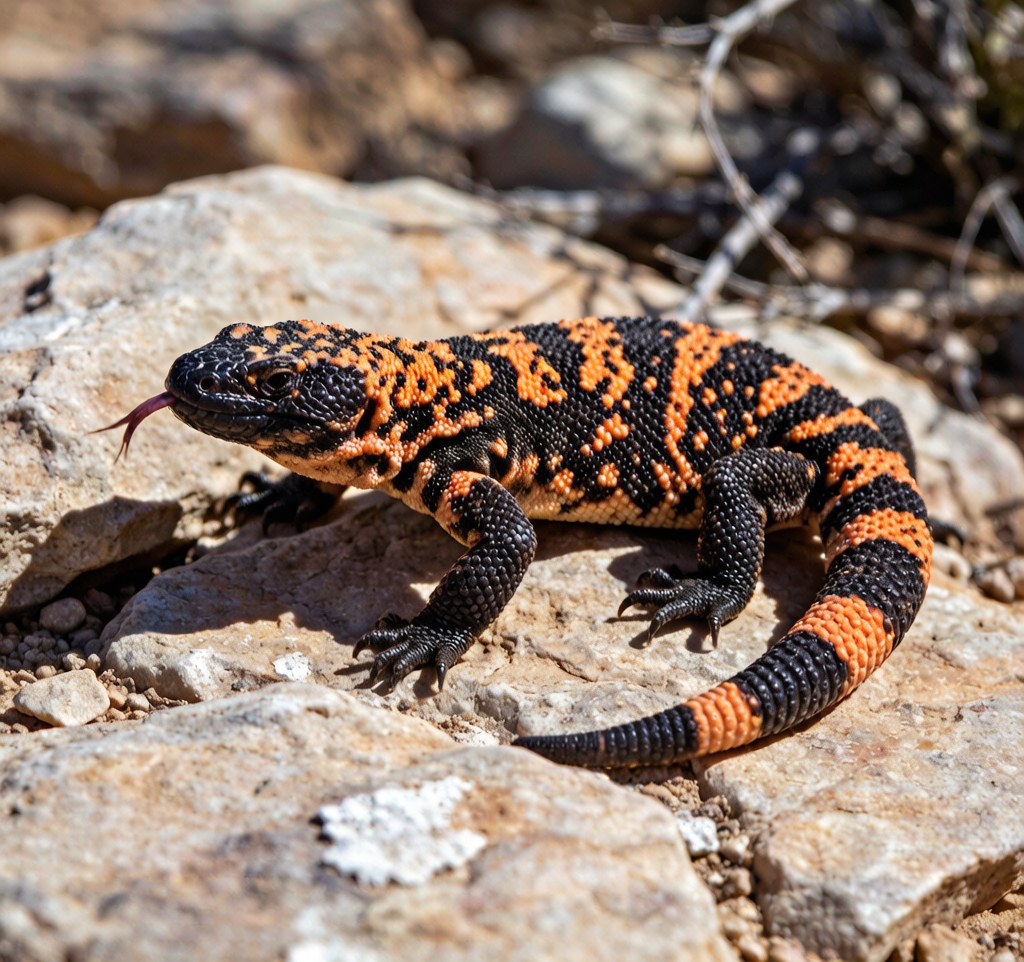
Introduction
The Gila Monster (Heloderma suspectum) is one of the most distinctive reptiles of the American Southwest, renowned as one of only two venomous lizard species found in the United States. Named after the Gila River basin of Arizona, this heavy-bodied lizard spends most of its life underground, emerging periodically to hunt prey and bask in the desert sun. Despite its fearsome reputation and potent venom — capable of causing significant pain in humans — the Gila Monster poses virtually no danger when left undisturbed in its natural habitat.
Taxonomy
The Gila Monster belongs to the family Helodermatidae, an ancient lizard family that diverged from other squamate lineages over 200 million years ago, making it one of the most basal extant groups of venomous reptiles. The genus Heloderma comprises five recognized species, with H. suspectum being the northernmost representative, divided into the Reticulate and Banded subspecies. The family represents an independent evolutionary origin of venom systems in lizards, entirely separate from those found in snakes. The Ball Python (Python regius) of Africa, though not closely related, shares with the Gila Monster the distinction of being a heavy-bodied, slow-moving predator relying on patience and ambush.
Physical Characteristics
Adult Gila Monsters measure 45 to 60 centimeters in total length and weigh 400 to 700 grams, with some individuals reaching nearly 70 centimeters. The most striking feature is the vibrant bead-like skin pattern of black and pink, orange, or yellow markings creating an aposematic warning display. The skin texture is distinctly granular, composed of osteoderms — bony plates embedded in the dermis — providing armor-like protection. Short, powerful limbs bear strong claws adapted for digging and climbing in the rocky desert environment. The thick tail functions as a fat storage organ, potentially comprising up to 20 percent of body weight during peak feeding periods.
Habitat
The Gila Monster occupies arid and semi-arid habitats across the southwestern United States and northwestern Mexico, including Sonoran, Mojave, and Chihuahuan Desert regions. Rocky canyons, foothills with dense vegetation, and scrubland providing suitable burrow sites form the core of the species’ range. Rodent burrows serve as critical retreats for thermoregulation, predator avoidance, and secure egg-laying sites. Young Gila Monsters face significant predation pressure from coyotes, raptors, and snakes, making adequate ground cover essential for juvenile survival across all habitats.
Diet
The Gila Monster diet consists primarily of bird eggs and the nestlings of ground-nesting birds, supplemented by small mammals including mice, packrats, and kangaroo rats. The high caloric value of eggs — fully digested including the shell — makes avian reproduction a critical food resource, and individual Gila Monsters may consume entire nest contents in single foraging bouts. The species is opportunistic, adjusting foraging effort in response to seasonal prey availability. Gila Monsters can consume meals equivalent to 35 percent of body weight in a single feeding event, storing energy as fat in their tails to sustain them through periods exceeding six months without feeding.
Reproduction
Gila Monsters reach sexual maturity at 4 to 5 years of age, with mating occurring in spring following emergence from winter dormancy. Males engage in ritualized combat dances, rearing up on hind legs and pushing against each other in contests that determine access to receptive females. After mating, females lay clutches of 3 to 13 eggs in July or August, depositing them in burrows dug 10 to 15 centimeters below the soil surface. Eggs incubate through the autumn, with hatchlings emerging in late October or November after a 4 to 5 month incubation — one of the longest of any North American lizard. Like the Green Iguana, Gila Monsters are long-lived, with wild individuals surviving 20 to 30 years.
Conservation
The Gila Monster is listed as Near Threatened and is fully protected under state wildlife regulations in Arizona, Nevada, Utah, and New Mexico, where collection and harassment are strictly prohibited. Habitat loss from urban development, agricultural expansion, and energy infrastructure represents the primary ongoing threat across its desert range. Road mortality is significant given the species’ slow movement and tendency to cross roads. Climate change may reduce burrow availability and alter prey timing in ways that negatively impact reproduction.
Fun Facts
The Gila Monster’s venom contains exendin-4, a peptide that has been synthesized into the drug exenatide, used to treat type 2 diabetes — a striking example of venom research yielding significant medical applications. Despite its fearsome reputation, no authenticated human fatalities from Gila Monster bites have been recorded in modern medical literature. The species produces a surprisingly loud hissing vocalization when threatened, an effective warning signal against predators. The Western Diamondback Rattlesnake (Crotalus atrox) shares the Gila Monster’s southwestern range and similar ecological niche as a large venomous predator.