 By st20113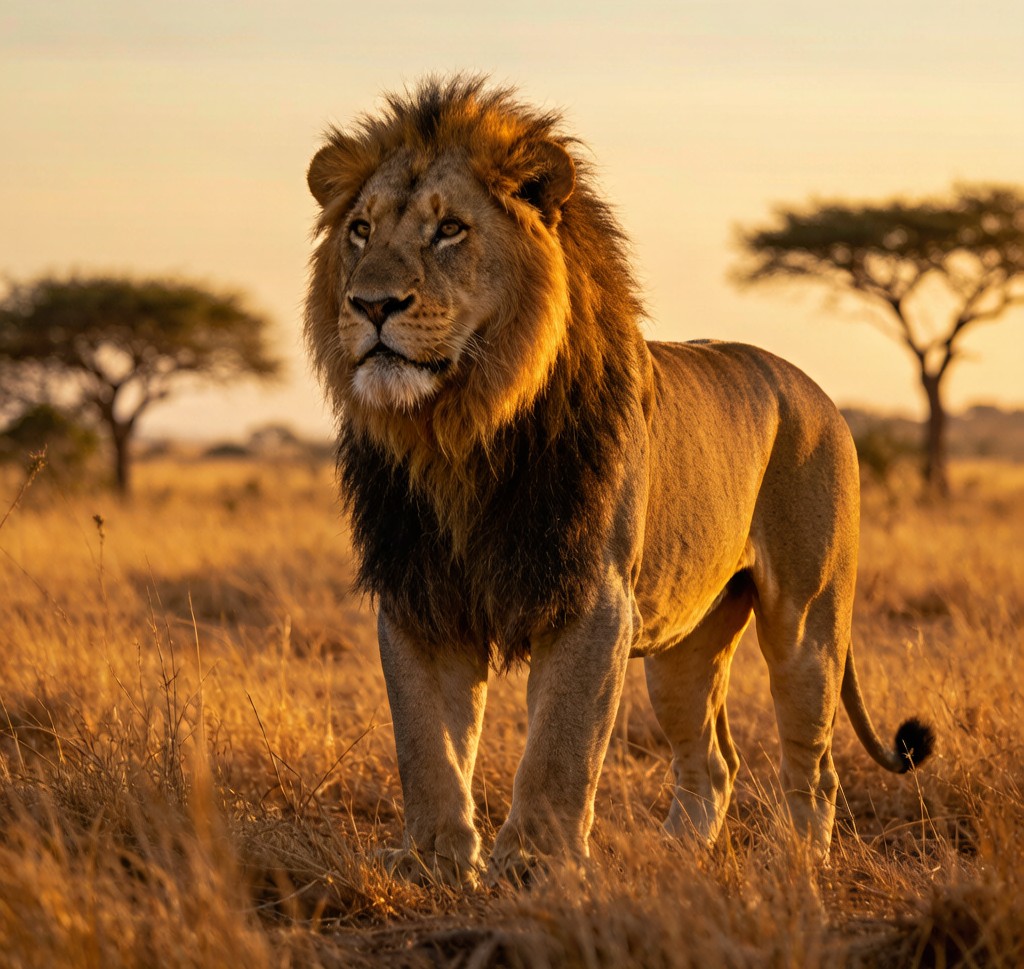
The African lion (Panthera leo) — known as the “king of beasts” across cultures and continents — is the second-largest living cat species in the world and the most socially complex of all the big cats. A powerful apex predator occupying a critical position at the top of the food chain, the African lion inhabits the savannas, grasslands, and open woodlands of sub-Saharan Africa. Unlike most other felids, which are solitary hunters, the African lion lives in family groups called prides — typically consisting of related females, their cubs, and a small number of resident males — that can number from three to more than 40 individuals. This social structure is among the most complex of any carnivore species and represents a remarkable evolutionary adaptation to life in the African savanna, where cooperative hunting allows lions to bring down the large, dangerous prey animals that form the bulk of their diet. The deep, resonant roar of a lion — which can be heard from more than eight kilometres away — serves as a territorial declaration and a social signal that coordinates the movements of pride members across the vast, open landscapes they inhabit.
## Physical Characteristics
The African lion is a large, powerfully built cat, with adult males typically weighing between 150 and 250 kilograms and measuring 1.7 to 2.5 metres in body length, not including the tail. Females are considerably smaller, weighing between 120 and 180 kilograms. The most distinctive feature of the adult male is the mane — a luxurious collar of thick, shaggy hair surrounding the head and neck — which varies in colour from blonde to dark brown and in size from a modest fringe to an impressive full mane that covers the back of the head and neck. The mane serves multiple functions: it provides protection during fights with rival males, signals testosterone levels and fighting ability to potential rivals and mates, and may also help regulate body temperature. Lions have a uniformly tawny to sandy-coloured coat, with faint darker spots on the cubs that typically fade as they mature. The skull is broad with powerful jaw muscles, and the tongue is covered in backward-facing keratinised papillae that are used both to scrape meat from bone and to groom the coat effectively. The forelimbs are extraordinarily muscular and equipped with large, retractable claws that can measure up to 38 millimetres in length.
## Habitat and Distribution
African lions historically ranged across the entirety of sub-Saharan Africa and into parts of North Africa and the Middle East. Today, African lions occupy less than a quarter of their historical range and are found in isolated populations scattered across 27 African countries, from the semi-desert scrublands of Namibia and Botswana in the southwest to the tall grass savannas of Tanzania and Kenya in the east, and from the humid forests of Central Africa to the arid Sahel zone on the southern edge of the Sahara. The largest and most stable populations are found in eastern and southern Africa, particularly in the Serengeti-Mara ecosystem of Tanzania and Kenya, the Okavango Delta in Botswana, the Kruger National Park in South Africa, and the Etosha National Park in Namibia. Lions are absent from the rainforests of the Congo Basin and have been extirpated from most of West Africa. They occupy a wide range of habitats provided there is sufficient cover for daytime resting and adequate access to water and large prey, from sea level to over 3,000 metres altitude in the Ethiopian Highlands.
## Diet and Behavior
African lions are opportunistic predators that hunt a wide variety of prey species, from small rodents and reptiles to the enormous Cape buffalo and young giraffes. The staple prey of most lion populations consists of medium to large ungulates — principally wildebeest, zebra, gazelles, impala, warthogs, and the various antelope species that share the African savanna. Females do the majority of the hunting in most prides, using a coordinated, cooperative approach that combines stealth, speed, and teamwork to outmanoeuvre prey. The typical hunting strategy involves encircling or ambushing a herd, driving selected prey animals toward hidden members of the pride. After a successful kill, lions may consume up to 30 percent of their body weight in a single meal, then go without eating for several days. Male lions, particularly those in their prime, also hunt individually and are capable of killing very large prey including adult Cape buffalo and even young elephants. Lions spend approximately 20 hours of each day resting and sleeping, becoming active in the cooler hours of the late afternoon and night.
## Conservation
African lions are classified as Vulnerable on the IUCN Red List, with population estimates of between 20,000 and 30,000 individuals remaining in the wild — down from an estimated 100,000 or more just a few decades ago. The primary threats to African lion populations include habitat loss and fragmentation as agricultural and pastoral expansion encroaches on lion habitat, human-wildlife conflict resulting in retaliatory killings of lions by livestock herders, prey depletion caused by bushmeat hunting, and in some areas, trophy hunting that removes individuals and disrupts social structures. Lions also face disease threats, including canine distemper transmitted from domestic dogs. Several large, well-managed protected areas in eastern and southern Africa still support viable populations, and community-based conservation programmes that provide economic benefits to local people living alongside lions have shown promising results in reducing conflict killings.
where unrelated species develop similar traits to exploit similar ecological niches. Unlike the African lion, which hunts large prey, numbats specialize on tiny termites. Their closest relatives include other
reached within one to two years. These reproductive habits differ significantly from those of the African lion or other
[…] Old World. It is classified within the family Felidae and shares a recent common ancestry with the African lion, Panthera leo, of the savannas. Closer relatives adapted to cold mountain habitats include the snow […]
[…] range, they are often observed alongside other large African wildlife, including African elephants, African lions, and cape […]
[…] including savannas, grasslands, scrub forests, and rocky mountainous regions. Unlike the African Lion, which prefers open savannas, Striped Hyenas thrive in more rugged landscapes where they can find […]
technique allow them to catch prey that larger predators often overlook. Unlike the more famous African Lion, servals hunt alone and rely on stealth and agility rather than raw