 By st20113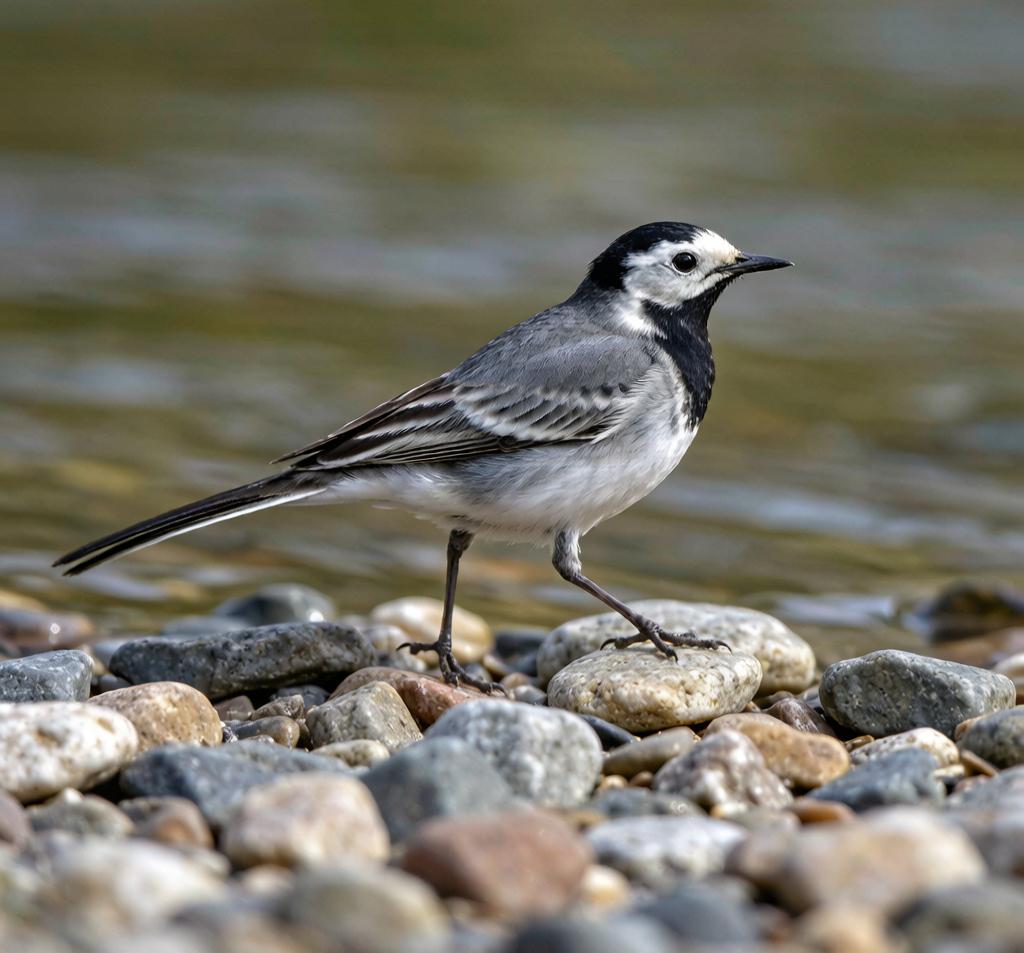
Introduction
The white wagtail is one of the most familiar and charming birds across its vast Eurasian range, recognized by its black-and-white plumage and characteristic tail-bobbing walk.
It breeds from Iceland and western Europe eastward across the Palearctic, preferring open habitats near water such as riverbanks, lake shores, coastal flats, and recently cultivated fields.
The species has also adapted well to urban environments, nesting under bridges, in building crevices, and on industrial structures throughout cities.
Its diet of flying insects, beetles, and fly larvae makes it a valuable natural pest controller near water treatment facilities and agricultural areas.
Like the common blackbird and the sedge warbler, it is an adaptable species that thrives in both natural and human-modified landscapes.
Taxonomy
The white wagtail belongs to the family Motacillidae, a cosmopolitan family of slender, ground-feeding songbirds that includes wagtails, pipits, and longclaws.
Its scientific name Motacilla alba is Latin for white moving tail, a direct reference to the constantly bobbing tail that gives the group its common name.
The genus Motacilla contains nine wagtail species, all characterized by long tails, upright posture, and a distinctive gait.
The white wagtail forms a species complex with the white-browed wagtail of South Asia and the black-backed wagtail of East Asia, with at least 10 recognized subspecies.
Physical Characteristics
The white wagtail is a slender bird, 16 to 19 centimetres in length with a wingspan of 25 to 30 centimetres and a weight of 17 to 25 grams.
The nominate subspecies has a black crown and nape, white cheeks and ear coverts, and a white wing panel contrasting with the clean dark grey back.
The throat and breast are black, extending as a distinct gorget down the breast, contrasting with the pure white lower breast, belly, and vent.
The most distinctive behavioural trait is the near-constant tail-bobbing while walking along shorelines and open ground.
Habitat
The white wagtail inhabits open, well-lit landscapes with short vegetation and exposed ground, especially near freshwater and coastal environments.
Prime habitats include river and lake margins with gravelly or sandy shores, coastal beaches and tidal flats, recently ploughed fields, and urban environments.
The species is highly tolerant of human presence and thrives in cities and industrial areas, nesting under bridges, behind facade panels, and in building crevices.
Migratory populations winter in the Mediterranean basin, North Africa, and South Asia, where they occupy similar open habitats.
Diet
The white wagtail is an active ground forager, walking or running along shorelines, mudflats, short grass, and paved surfaces to pick invertebrates from the surface.
Principal prey includes flies and midges, beetles, mayflies, stoneflies, small caterpillars, spiders, and freshwater crustaceans encountered along water margins.
Its relatively long legs allow it to wade in shallow water, and it is an agile swimmer for a passerine, pattering across the surface to capture insects from emergent vegetation.
During migration and winter, when flying insects become less available, it supplements its diet with small seeds and plant material picked from mud and short vegetation.
Reproduction
Breeding pairs form on arrival at breeding grounds in March or April, with monogamous pair bonds maintained throughout the single to triple annual broods.
Nests are constructed in dark, enclosed sites including building crevices, bridges, stone walls, and dense vegetation, built by the female from grasses, leaves, and moss.
Clutches of four to six greyish eggs with fine speckling are incubated by the female for 11 to 14 days, during which the male feeds her at the nest.
Both parents feed the nestlings on a diet of small insects and larvae for 11 to 16 days until fledging, with families regrouping after the young leave the nest.
Conservation
The white wagtail is assessed as Least Concern by the IUCN, with a global population estimated at 10 to 100 million individuals and a wide breeding range spanning Europe to East Asia.
It is protected under the EU Birds Directive and national legislation across its range.
Primary threats include water pollution affecting invertebrate prey populations, loss of gravelly river margins through river engineering, and changing agricultural practices.
Climate change is driving northward range expansion in some regions as warmer springs allow earlier arrival and longer breeding seasons.
Fun Facts
The white wagtail’s habit of following cattle to capture disturbed insects has earned it the alternative name of shepherd bird in some European regions.
In Iceland, where the species is a widespread breeding bird, it has colonized a remarkable diversity of habitats from coastal cliffs to geothermal areas.
The species is one of the few passerines that regularly swims voluntarily, pattering across shallow water to capture insects.
European-ringed individuals recovered thousands of kilometres south in their wintering grounds were instrumental in early understanding of bird migration.