 By st20113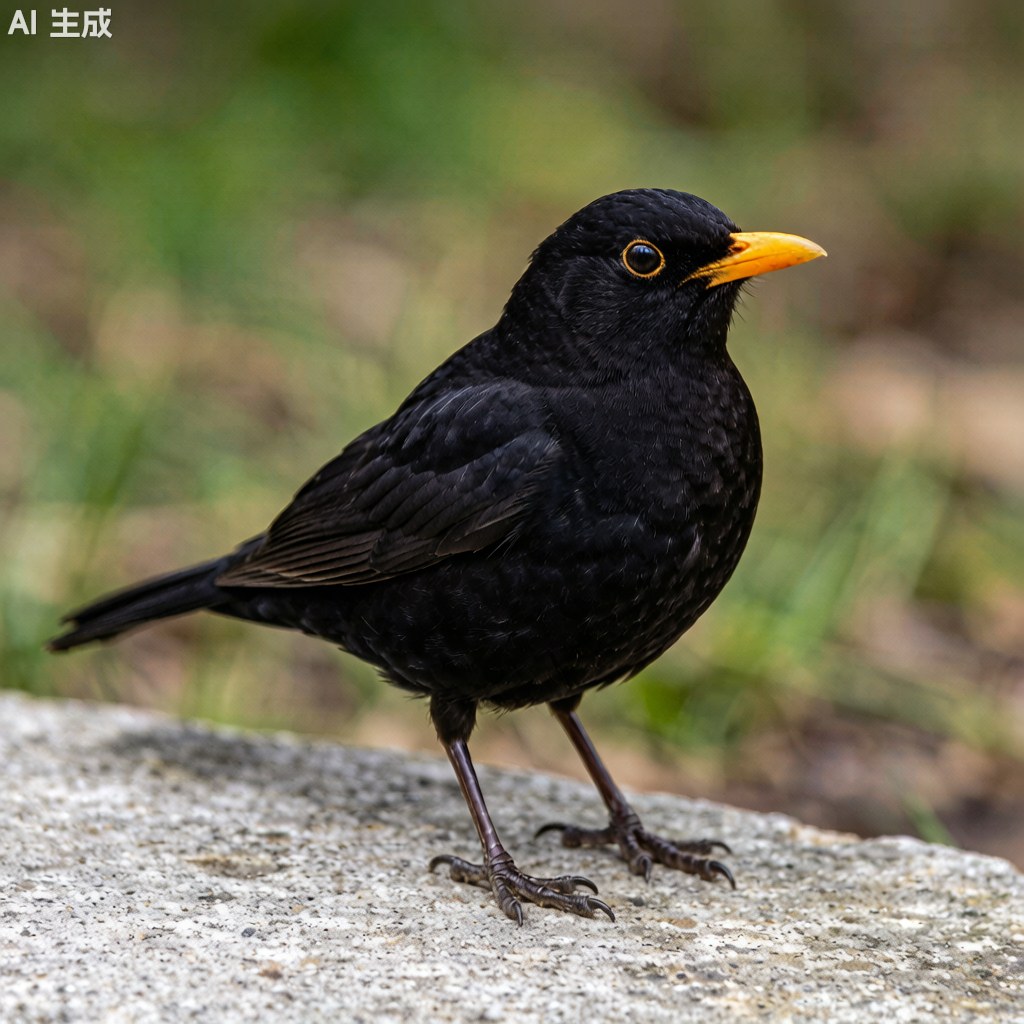
Introduction
The common blackbird, scientifically Turdus merula, is one of the most familiar songbirds of Europe, North Africa, and western Asia. The male is instantly recognizable by his glossy black plumage and bright orange-yellow eye-ring and bill, while the female is plain brown. A regular visitor to gardens, parks, and woodlands, the blackbird fills spring mornings with a rich, flute-like song. Its adaptability has made it one of the continent’s most numerous and familiar birds.
Taxonomy
The common blackbird is a member of the thrush family, Turdidae, within the genus Turdus, which includes many similar songbirds. It is not closely related to the Eurasian magpie, though both are clever, adaptable birds, as this species is the quintessential European thrush. Several subspecies occur across its range, varying slightly in size and shade, but all share the melodious voice that has earned the bird a place in literature and folklore.
Physical Characteristics
Adult males measure 23 to 29 centimeters in length with a wingspan near 34 to 38 centimeters, weighing 80 to 125 grams. Males are uniformly black with a golden eye-ring and yellow bill; females and juveniles are dark brown with streaked underparts and a browner bill. The blackbird has a slender body, a medium-length tail, and strong legs suited to hopping across lawns. Its alert posture and upright stance make it easy to spot probing the soil for food.
Habitat
Blackbirds thrive in a wide variety of wooded and open habitats, including deciduous and mixed forests, hedgerows, orchards, parks, and suburban gardens. They prefer ground with cover nearby where they can forage and escape predators. During winter, some northern populations migrate south, while many in milder regions stay year-round. The availability of berry shrubs and open lawns for feeding strongly influences where pairs settle and raise their young.
Diet
The blackbird’s diet shifts with the seasons. In spring and summer it eats earthworms, insects, and other invertebrates gleaned from moist soil, often following gardeners to snatch disturbed worms. In autumn and winter it switches to fruits and berries such as rowan, holly, and ivy. It forages by running, stopping, and cocking its head to listen for prey underground. Occasionally it takes small amphibians and scraps, showing typical thrush opportunism.
Reproduction
Breeding begins in early spring. The female builds a neat cup nest of grass, twigs, and mud, usually low in a shrub, hedge, or climber. She lays three to five pale blue-green eggs speckled with reddish brown and incubates them for about thirteen days. Both parents feed the nestlings, which fledge in roughly fourteen days. Blackbirds commonly raise two or three broods in a single season across their range. In towns, nests are sometimes built on building ledges, planters, or wall climbers. First-year birds occasionally help parents feed later broods, a cooperative habit unusual among European thrushes. This flexibility in nesting and cooperative care helps blackbirds maintain high breeding success even in busy cities. Their readiness to exploit new opportunities explains their continued abundance.
Conservation
Classified as Least Concern, the common blackbird is abundant across Europe with hundreds of millions of individuals. It benefits from gardens, parks, and agricultural edges, though intensive farming and pesticide use can reduce insect food locally. Cats, hawks, and collisions take a toll, but high reproductive rates sustain populations. The species remains a beloved and widespread symbol of the European spring. Ongoing citizen-science counts rely on its familiar song to track broad ecological health across the continent.
Fun Facts
The male blackbird sings one of the most beautiful songs of any garden bird, often from a rooftop or tree at dawn. He will fiercely defend his territory by chasing off intruders with loud chattering calls. Blackbirds can crack open snails by smashing them against a favorite “anvil” stone. They sometimes use leaves as tools to carry food. In many cultures the sight of a blackbird is linked to seasonal change and renewal.
[…] and singing perches. Migratory habitat includes wetlands and gardens along migration routes. The common blackbird also inhabits hedgerows but occupies a different ecological […]
[…] duller olive-brown. The species has a white wing bar and outer tail feathers visible in flight. The common blackbird is larger and uniformly dark by […]
[…] vary from white to chestnut. The bill is straight and powerful, adapted for hammering seeds. The common blackbird shares woodland habitats but forages on the […]
[…] trait. The species has a fine, slightly downcurved bill adapted for gleaning insects. The common blackbird shares garden habitats but is much […]
[…] the common blackbird and the sedge warbler, it is an adaptable species that thrives in both natural and human-modified […]
[…] to challenging environments, from high-altitude foraging to seasonal hibernation or migration. the common blackbird frequently coexist with the common raven across shared landscapes, creating complex ecological […]
[…] to challenging environments, from high-altitude foraging to seasonal hibernation or migration. the common blackbird and the common cuckoo frequently coexist with the eurasian hoopoe across shared landscapes, […]
[…] to challenging environments, from high-altitude foraging to seasonal hibernation or migration. the common blackbird and the kingfisher frequently coexist with the white-throated dipper across shared landscapes, […]
[…] tails for ambush hunting in cover. As a bird-hunting specialist it overlaps ecologically with the Common Blackbird, one of its many garden prey […]
[…] long grouped with them in popular accounts. Its close ecological counterpart in gardens is the Common Blackbird, which shares its tolerance of human […]
[…] as some other farmland birds have declined. For readers interested in other woodland birds, the Common Blackbird shares many of the same […]
[…] body of a spider, and it has only two eyes set on a small raised turret. Predators such as the common-blackbird-turdus-merula take harvestmen from foliage, and the order as a whole is one of the most diverse of the […]
[…] lives in the same rough grasslands and hedgerows as the Common Blackbird, which forages for the snails the glow-worm eats, and its habitat is also used by the Red Fox and […]
[…] such as the common-blackbird-turdus-merula that hunt around buildings, along with toads and ground beetles, will take spiders, so the Giant […]