 By st20113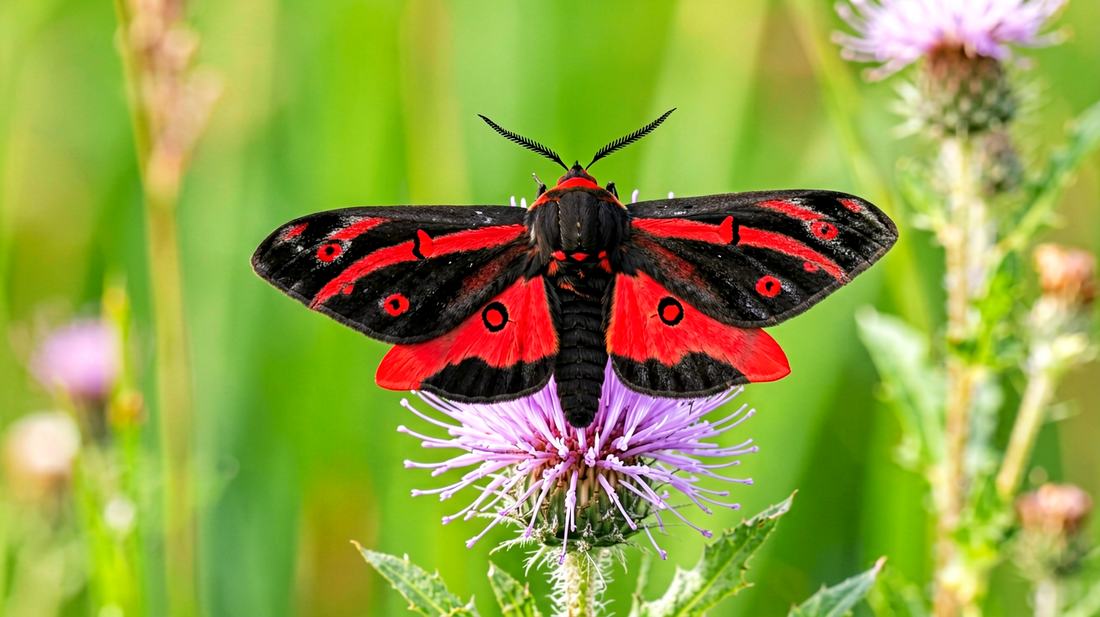
Tyria jacobaeae | Cinnabar Moth
Species Profile · Erebidae
Cinnabar Moth
A red-and-black day-flying moth whose yellow-banded caterpillars strip ragwort, and which has faded from much of northern and western Europe.
Not assessed by IUCN
Range
Wingspan
Broods
Eggs
Caterpillar
The red and black moth
The cinnabar moth
The cinnabar moth is a small moth that flies at night. Its black front wings carry a bold red stripe and two red spots. Its back wings are a solid, bright scarlet. Its English name comes from cinnabar, the red mercury ore once used as a colour. Both the adult and the young are brightly coloured. The colours are not for show.
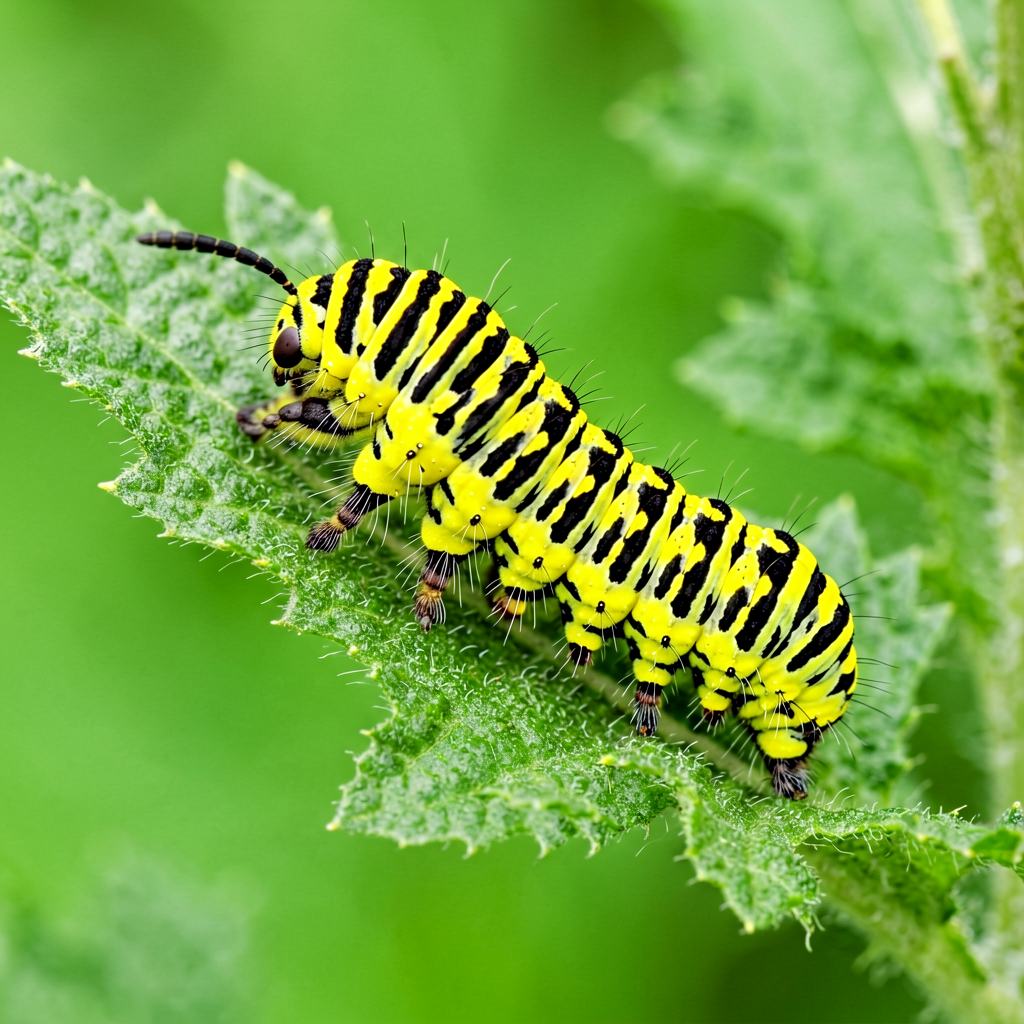
The young feed on ragwort and store the plant’s poison. This makes them toxic and bad to taste for birds. They are banded bright yellow and black. They feed in the open by day. They are safe by their bad taste rather than by hiding. Cinnabar moths live across Europe and much of mild Asia.
They were taken to North America, Australia and New Zealand to control ragwort. Ragwort is poison to farm stock. In Britain the species has grown much rarer in recent decades. This is largely because ragwort was cleared from where it once grew in plenty.
Family tree
Among the tiger moths
The cinnabar moth is in the order Lepidoptera. Its family is Erebidae. Its genus is Tyria. It is the only species in that genus. Its best-known kin in that order is the Monarch Butterfly. The monarch is the classic case of warning colour.
It too turns poisonous by eating a toxic plant. It shows this with bright orange and black wings. Both species store plant poisons. Both are brightly coloured. Hunters that learned the lesson shun them. The monarch is a large day-flying butterfly that migrates thousands of kilometres.
The cinnabar is a small night moth with a local life. The genus Tyria sits in the Erebidae. That is one of the largest moth families. It holds the tiger moths and many bright day-flying species. The cinnabar was named by Carl Linnaeus in 1758. Its name refers to Jacobaea, the plant group of common ragwort, its main food.
Streaks, spots and stripes
How to identify one
An adult cinnabar moth has a wingspan of 32 to 42 millimetres. It has a slim, dark body. The front wings are dark grey-black. A long red streak runs along the front edge. Two red spots sit near the tip. The back wings are all bright red with a thin dark edge. A few moths are yellow or orange instead of red. These forms show up at low rate in most groups.
The body and legs are dark. The feelers are thin and thread-like. The moth rests with wings flat over its back. Only the black front wings show. It looks like a plain dark moth until it shows its back wings when disturbed. The young stage is the more familiar one. It grows to about 25 millimetres. It has a bright yellow body crossed by bold black bands.
It is covered in thin hairs. The pupa is dark reddish-brown. It lies in the soil or leaf litter. The species spends the winter there. Adults fly at night from May to August. They are drawn to light. There is one brood a year in northern Europe. There are two or more in the south.
1
2
3
Ragwort country
Where it lives
The cinnabar moth is found across Europe. It ranges through much of mild Asia as far as Siberia. It was taken to North America, Australia and New Zealand as a control agent. Its range follows its food plant. It is most common in open, disturbed ground where common ragwort grows. Such places are rough grass, road sides, railway banks, waste ground, sand dunes, woodland clearings and poor pasture.
It is rare on intense farms and in thick woodland. It is absent from wet peat land and high hills. In Britain it was once common wherever ragwort grew. Since the 1970s its range and numbers have shrunk. It is now local and fading over much of England. It stays more common in parts of Wales, Scotland and Ireland.
Ragwort is poison to horses and cattle. It is fought hard, so the moth suffers. Adults travel several kilometres. Some years they reach the coast as migrants. Numbers bounce back fast when ragwort is left to grow. A few are carried by chance with hay and plant matter.
What it eats
A diet of ragwort
The cinnabar moth is a picky feeder. In Europe its young eat almost only common ragwort. They also eat a few close kin such as hoary ragwort and groundsel. Young ones feed in groups on the underside of leaves. They eat the flesh between the veins. As they grow they spread out. They eat whole leaves, flowers and seeds.
A heavy outbreak can strip a stand of ragwort in a few weeks. That is why the moth was sent to lands where the plant is a weed. The young one’s main guard is chemical. Ragwort holds pyrrolizidine alkaloids. These harm the liver of grazing animals. The young one takes these and stores them. It becomes both poison and bitter.
Its yellow and black bands tell this to birds. Birds that tried one cinnabar young usually avoid them after. Adults take nectar but do little harm. They keep some of the plant poison. A few special hunters eat them, such as ground beetles. Wasps and flies prey on the young. Common birds leave them alone.
Thirty to sixty eggs
One brood a year
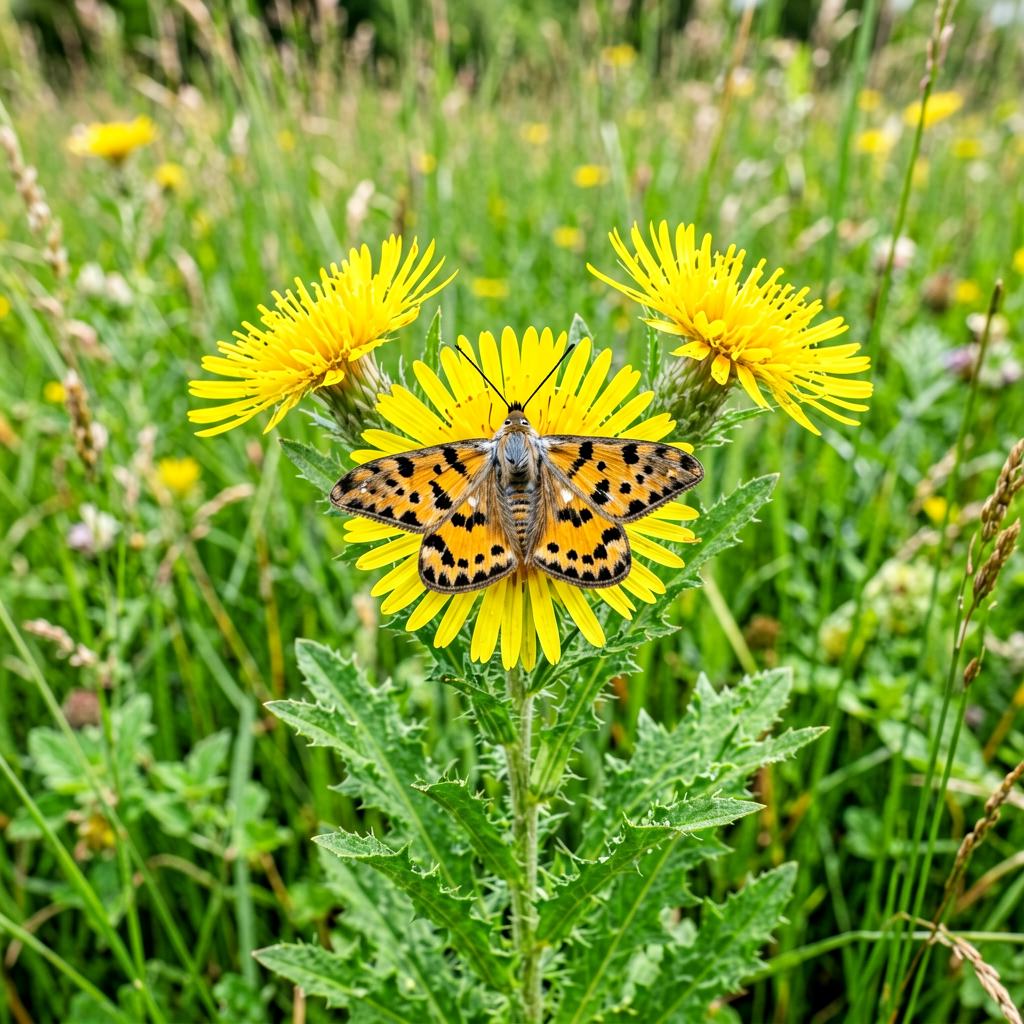
Cinnabar moths have one brood a year in northern Europe. They have two or three in southern Europe. Adults leave their pupae in late spring and early summer. Females give off a scent that draws males. After mating they lay eggs in groups of thirty to sixty. The eggs go on the undersides of open, unshaded ragwort leaves. A single female can lay several hundred eggs in all. She spreads them over several batches and plants.
The eggs hatch in one to two weeks. The young feed together for the first days. Then they spread across the plant. They pass through several sheds of skin. They reach full size in about a month. By then they are plain yellow-and-black young out on leaves and flower heads. When ready to form a pupa, usually in July or August, they drop to the ground. They dig into soil or leaf litter.
They spin a weak silk case. The pupa is the winter stage. In Britain it stays so for up to ten months. Adults appear the next May. Some pupae rest for two winters. This lets a group survive a year when the food plant fails.
Ragwort pulled, moths lost
An insect in retreat
The cinnabar moth has no set rank. It is not protected. Yet it is fading across much of northern and western Europe. It is one of many once-common insects that have grown rare in the last fifty years. The reasons tie to the plant it needs. Ragwort has been pulled from pastures, road sides, railways and waste ground. It is poison to farm stock.
In some lands its growth on farms is a legal duty to control. Each pull takes away the moth’s only food plant. More intense farming, grass re-sowing, wide weed spray and the tidy-up of road sides and waste land all play a part. The moth mates readily. It can settle new ragwort stands fast. Its fall is not final. Numbers often return when ragwort is left to grow for a few years.
The species is also hurt by light pollution. That draws moths from their host plants. It is hurt by the broad fall in night insects across Europe. Care is indirect. It means keeping rough, undisturbed ground with ragwort and other wild flowers. It means leaving some road sides and field edges uncut. Its use overseas as a control agent has made its life well studied.
Quick hits
Five things to remember
- Both the adult moth and the young are brightly coloured because they are poison, not because they hide.
- The young take ragwort’s liver-harming alkaloids and store them as a chemical guard.
- The adult rests with only its black front wings showing and shows its scarlet back wings only when disturbed.
- It was taken to North America, Australia and New Zealand on purpose to control ragwort.
- The species spends up to ten months of the year as a pupa buried in the soil.
[…] six-spot burnet shares the family with the cinnabar moth. That moth is larger and bolder. It lives on heather and ragwort. Its young feed on a single plant […]