 By st20113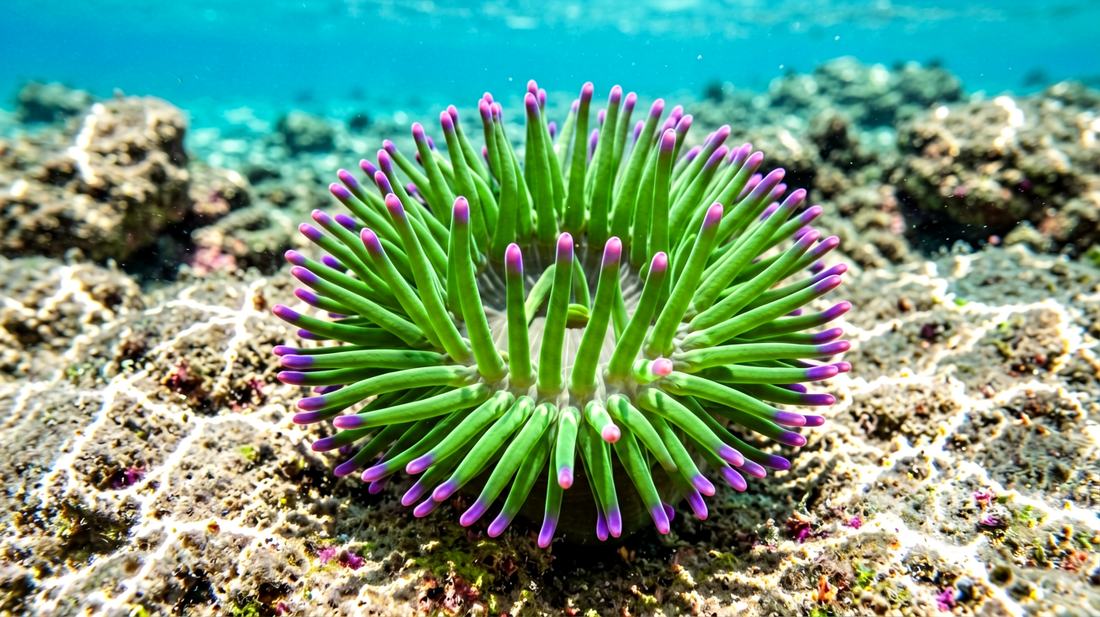
Anemonia viridis | Snakelocks Anemone
Species Profile · Actiniidae
Snakelocks Anemone
A green sea anemone with long purple-tipped tentacles that stays open in daylight and turns pale when warm seas cost it its algae.
Not assessed by IUCN
Range
Column
Tentacle crown
Tentacle tips
Reproduction
An anemone that stays open
The snakelocks anemone
The snakelocks anemone is a bright green sea anemone. It has long, waving tentacles tipped violet or pink. It is common in south-western Britain, Ireland and the Mediterranean. It lives in sunny, shallow water. Its colour comes from tiny algae inside its tissues. These algae make food from sunlight. Without them the anemone cannot live long.
The tentacles are full of stinging cells. Anything small that touches them is paralysed. It is then passed to the mouth. The sting cannot hurt a person. It causes only a mild tingle on thin skin. Unlike many anemones it can move slowly over rock. A detached one can swim by lashing its tentacles.
It releases eggs and sperm into the water. It can also split itself in two lengthwise. It can survive being buried in sand for days. Warming seas are a growing worry. The algae are sensitive to heat. When lost the anemone turns pale and may starve.
Family tree
Among the true sea anemones
The snakelocks anemone is in the phylum Cnidaria. Its class is Anthozoa. Its order is Actiniaria. Its family is Actiniidae. It sits in the genus Anemonia with several similar species. They live in the Mediterranean and the eastern Atlantic. Its best-known relative in the same phylum is the Moon Jellyfish. The jellyfish shares the cnidarian plan of stinging cells.
It has a simple nerve net and two cell layers. But it is a drifting, free swimmer. The anemone stays fixed instead. The jellyfish pulses through the water. Its stinging tentacles trail behind it. The anemone fixes to rock and faces the light. Anthozoa holds anemones, corals and sea fans. It is the largest group of cnidarians.
It has more than six thousand species. Unlike jellyfish its members have no free-living stage. The scientific name has changed for years. Older books call it Anemonia sulcata. Recent work treats the two groups as one. The species was first described in 1766. The Dane Otto Friedrich Müller named it.
Column, crown and stings
How to identify one
An adult snakelocks anemone has a tube-shaped column. It grows to about five centimetres tall. It is two or three centimetres across. Its crown of tentacles may spread twenty centimetres. The column is dull green or brown. It may show paler marks near the base. Small sticky spots cover it. These help it grip rock in rough water. There may be up to two hundred tentacles.
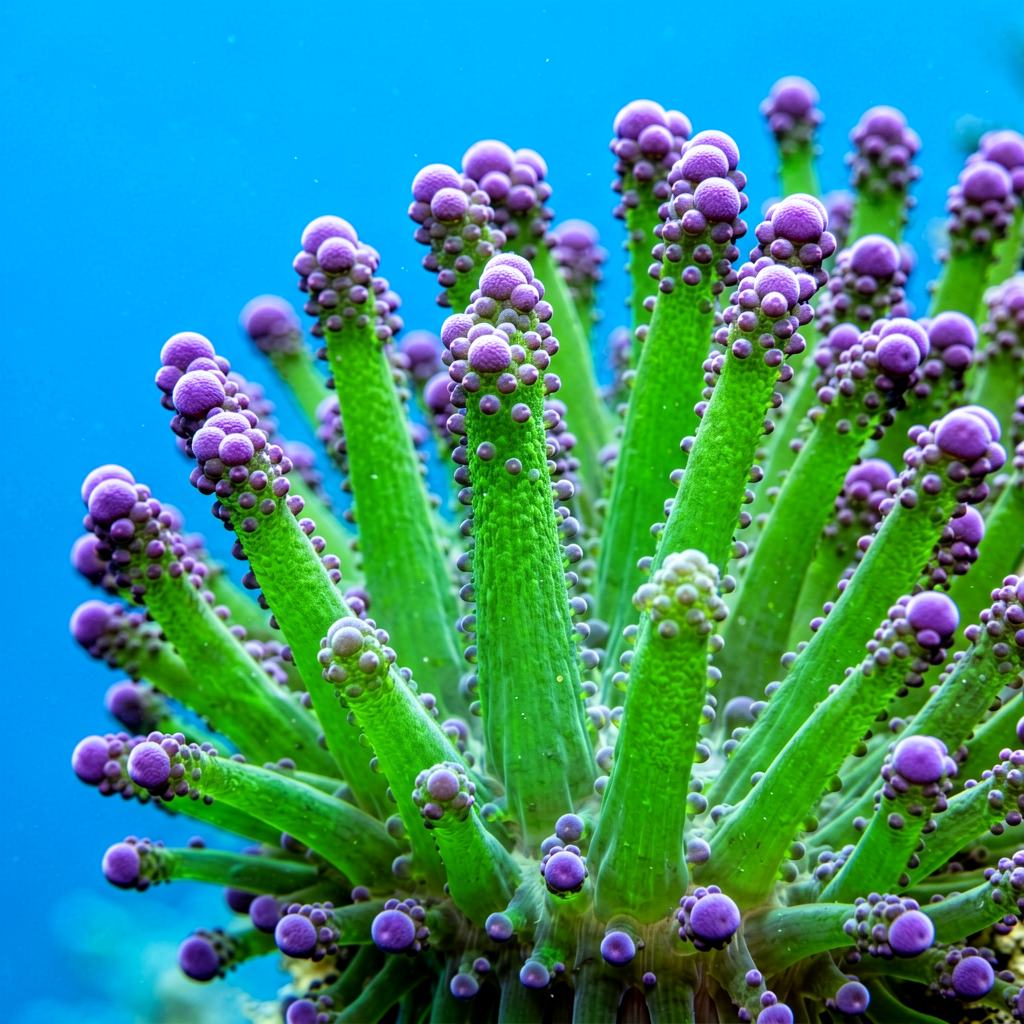
Each is long, slender and tapered. It is deep green for most of its length. The tip is a rounded purple, violet or pink swelling. Dense clusters of stinging cells fill the tip. The mouth lies in the centre of the upper surface. The bases of the tentacles surround it. The tentacles bend inward to push in food. The green colour comes from tiny algae. They are called zooxanthellae.
They live inside the tissues. They use sunlight to make sugars. The anemone takes some of those sugars as food. Because the algae need light, the species stays in clear, shallow water. Anemones in shade or deep water are paler and smaller. The stinging cells fire a tiny harpoon when touched. They inject a toxin that paralyses small prey within seconds. Snakelocks anemones can live for many years. They can regrow damaged tentacles and parts of the column.
1
2
3
Rock pools and shallow rock
Where it lives
The snakelocks anemone is found along western Europe’s Atlantic coast. Its range runs from northern Scotland and Ireland south. It goes through France, Spain and Portugal to North Africa. It is found throughout the Mediterranean and the Adriatic. It is a creature of shallow, sunlit, rocky shores. It lives from the low water mark down to about twenty metres. It needs clear water so light reaches its algae. In Britain and Ireland it is far more common in the south and west.
The colder North Sea suits it less. It is a common sight in rock pools. It lives on boulder shores and in kelp beds. It attaches to rock, stone, shells and eelgrass. It prefers a little current. Food is carried past and silt does not smother it. Unlike some anemones it bears dry air. It can survive hours left dry by the tide.
This lets it live high on the shore in pools and gullies. In winter it retracts its tentacles and shrinks. In the Mediterranean, bright ones are darker green. They have longer tentacles than those in shade. The anemones often live in groups. They may cover whole rock faces in dense beds. Other species shelter and feed among their tentacles.
What it eats
Waiting with tentacles spread
The snakelocks anemone hunts small prey. Through its algae it also makes part of its own food. Its tentacles catch small fish, shrimps and prawns. They catch small crabs and any animal within reach. The stinging cells fire on contact. They paralyse and hold the prey. The tentacles then carry it to the mouth. It also catches plankton and tiny shrimp.
It can gather food bits on its column. The algae inside supply sugars. It need not catch food every day. It can live for a long time on light alone. This helps an animal fixed in one place. When times are poor it may lose its algae. It then turns white. In the wild it may starve unless it recovers.
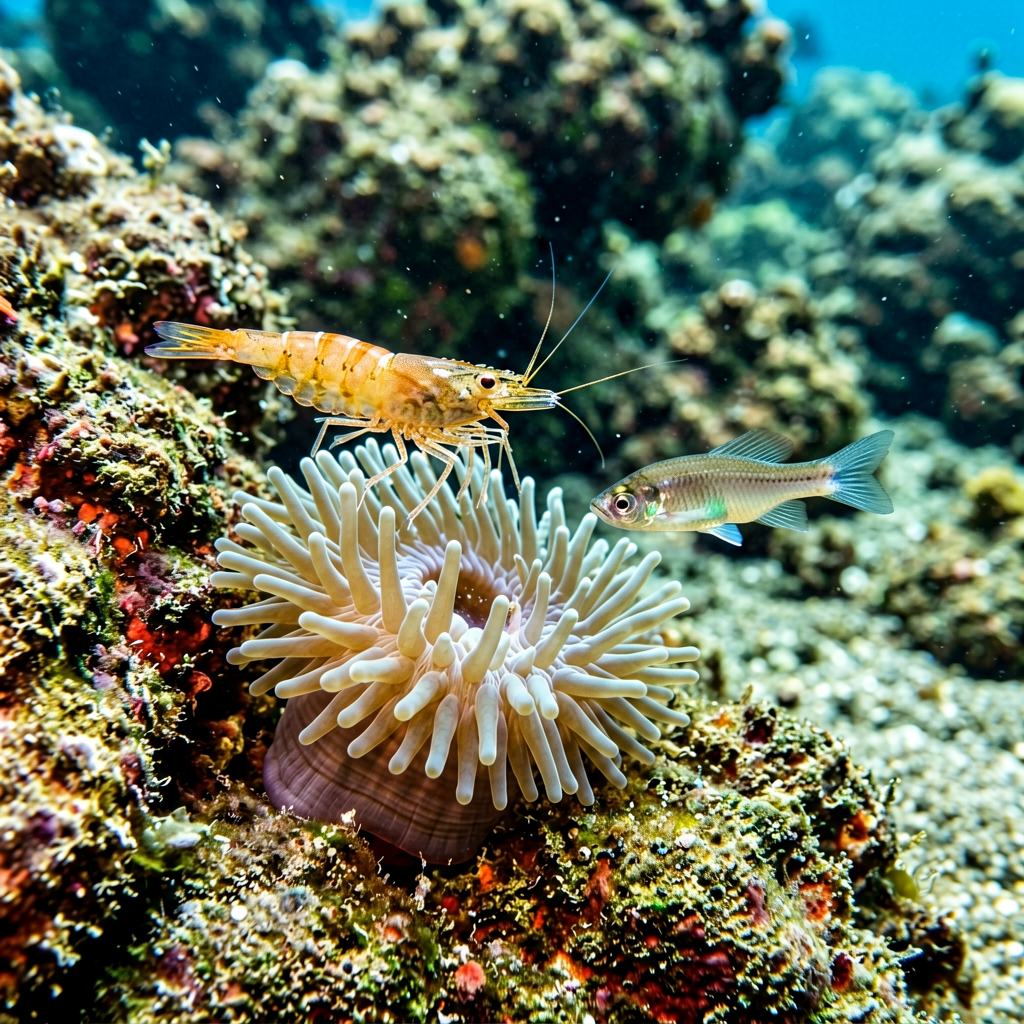
The same process in shallow seas is called bleaching. Snakelocks anemones are eaten in turn. The grey sea slug Aeolidia papillosa feeds on them. It is immune to the stinging cells. Sea spiders, sea urchins and some starfish eat them too. Small fish, prawns and young crabs shelter among the tentacles. They seem safe from its stings. Some may steal food it leaves.
Splitting and spawning
Two ways to reproduce
The snakelocks anemone reproduces in two ways. The mix varies by place. Sexual reproduction happens in spring and summer. Males and females release eggs and sperm into the water. The eggs are fertilised in the open sea. The larva is called a planula. It drifts in the plankton for several days. It then settles on a good surface.
It grows into a small anemone with a few tentacles. Splitting is the main way beds grow. It happens by longitudinal fission. The anemone splits lengthwise into two halves. This takes days or weeks. Each half becomes a complete animal. Some also use pedal laceration. They leave fragments of the base as they move.
Each fragment grows into a new anemone. Fission and laceration make clones. A single bed may be a few clones spread wide. Growth is slow. A young anemone takes several years to reach full size. Some have lived in tanks for more than ten years. Their wild life span is thought to be shorter.
Warm seas, pale anemones
A changing coast
The snakelocks anemone has no formal conservation status. No law in Europe targets the species. Yet several pressures act on it. The biggest is the warming of shallow coastal waters. This stresses the tiny algae it depends on. When summer seas warm sharply the anemone expels its algae. It turns pale.
This has been seen more often in shallow bays. It happens around Britain and the Mediterranean. Without its algae the anemone loses its main food. It may starve. Long bleaching can kill it. Water pollution, sediment and extra nutrients cloud the water. They cut the light to the algae.
This hurts sheltered bays and estuaries most. Trampling by people damages anemones. Taking them for the pet trade removes some. The species is not sold for food. It forms habitat for small fish and crabs. Its numbers are a sign of the health of shallow rocky reefs. Local divers and shore watchers record it in long-term notes.
Quick hits
Five things to remember
- Its green colour comes from tiny algae in its tissues. They make sugars from sunlight.
- Each tentacle is green with a violet or pink tip. It is packed with stinging cells, and there may be up to two hundred.
- It reproduces by splitting lengthwise into two animals. A whole bed may be made of clones.
- A detached anemone can swim awkwardly. It lashes its tentacles until it finds a new place.
- The grey sea slug Aeolidia papillosa can eat it. It feeds on the stinging tentacles without harm.