 By st20113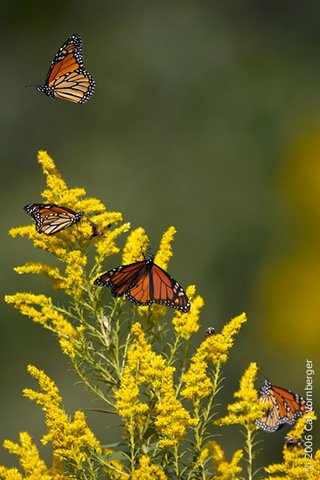
Introduction
The Monarch Butterfly (Danaus plexippus) is arguably the world’s most celebrated butterfly, famed for one of the most extraordinary migrations undertaken by any insect. Every autumn, millions of Monarchs travel up to 4,800 kilometres from their North American breeding grounds to specific overwintering sites in the mountainous forests of central Mexico. This long-distance migration, combined with its vivid orange and black colouring and its intimate relationship with milkweed plants, has made the Monarch a symbol of transformation and natural wonder. The butterfly’s story inspires scientific inquiry and conservation action among naturalists worldwide.
Taxonomy
The Monarch Butterfly belongs to the family Nymphalidae, the largest butterfly family with over 6,000 species worldwide. Its full scientific classification is: kingdom Animalia, phylum Arthropoda, class Insecta, order Lepidoptera, family Nymphalidae, genus Danaus, and species D. plexippus. Carl Linnaeus formally described the species in 1758. The genus Danaus contains approximately 15 other butterfly species, many sharing the characteristic orange and black aposematic coloration. The Monarch has migratory populations in North America and non-migratory resident populations in Central and South America, the Caribbean, Australia, and parts of Europe and Asia.
Physical Characteristics
The Monarch Butterfly has a wingspan of approximately 8.5 to 12 centimetres, making it one of the larger butterfly species in its range. Its wings display rich orange-red colouration traversed by bold black veins and bordered by a distinctive black margin dotted with white spots. This pattern serves as aposematic coloration, warning predators that the butterfly is toxic due to cardiac glycosides sequestered from milkweed during the larval stage. Males possess a black scent scale patch on each hindwing used in courtship. The caterpillar is boldly patterned in yellow, white, and black with elongated black tentacles, transforming into a jade-green chrysalis adorned with golden dots before the adult emerges.
Habitat
Monarch Butterflies occupy distinct seasonal habitats. During breeding, they are found throughout North America in fields, meadows, and gardens where milkweed—the sole host plant for eggs and caterpillars—is abundant. This mutualistic relationship with milkweed is the cornerstone of the butterfly’s life cycle. Overwintering populations congregate in very specific high-altitude forest habitats in central Mexico’s Trans-Mexican Volcanic Belt and along the California coast, where cool temperatures and high humidity allow the butterflies to enter reproductive diapause. These overwintering sites represent some of the most concentrated butterfly aggregations on Earth, with millions of individuals clustering on oyamel fir trees.
Diet
Adult Monarchs feed primarily on nectar from flowering plants including coneflowers, zinnias, and lantana, drawn through a long coiled proboscis. As a caterpillar, however, the Monarch feeds almost exclusively on milkweed leaves and flowers in the genus Asclepias. This milkweed diet is critical because the plant’s cardiac glycoside compounds are sequestered in the caterpillar’s tissues, rendering both caterpillar and adult toxic and unpalatable to most predators. Some specialist birds and insects have evolved resistance to these toxins and readily consume Monarchs, though the vast majority of potential predators learn to avoid them after a single unpleasant experience.
Reproduction
Monarch reproduction follows a seasonal cycle tied to migration. Adults emerging from overwintering sites begin mating soon after reaching northern latitudes, and females immediately search for milkweed on which to lay eggs. Each female can lay 300 to 500 eggs over two to five weeks, depositing them individually on milkweed undersides to minimise larval competition. Eggs hatch in three to five days, and caterpillars pass through five growth stages over approximately two weeks before forming a jade-green chrysalis. The entire North American migration involves four to five generations, with each generation living only two to six weeks before dying after reproduction.
Conservation
Monarch populations have declined dramatically since the 1980s, with the western North American population falling by over 99 percent and the eastern population by approximately 80 percent. Primary threats include widespread loss of milkweed habitat due to agricultural intensification, urban development, and herbicide-tolerant crops. Climate change disrupts migration timing and threatens overwintering forest habitats. The Monarch was assessed as Endangered by the IUCN in 2022. Conservation efforts focus on restoring milkweed along migration corridors, protecting overwintering sites, and reducing pesticide use through community-based habitat creation programmes.
Fun Facts
The Monarch Butterfly navigates thousands of kilometres using a time-compensated sun compass, calculating direction from the sun’s position while compensating for its movement across the sky. Individual Monarchs that migrate to Mexico have never visited those forest sites before yet return to the exact same groves year after year. The butterfly’s name derives from the Greek word for prophet or seer, a reference to its majestic appearance. In parts of Australia and New Zealand, resident populations do not migrate and produce year-round generations. The Monarch is a flagship for conservation biology education, appearing in textbooks and documentaries worldwide as a model for understanding migration and metamorphosis.
[…] is Polyommatus. It is the type species of that large genus. Its best-known large relative is the Monarch Butterfly. That insect is far bigger. It has orange and black wings. It lives by long-distance migration and […]