 By st20113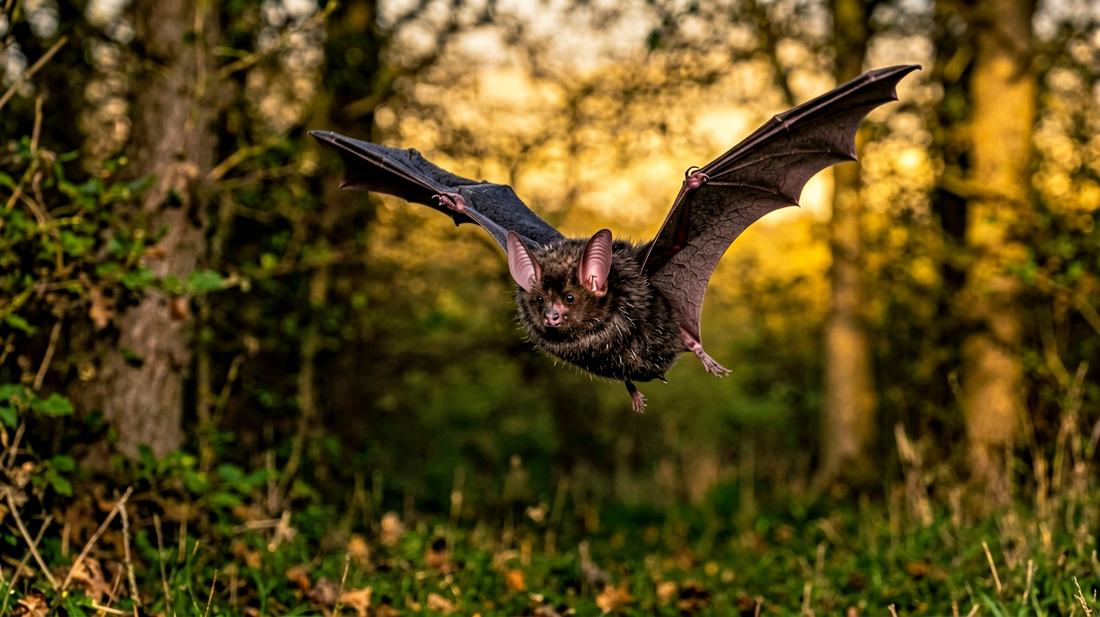
Barbastella barbastellus | Barbastelle
Species Profile · Vespertilionidae
Barbastelle
A woodland bat whose ears join across the top of its head, hunting moths on the quietest call of any European bat.
IUCN: Near Threatened
Range
Length
Weight
Hunting call
Roost
The bat nobody sees
The barbastelle
The barbastelle is a bat of wooded country across Europe and western Asia. It is one of the least seen bats in the region. It lives in old woodland. It roosts behind loose bark and in cracks in dead trees. It does not gather in big roof colonies like pipistrelles do.
It lives in small, scattered groups instead. That is why most people never notice it. It hunts in a special way. It calls very quietly and creeps up on small moths. Only a few bats in Europe do this.
In Britain, Germany and the Low Countries, counts have fallen for decades. The losses are worst where old trees and dead wood have been cleared. Most countries now treat it as a species of concern.
Family tree
One of two species in its genus
The barbastelle is in the family Vespertilionidae. That is the largest bat family in Europe. It sits in the genus Barbastella. Only two species live in that genus. One is the European barbastelle. The other lives in central and eastern Asia. The genus was split off from the other vesper bats. Two features set it apart. Its ears are broad.
They join across the top of the head. Its snout is short and blunt. No other European bat has this mix. A German naturalist described the species in 1774. Its name comes from an old word for a bat. A related bat lives in the same wooded valleys. It is the Greater Horseshoe Bat. That bat is much larger. It has a horseshoe-shaped nose leaf.
It uses a different kind of echo. The two often turn up in the same place. But they roost apart and eat different prey. Studies of its genes show little structure across Europe. That means colonies were once linked. Woodland clearance broke those links. The small groups left are now cut off from each other.
Ears, fur and quiet calls
How to identify one
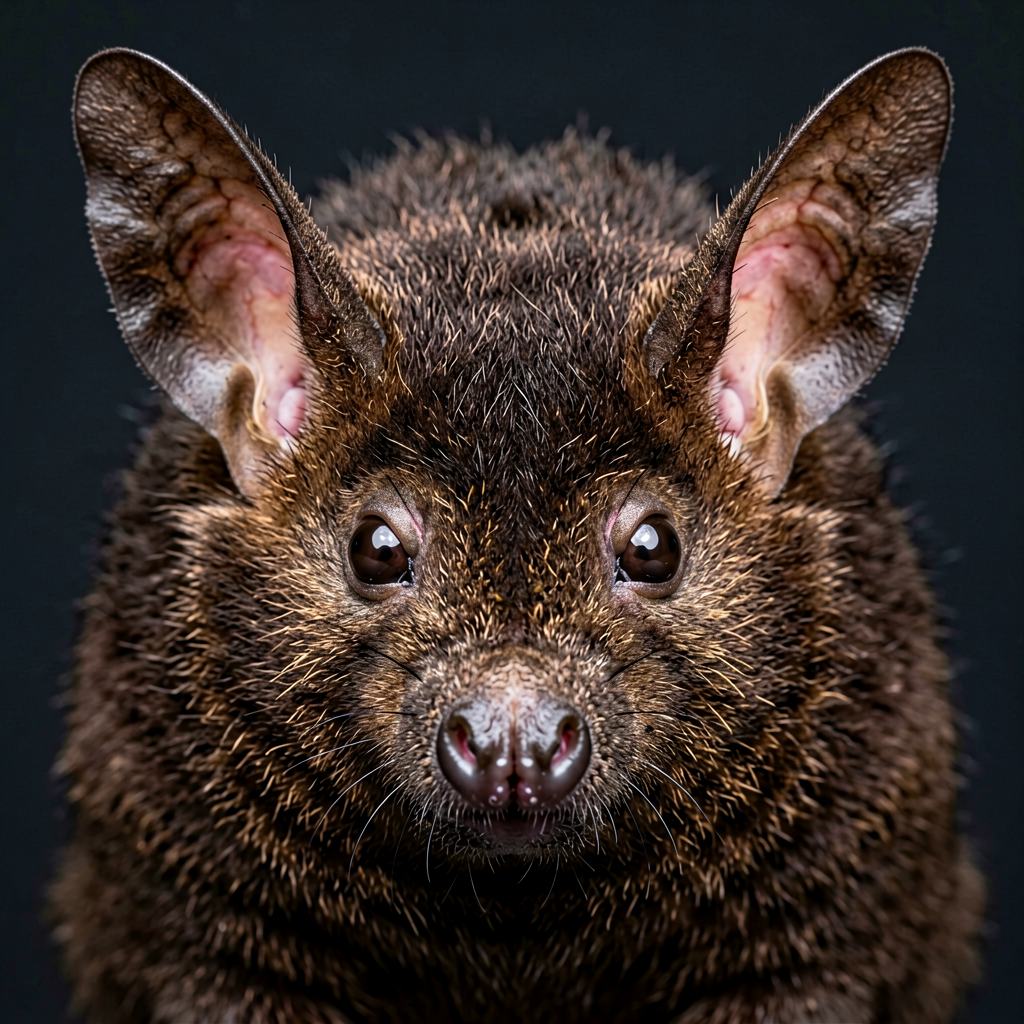
An adult barbastelle is 45 to 58 mm long. Its forearm measures 36 to 43 mm. That makes it medium-sized for a European bat. It is smaller than a noctule. It is larger than a pipistrelle. It weighs 6 to 13 grams. The weight changes with the season. The bats put on fat in late summer. They lose much of it by spring. Its fur is long and thick.
It is almost black at the base. The tips are pale grey-brown. That gives the animal a frosted look. Most woodland bats are plain brown. The fur covers the muzzle too. So the face looks blunt and furry. The ears are the clearest feature. They are wide and roughly triangular. They join across the forehead. A long thin tragus points forward inside.
Its wings are long and narrow. The membrane joins the base of the toes. The tail sits fully inside the tail membrane. So the bat looks compact in flight. Its skull is short and broad. Its teeth suit soft insects. It has small eyes. It finds its way by echo, not by sight.
1
2
3
Old woodland and dead trees
Where it roosts
The barbastelle lives across most of Europe. Its range runs from Spain and Portugal to Poland and Russia. It reaches Asia Minor and central Asia in the east. In the north it lives in southern Scandinavia and the British Isles. There it is one of the rarest breeding bats. It needs mature deciduous woodland. It also uses parkland and old orchards. Dead trees matter most. It roosts behind lifted bark.
It also uses cracks in dead branches. Many bats also use old buildings and bridges. In winter it hibernates in caves and mines. It also uses deep cellars. It needs cold, damp, stable air. The temperature is usually 2 to 8 degrees Celsius. The air is almost saturated. It hunts along woodland edges. It uses rides and clearings.
It follows tree-lined rivers and hedgerows. It avoids open farmland. There are no roosts there. There are also few small moths. Radio tracking shows long flights. Bats fly several kilometres to feed. They follow lines of trees and water. They do not cross open ground. They return to the same wood each night.
What it eats
A whisper hunter of moths
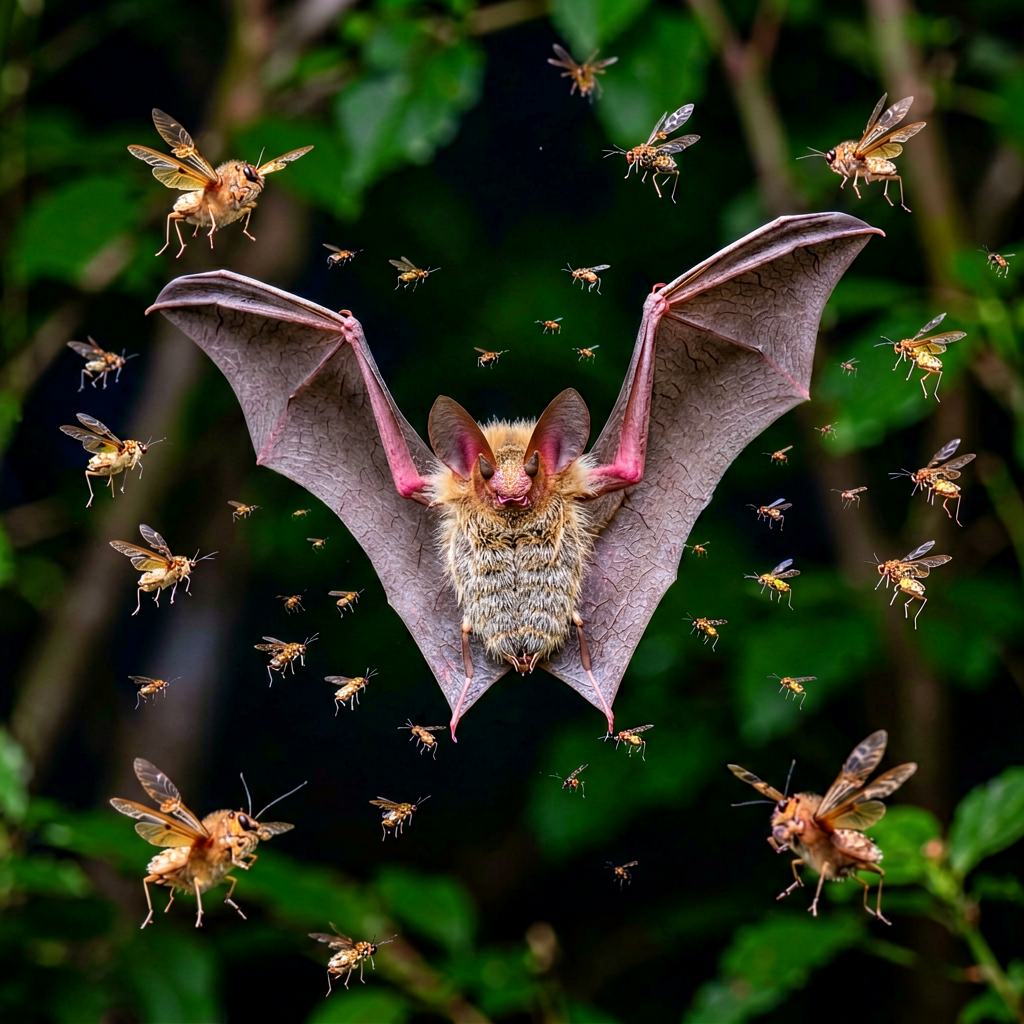
The barbastelle feeds mostly on small moths. Its whole hunting method suits this. Moths can hear bat calls. They also fly away fast. A loud, quick bat is often heard and dodged. The barbastelle calls very quietly instead. Its call is far weaker than most European bats. So it can get within a few metres of a moth. The moth does not react in time.
Its call is also odd in shape. It sweeps from about 30 to 40 kilohertz. Each pulse ends with a short steep drop. Quiet calls let it hunt close to leaves. Loud calls would bounce off twigs and drown the signal. Moths of two main families form most of the diet. Midges, caddisflies and small beetles also feature. The mix changes through the year. Caddisflies are taken over water in spring.
Moths are taken over woodland in summer. The bat flies slowly. Its flight looks fluttering. It takes prey in the air. It does not pick insects off leaves. It needs many hundreds of insects a night. One animal in Britain held 16 kinds of moth.
Small maternity groups
Ten to forty females
Barbastelles mate in autumn. The female stores sperm through the winter. Fertilisation waits until spring. That is when she wakes and starts to feed. Maternity colonies are small and quiet. Most hold 10 to 40 females. They form in late spring. The roost is often in a tree. The group moves often.
Sometimes it moves every few days. That may foil predators and parasites. It also finds the warmest spots. One young is born in late June or early July. The pup is blind and almost bare. It weighs only a couple of grams. The mother carries it while she feeds. After about a week she leaves it in the roost. The pups stay together in a crèche.
The young fly at about 3 weeks. They are weaned by the end of summer. That leaves little time to learn to hunt. They must also build fat for winter. Females often do not breed in their first year. One pup a year is the rule. So numbers recover very slowly.
Dead wood cleared, bats lost
A woodland bat in decline
The barbastelle is Near Threatened on the global Red List. In several European countries it is rare or vulnerable. The strongest numbers are in France and Germany. The edges of its range hold far fewer bats. The main long-term problem is the loss of old woodland. The species needs standing dead trees. It also needs trees with damaged bark. Foresters often clear dead wood.
That removes exactly what the bat needs. Felling mature park and orchard trees has the same effect. Hibernation sites face disturbance. A bat woken in winter burns fat fast. Opening caves for visitors has damaged several sites. So has blocking entrances for safety. Farming has cut the number of small moths. Artificial light is a growing problem.
Roads, houses and farm buildings push bats away. The species is protected across the European Union. National laws protect it in most countries. But protecting single animals is not enough. The bat needs better woodland management. Conservation now focuses on keeping dead wood. It also guards hibernation sites from people. And it keeps networks of mature trees and hedgerows.
Quick hits
Five things to remember
- Its echolocation call is so quiet that a normal bat detector can barely pick it up beyond a few metres.
- Its ears join across the top of the head, a feature no other European bat shares.
- It often roosts behind loose bark and in cracks in standing dead trees, not in buildings or caves.
- Females store sperm through the winter and delay fertilisation until spring, so the single pup arrives when insects are plentiful.
- Droppings from one animal in Britain contained the remains of as many as 16 different kinds of moth.