 By st20113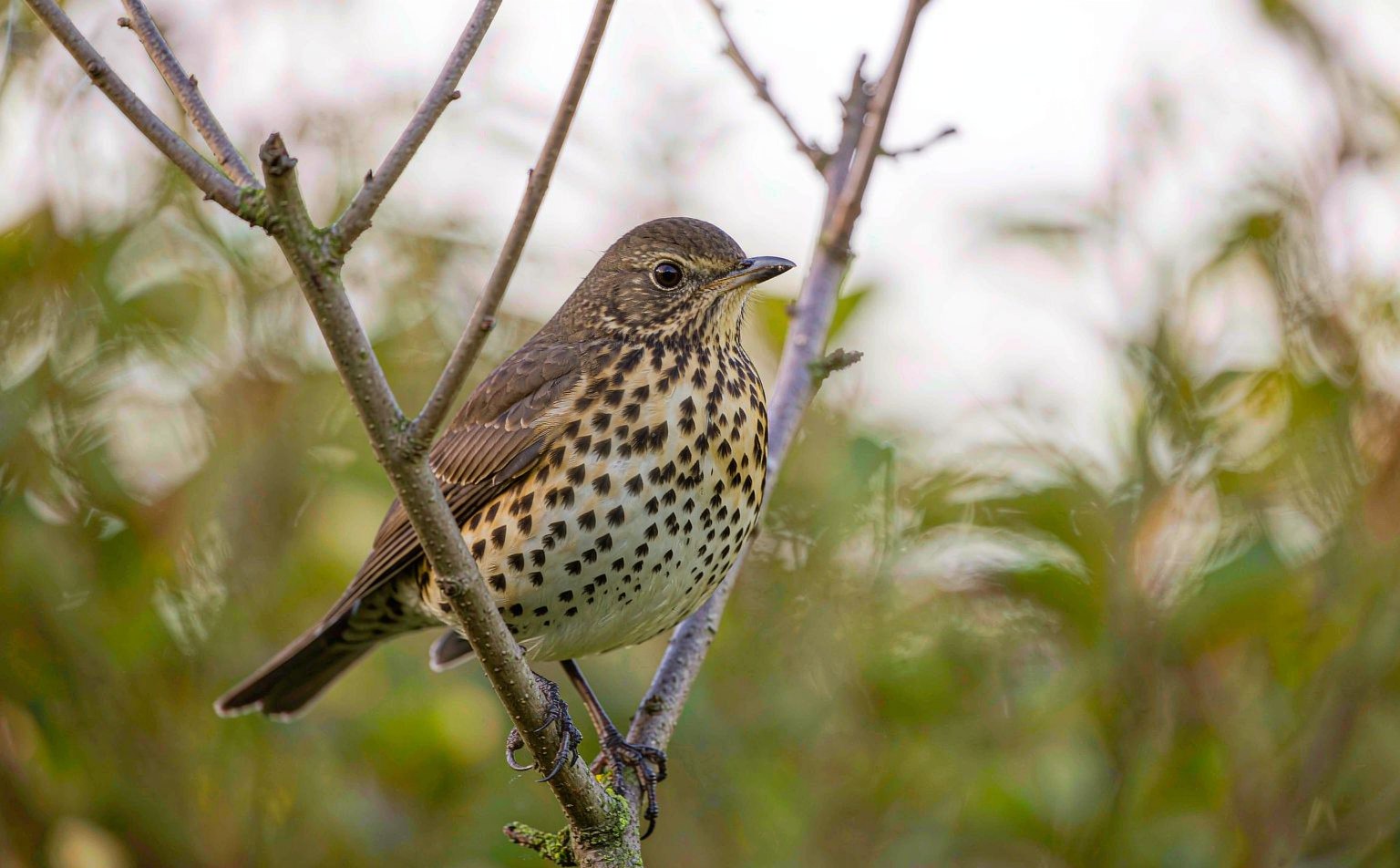
Turdus philomelos | Song Thrush
Introduction
The song thrush, Turdus philomelos, is a familiar garden and woodland bird across Europe, celebrated for its loud, repetitive song delivered from exposed perches. A member of the thrush family Turdidae, it is slightly smaller than the blackbird and is readily recognised by its warm brown upperparts and densely dark-spotted cream underparts. Although still common, the species has declined in parts of its range, drawing attention to the health of farmed and suburban habitats it depends upon.
Highly migratory in the east of its range and largely resident in the west, the song thrush occupies a remarkable variety of habitats from city parks to remote forests, making it one of the most audible harbingers of spring in European gardens.
Taxonomy
Turdus philomelos was described by the German naturalist Christian Ludwig Brehm in 1831. It sits within the genus Turdus, which includes the European Robin (though the robin is placed in a different genus, Erithacus) and the familiar blackbird. The specific epithet philomelos references Philomela, the figure from Greek myth associated with song, reflecting the bird’s musical reputation.
Physical Characteristics
An adult song thrush measures 20–24 cm in length with a wingspan of 33–36 cm and weighs 50–107 g. The upperparts are uniform warm olive-brown, the underparts are whitish-buff profusely marked with rounded black spots that continue onto the flanks and breast, and the belly is paler. The legs are pinkish and the bill is dark with a yellowish base in females and younger birds.
In flight the underwing shows a conspicuous warm buff-orange panel, a useful field mark separating it from the plainer blackbird. The eye is dark, and the upright, rather short-tailed posture when perched helps distinguish it. Males and females are similar in plumage, though males average slightly larger.
Habitat
Song thrushes favour habitats that combine open ground for feeding with trees or shrubs for nesting and song posts. They are abundant in deciduous and mixed woodland, parks, large gardens, hedgerows, orchards, and churchyards. They avoid treeless arable land and dense uninterrupted forest, preferring a varied structure with leaf litter in which to forage.
In winter, birds from colder regions move southwest to milder areas, where they join resident populations in lowland farmland and coastal scrub. The species shows strong site fidelity to productive feeding territories during the breeding season.
Diet
The song thrush is perhaps best known for its habit of using a favourite “anvil” stone to smash the shells of snails, especially the common garden snail. It holds the shell against the stone with one foot and strikes it with the bill, a learned behaviour passed between individuals. Beyond snails, it eats a wide range of invertebrates including earthworms, insects, and spiders, shifting to berries and fallen fruit in autumn and winter.
Foraging is mostly on the ground, where the bird runs, stops, cocks its head to listen, then probes or leaps to seize prey. The combination of animal prey in summer and fruit in winter gives the species a broad and resilient dietary base.
Reproduction
Breeding begins in spring, and a pair may raise two or three broods in a single season. The nest is a neat cup of grass, twigs, and moss, plastered inside with mud and lined with fine grass, typically placed in the fork of a shrub, tree, or climber one to five metres above ground. The female lays three to five sky-blue eggs speckled with black, which she incubates for about two weeks.
Both parents feed the chicks, which fledge after roughly two weeks but remain dependent for several more days. The reused anvil sites and the birds’ loud, confident song make breeding territories easy to locate for patient observers.
Conservation
The song thrush is currently assessed as Least Concern globally, but national populations in Britain, Ireland, and parts of central Europe have shown significant declines linked to intensification of agriculture, loss of hedgerows, and reduced availability of invertebrate prey from pesticide use. In some regions it is now a conservation priority species.
Agri-environment schemes that maintain hedgerows, grassy field margins, and fruiting shrubs benefit the species considerably. Garden planting of berry-bearing native shrubs and avoidance of chemical snail controls also help urban and suburban populations persist alongside people.
Fun Facts
- The song thrush repeats each phrase of its song two or three times, producing the ringing “did-he-do-it, did-he-do-it” quality birdwatchers know well.
- It uses the same favourite stone, or “anvil,” for years to crack snail shells.
- The scientific name philomelos ties the bird to a Greek myth of a woman transformed into a singing nightingale-like figure.
- Some populations migrate hundreds of kilometres between breeding and wintering grounds.
- Its spotted plumage is shared with other thrushes but the buff underwing in flight is distinctive.
[…] contextual comparison, the Meadow Pipit shares open habitats with the Song Thrush (Turdus philomelos), though the two species can be distinguished by their plumage, with the Meadow Pipit displaying a […]
[…] the Pied Flycatcher belongs to a diverse assemblage of Old World flycatchers that includes the Song Thrush (Turdus philomelos), another woodland-dwelling species that shares some habitat preferences but can be distinguished by […]
[…] contextual comparison, Richard’s Pipit shares open habitats with the Song Thrush (Turdus philomelos), though the two species can be distinguished by their size and plumage, with Richard’s Pipit […]
[…] contextual comparison, the Spotted Flycatcher shares woodland habitats with the Song Thrush (Turdus philomelos), another woodland-dwelling species that can be distinguished by its carolling song and different […]
[…] contextual comparison, the Woodlark shares open woodland habitats with the Song Thrush (Turdus philomelos), though the two species can be distinguished by their plumage, with the Woodlark displaying a […]
[…] contextual comparison, the Song Thrush (Turdus philomelos) represents another member of the Turdidae family that shares some habitat preferences with the […]