 By st20113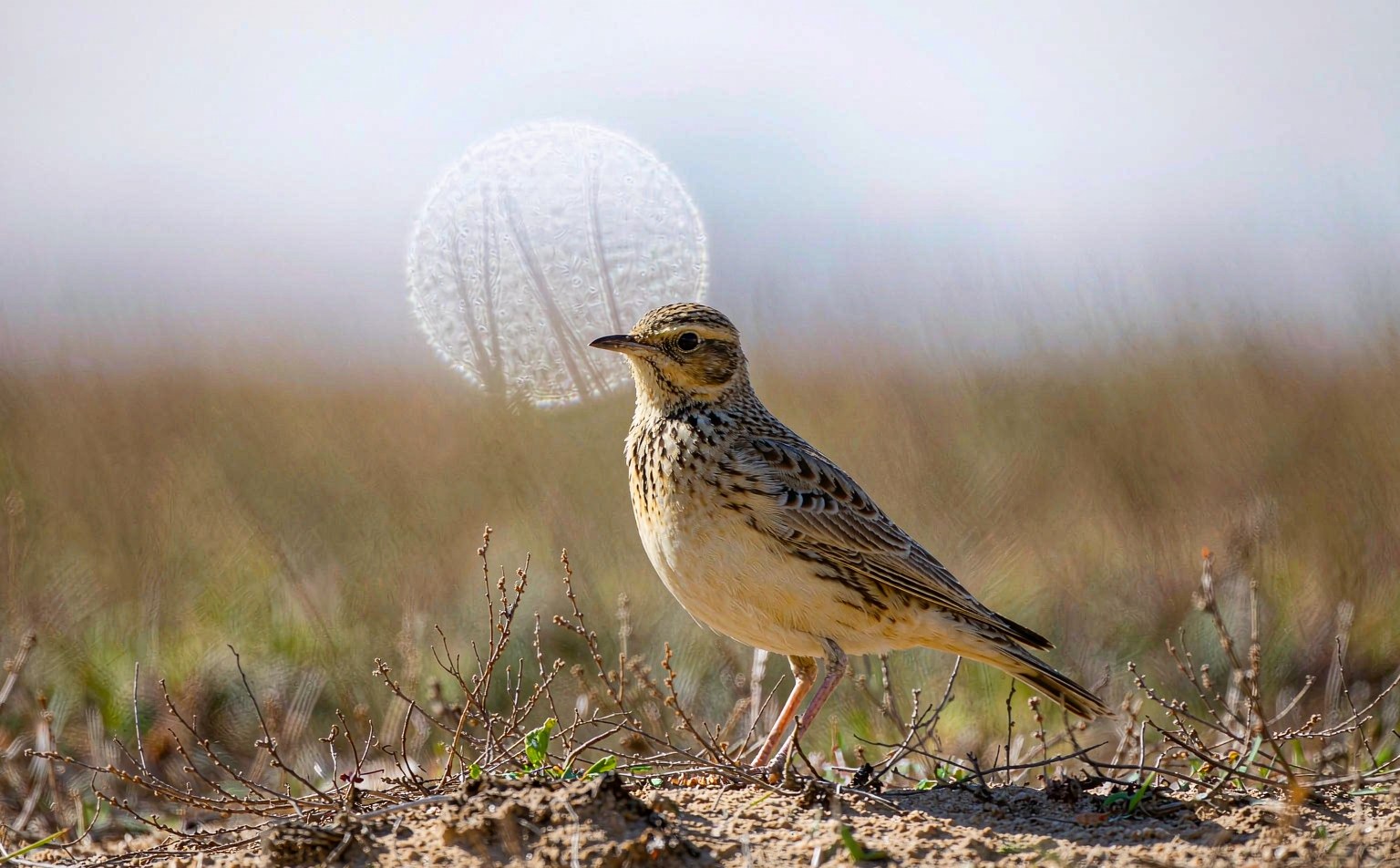
Anthus trivialis | Woodlark
Introduction
The Woodlark (Lullula arborea) is a small, distinctive lark belonging to the family Alaudidae, a group of passerine birds known for their elaborate songs and terrestrial habits. Measuring approximately 17–19 cm in length with a wingspan of 28–33 cm, this bird is one of the most charismatic larks in Europe, easily recognized by its prominent crest, warm buff coloration, and bold wing bars. The Woodlark is strongly associated with open woodland, heathland, and disturbed habitats with a mosaic of bare ground, low vegetation, and scattered trees or bushes.
The species is sedentary across much of its range, though northern populations may undertake short-distance movements during winter. The Woodlark is a solitary bird outside the breeding season, typically found in pairs or small family groups during autumn and winter. During the breeding season, males establish territories and sing from prominent perches or in display flight, delivering one of the most beautiful songs in the European avifauna.
The Woodlark has a long history of captivity in Europe, where it was one of the most prized caged birds during the 18th and 19th centuries. The bird’s beautiful song, attractive appearance, and hardy constitution made it a favorite among bird keepers, and captive-bred individuals were widely traded across the continent. Wild captures continue in some parts of Europe, though conservation concerns have led to restrictions on trapping in many countries.
Taxonomy
The Woodlark was first described by Carl Linnaeus in his seminal Systema Naturae in 1758, under the binomial name Alauda arborea. It was later transferred to the genus Lullula, which encompasses a small group of larks characterized by their crest and woodland habitat preference. The genus name derives from Latin lulla (meaning “lark”), while the specific epithet arborea means “of trees,” referring to the bird’s association with woodland and scrub habitats.
The Woodlark is recognized as a monotypic species, with no subspecies currently accepted by major taxonomic authorities. Molecular phylogenetic studies have confirmed that the species belongs to the genus Lullula, which is distinct from other lark genera such as Alauda and Galerida. The Woodlark is most closely related to the Crested Lark (Galerida cristata), though the two species occupy different habitat preferences and can be distinguished by their plumage and vocalizations.
For contextual comparison, the Woodlark shares open woodland habitats with the Song Thrush (Turdus philomelos), though the two species can be distinguished by their plumage, with the Woodlark displaying a prominent crest and warm buff coloration compared to the Song Thrush’s streaked brown appearance. Both species are associated with open habitats, but the Woodlark prefers more wooded areas while the Song Thrush favors woodland edges and gardens.
Physical Characteristics
The Woodlark is a stocky, crested lark with warm buff upperparts and boldly patterned wings. The plumage is predominantly buff with heavy black streaking on the upperparts and breast, fading to pale buff on the belly and undertail coverts. The head is marked with a prominent black-and-white crest that can be raised or flattened depending on the bird’s mood, and the face is marked with a bold black mask extending from the bill through the eye. The wings are buff with two prominent black wing bars, and the tail is buff with black subterminal markings.
The bill is relatively short, straight, and pointed, with a dusky upper mandible and a paler lower mandible. The legs and feet are dark brown to black, relatively long and adapted for terrestrial foraging. The overall appearance is that of a typical lark, with a compact body, relatively long wings, and a prominent crest that gives the bird its distinctive silhouette. In flight, the Woodlark displays broad, rounded wings and a relatively long tail, with the wing bars and tail markings conspicuous.
Juvenile birds are similar to adults but duller and more heavily streaked on the underparts, with less distinct coloration and a more variable pattern of buff and brown. The plumage of juveniles also tends to be softer and less structured than that of adults, reflecting the more downy texture of their first coat. The overall appearance is deliberately cryptic, providing effective camouflage among the dappled light and shadow of open woodland and heathland.
Measurements of adult Woodlarks typically include a total length of 170–190 mm, a wing chord of 95–110 mm, a tail length of 70–85 mm, and a bill length of 12–15 mm. Body mass ranges from 30 to 50 grams, making it one of the larger larks in Europe. The bird’s prominent crest and bold wing patterns make it one of the most distinctive larks in the European avifauna.
Habitat
The Woodlark is associated with open woodland, heathland, and disturbed habitats with a mosaic of bare ground, low vegetation, and scattered trees or bushes. The preferred habitat includes mature pine plantations, heathland with scattered birch and juniper, and ancient woodland edges with a diverse understory. The vegetation must provide suitable nesting sites, either on the ground among low vegetation or in low bushes, as well as an abundant supply of insects and seeds for foraging throughout the year.
Woodlarks breed across a broad range that extends from western Europe across temperate Asia to western Siberia. In Europe, the species is found from the British Isles and Scandinavia eastward through Germany, Poland, the Baltic states, and into Russia, with scattered populations reaching into the Iberian Peninsula and Italy. The northern boundary of the breeding range extends into southern Fennoscandia and the Baltic region, while the southern limit follows the northern edges of the Mediterranean basin.
During winter, Woodlarks may form small flocks that include other lark species, particularly in areas where food is abundant. These flocks are typically loose and transient, dispersing as individual territories are re-established during spring. The species is generally solitary outside the breeding season, though winter flocks can occasionally include dozens of individuals in suitable habitats.
The conservation status of the Woodlark is generally favorable, reflecting its wide distribution across open woodland and heathland habitats. The species is listed as Least Concern on the IUCN Red List, and populations have remained relatively stable across much of its range. However, the species remains dependent on open, structurally diverse habitats, which have declined in some areas due to habitat management and afforestation.
Diet
The Woodlark is an omnivorous species that feeds on insects and seeds throughout the year. The diet consists of beetles (Coleoptera), flies (Diptera), ants (Hymenoptera), spiders (Araneae), and other invertebrates during the breeding season, supplemented by seeds from grasses, herbs, and weeds during autumn and winter. The bird forages primarily on the ground, walking and hopping through leaf litter and low vegetation in search of food. The Woodlark is a ground-foraging specialist, spending much of its time moving through the understory in search of insects and seeds.
Foraging behavior in the Woodlark is characterized by a “walk-and-glean” strategy combined with occasional sallies for flying insects. The bird moves steadily across the ground, pausing frequently to inspect leaf litter and turn over small debris. It also makes short flights to catch insects on the wing, particularly during warm weather when flying insects are abundant. The bird’s relatively long legs and strong feet are well-adapted for terrestrial foraging, allowing it to move efficiently through diverse terrain.
Nesting birds have particularly high energy demands, and the parents must capture large quantities of insects to feed themselves and their growing chicks. A nesting pair of Woodlarks may consume thousands of insects during the breeding season, playing an important role in regulating invertebrate populations within woodland and heathland ecosystems. The bird’s preference for larger, more nutritious prey items such as caterpillars, beetles, and ants ensures efficient energy transfer through the food web.
During migration and winter, the Woodlark supplements its insectivorous diet with seeds from grasses, herbs, and agricultural crops. This dietary flexibility allows the species to exploit diverse habitats across its extensive range and adjust to seasonal fluctuations in food availability. The bird’s ability to switch between protein-rich insect prey and energy-dense plant material is a key adaptation that supports its successful colonization of habitats across Europe.
Reproduction
The Woodlark is a solitary nester that establishes breeding territories within open woodland and heathland during spring. Males arrive on breeding grounds in April and May, depending on latitude, and begin singing almost immediately to attract mates and establish territory boundaries. The male’s song is one of the most beautiful in the European avifauna, consisting of a sweet, warbling melody delivered from a conspicuous perch or in hovering display flight. The song is repeated incessantly throughout the day during the breeding season and has been described as one of the most characteristic sounds of European heathland.
Nest construction is undertaken solely by the female, who builds a shallow cup-shaped structure from grass stems, rootlets, and moss, secured in a shallow depression on the ground among low vegetation or in the hollow of a tree root. The nest is typically placed 0–0.5 meters above the ground, hidden within dense vegetation or among roots where it is well concealed from predators. The interior of the nest is lined with fine grass, hair, feathers, and rootlets, providing insulation and comfort for the incubating female and subsequent brood.
The typical clutch size is 3–5 eggs, though clutches of 2–6 eggs are not uncommon. The eggs are pale buff to whitish with fine brown or grey speckles concentrated at the broader end, measuring approximately 24–29 mm in length. Incubation lasts 13–16 days and is undertaken solely by the female, who is fed by the male during this period. The chicks are altricial and naked at hatching, with their eyes closed and dependent on parental care for warmth and food.
Both parents feed the chicks, and the nestling period lasts approximately 11–14 days. After fledging, the young remain dependent on their parents for an additional 1–2 weeks while they learn to forage and navigate the open habitat. Woodlarks are usually univoltine, producing a single brood per season, though second broods are occasionally recorded in favorable years with abundant food resources. The species typically begins breeding in its second year of life, reaching sexual maturity at approximately 12 months of age.
Conservation
The global population of the Woodlark is estimated at 15–25 million breeding pairs, making it one of the more common larks across Europe. The species is listed as Least Concern on the IUCN Red List, reflecting its wide distribution and generally stable population trends across much of its range. However, the Woodlark has experienced significant population declines in parts of western Europe, particularly in the United Kingdom and the Netherlands, where breeding populations have fallen due to habitat loss and changes in forest management.
The primary threat to Woodlark populations is the loss of open woodland and heathland habitats. Throughout Europe, extensive areas of heathland have been afforested or abandoned to succession, while changes in forest management practices have reduced the availability of open, structurally diverse habitats. Climate change poses an additional threat, with altered precipitation patterns potentially affecting insect abundance and the timing of vegetation growth that breeding birds depend upon.
Conservation efforts for the Woodlark focus on the protection and management of open woodland and heathland habitats. In the United Kingdom, organizations such as the Royal Society for the Protection of Birds (RSPB) and the Forestry Commission manage heathland reserves specifically for the benefit of ground-nesting birds, employing techniques such as controlled burning and grazing management to maintain habitat heterogeneity. Across Europe, Woodlark populations are protected under the European Union Birds Directive, and many suitable habitats are designated as protected areas under the Natura 2000 network.
The continued abundance of Woodlark populations depends on maintaining the extensive networks of open woodland and heathland habitats that support its lifecycle across Europe. The species’ ability to exploit a range of open habitats suggests that it may continue to persist in modified landscapes where suitable habitat is maintained, particularly through agri-environment schemes and nature conservation programs.
Fun Facts
- The Woodlark’s song is one of the most beautiful in the European avifauna, consisting of a sweet, warbling melody that is delivered from a conspicuous perch or in hovering display flight. The song has been described as one of the most characteristic sounds of European heathland and has inspired poets and naturalists for centuries.
- Male Woodlarks are territorial and aggressive during the breeding season, frequently engaging in aerial duels with rival males. These displays involve rapid, undulating flight combined with singing, and the winner typically secures the best territory and attracts the most mates.
- The nest of the Woodlark is one of the most well-concealed ground nests in the European avifauna. It is typically built within a shallow depression among low vegetation or in the hollow of a tree root, and is constructed from coarse grass stems and lined with fine grass, hair, and feathers. The nest is remarkably sturdy and can withstand heavy rain and wind while providing effective insulation for incubating eggs.
- Woodlarks are exceptionally well adapted to life in open woodland and heathland, with cryptic plumage that provides effective camouflage among the dappled light and shadow of their preferred habitats. The bird’s prominent crest can be raised or flattened depending on its mood, adding to its distinctive appearance.
- The Woodlark has a long history of captivity in Europe, where it was one of the most prized caged birds during the 18th and 19th centuries. The bird’s beautiful song, attractive appearance, and hardy constitution made it a favorite among bird keepers, and captive-bred individuals were widely traded across the continent.