 By st20113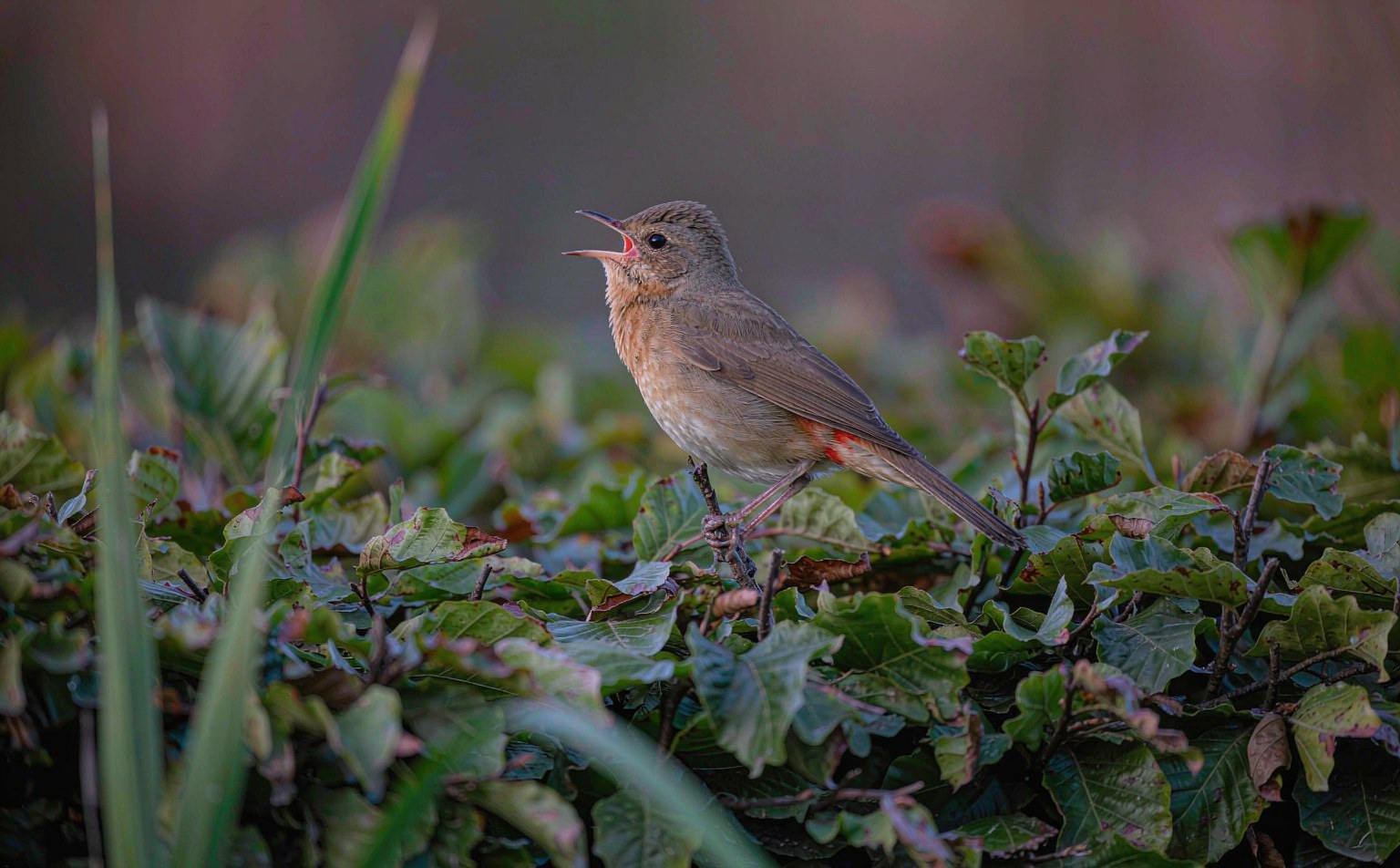
Luscinia megarhynchos | Nightingale
Introduction
The Nightingale (Luscinia megarhynchos) is a small, unassuming passerine bird renowned throughout history for the power, beauty, and complexity of its song. Belonging to the family Turdidae, which includes thrushes, chats, and related forms, the Nightingale measures approximately 13–15 cm in length with a wingspan of 20–24 cm. Despite its modest and drab appearance—dull brown upperparts and pale buff underparts—the Nightingale possesses one of the most celebrated vocal repertoires in the avian world, a trait that has captivated poets, musicians, and naturalists for millennia.
The species is strongly associated with dense, low woodland and thicket habitats characterized by a thick understorey of brambles, hawthorn, and other shrubby vegetation. These habitats provide the concealment necessary for the bird’s secretive lifestyle and the material required for nest construction. The Nightingale is predominantly a summer visitor to Europe and western Asia, arriving in April and departing for its West African wintering grounds by August or September.
The Nightingale’s song has been celebrated in literature and folklore across countless cultures. From ancient Greek mythology, where the bird’s song was said to have been created from the grief of the goddess Philomela, to the poetry of John Keats, Samuel Taylor Coleridge, and Thomas Hardy, the Nightingale has symbolized the power of music, the pain of love, and the beauty of nature. In scientific terms, the song is a complex performance delivered by the male from a concealed perch, typically low within the vegetation, and consists of a rich repertoire of phrases that can exceed 200 distinct syllables.
Taxonomy
The Nightingale was first described by Peter Simon Pallas in 1770 under the binomial name Luscinia megarhynchos. The genus name Luscinia derives from Latin, meaning “nightingale” or “singing bird,” while the specific epithet megarhynchos comes from Ancient Greek megalo (meaning “large”) and rhynchos (meaning “beak”), referring to the bird’s relatively large bill. The Nightingale belongs to the subfamily Muscicapinae within the family Turdidae, a group that includesOld World flycatchers, chats, and robins.
Historically, the Nightingale was considered conspecific with the Common Nightingale’s close relative, the Oriental Nightingale (Luscinia robusta), which breeds in central Asia. Molecular phylogenetic studies have confirmed that these two species are distinct, though they remain closely related and form a species pair. The Nightingale is recognized as a monotypic species, with no subspecies currently accepted by major taxonomic authorities.
For contextual comparison, the Song Thrush (Turdus philomelos) represents another member of the Turdidae family that shares some habitat preferences with the Nightingale, though it is a woodland edge and garden species rather than a dense thicket dweller. The two species can be distinguished by their songs, with the Song Thrush delivering more repetitive, carolling phrases compared to the Nightingale’s complex and varied repertoire.
Physical Characteristics
The Nightingale is a compact, stocky bird with a relatively long tail and a sturdy bill. The plumage is uniformly dull brown above, fading to a warmer buff on the crown, rump, and tail coverts. The wings and tail are darker brown, with the tail feathers narrowly edged with buff. The underparts are pale buff to whitish, with a slightly darker throat and breast that may appear washed with rufous in some lighting conditions.
The head is plain and unmarked, lacking any stripe, collar, or other distinctive feature. The lores are dusky, and a faint, pale supercilium may be visible in good lighting. The bill is relatively long, straight, and pointed, with a dusky upper mandible and a paler lower mandible. The legs and feet are dark brown to black, strong and adapted for perching low within dense vegetation.
In flight, the Nightingale displays broad, rounded wings and a moderately long tail. The wing feathers show faint buff edging, creating a subtle pale bar across the wing. Juvenile birds are similar to adults but duller and more streaked on the underparts, with less distinct coloration and a more variable pattern of buff and brown. The overall appearance is deliberately cryptic, providing effective camouflage among the brown leaves and twigs of the understorey.
Measurements of adult Nightingales typically include a total length of 135–155 mm, a wing chord of 68–80 mm, a tail length of 55–70 mm, and a bill length of 13–16 mm. Body mass ranges from 18 to 29 grams, with males averaging slightly heavier than females. The bird’s cryptic coloration and secretive behavior make direct observation difficult, and most encounters are limited to auditory detection of the male’s song.
Habitat
The Nightingale is associated with dense, low woodland and thicket habitats characterized by a thick understorey of brambles, hawthorn, blackthorn, and other shrubby vegetation. The preferred habitat includes riparian woodland, ancient forest clearings, and thickets along riverbanks and woodland edges. The vegetation must be sufficiently dense to provide cover from predators and suitable material for nest construction, while also supporting an abundance of invertebrate prey.
Nightingales breed across a broad range that extends from western Europe across temperate Asia to western Siberia. In Europe, the species is found from the British Isles and France eastward through Germany, Poland, the Baltic states, and into Scandinavia, with scattered populations reaching into the Iberian Peninsula and Italy. The northern boundary of the breeding range extends into southern Finland and Sweden, while the southern limit follows the northern edges of the Mediterranean basin and the Balkan Peninsula.
During migration and winter, the Nightingale undertakes a trans-Saharan journey to West and Central Africa, where it spends the non-breeding season in savanna, woodland, and secondary forest habitats across the Sahel and southern Africa. The migration route takes birds southward through Europe and across the Mediterranean, with some populations dispersing across the African Sahel and others reaching as far south as the Democratic Republic of Congo and Zambia.
The conservation of Nightingale populations depends critically on the preservation of dense thicket habitats, which have declined dramatically across Europe due to woodland management, agricultural intensification, and habitat fragmentation. The species is protected under the European Union Birds Directive, and many suitable habitats are designated as protected areas under the Natura 2000 network. The Nightingale’s association with mature, structurally complex habitats makes it particularly vulnerable to habitat degradation and management practices that simplify vegetation structure.
Diet
The Nightingale is an insectivorous species that feeds primarily on insects and other invertebrates during the breeding season. The diet consists of beetles (Coleoptera), flies (Diptera), moths and butterflies (Lepidoptera), spiders (Araneae), earthworms, and other small invertebrates. The bird forages by gleaning prey from the ground, low vegetation, and leaf litter, using its sturdy bill to probe among debris and capture hidden prey. The Nightingale is a ground-foraging specialist, spending much of its time moving through the leaf litter and low understorey in search of food.
Foraging behavior in the Nightingale is characterized by a “sit-and-wait” strategy combined with active gleaning. The bird perches low within the vegetation and sallies forward to capture prey on the ground or in low shrubs. It also hops through the leaf litter, turning over leaves and debris to expose hidden invertebrates. The bird’s relatively long legs and strong feet are well-adapted for terrestrial foraging, allowing it to move efficiently through the dense understorey.
Nesting birds have particularly high energy demands, and the parents must capture large quantities of insects to feed themselves and their growing chicks. A nesting pair of Nightingales may consume thousands of insects during the breeding season, playing an important role in regulating invertebrate populations within woodland ecosystems. The bird’s preference for larger, more nutritious prey items such as caterpillars, beetles, and earthworms ensures efficient energy transfer through the food web.
During migration and winter, the Nightingale supplements its insectivorous diet with berries and fruits from woodland and savanna plants. This dietary flexibility allows the species to exploit diverse habitats across its extensive range and adjust to seasonal fluctuations in food availability. The bird’s ability to switch between protein-rich insect prey and energy-dense plant material is a key adaptation that supports its successful colonization of habitats across two continents.
Reproduction
The Nightingale is a solitary nester that establishes breeding territories within dense thicket habitats during spring. Males arrive on breeding grounds in late April and May, depending on latitude, and begin singing almost immediately to attract mates and establish territory boundaries. The male’s song is delivered from a concealed perch low within the vegetation, typically 0.5–2 meters above the ground, and is repeated incessantly throughout the night and into the early morning hours. The song is one of the most complex and powerful in the European avifauna, capable of being heard at distances of up to 500 meters on a calm night.
Nest construction is undertaken solely by the female, who builds an intricately woven cup-shaped structure from grass stems, leaves, and rootlets, secured firmly among the lower branches of bramble, hawthorn, or other dense shrubs. The nest is typically placed 0.3–1.5 meters above the ground, hidden deep within the impenetrable tangle of thorns and vegetation where it is well concealed from predators. The interior of the nest is lined with fine grass, hair, feathers, and moss, providing insulation and comfort for the incubating female and subsequent brood.
The typical clutch size is 4–6 eggs, though clutches of 3–7 eggs are not uncommon. The eggs are whitish to pale buff with fine reddish-brown or grey speckles concentrated at the broader end, measuring approximately 20–23 mm in length. Incubation lasts 12–14 days and is undertaken solely by the female, who is fed by the male during this period. The chicks are altricial and naked at hatching, with their eyes closed and dependent on parental care for warmth and food.
Both parents feed the chicks, and the nestling period lasts approximately 11–13 days. After fledging, the young remain dependent on their parents for an additional 1–2 weeks while they learn to forage and navigate the complex thicket environment. Nightingales are usually univoltine, producing a single brood per season, though second broods are occasionally recorded in favorable years with abundant food resources. The species typically begins breeding in its second year of life, reaching sexual maturity at approximately 12 months of age.
Conservation
The global population of the Nightingale is estimated at 9–17 million breeding pairs, making it one of the more common warblers across its extensive range. The species is listed as Least Concern on the IUCN Red List, reflecting its wide distribution and generally stable population trends across much of its range. However, the Nightingale has experienced significant population declines in parts of western Europe, particularly in the United Kingdom, where breeding populations have fallen by an estimated 70% since the 1930s.
The primary threat to Nightingale populations is the loss and degradation of dense thicket habitats. Throughout Europe, extensive areas of ancient woodland, riverine thicket, and scrub habitat have been cleared for agriculture, forestry, and urban development. Habitat fragmentation has isolated populations, reducing gene flow and increasing vulnerability to local extinction. In the United Kingdom, the species has become almost entirely restricted to the New Forest and a few other scattered locations, making conservation efforts critically important.
Conservation efforts for the Nightingale focus on the protection and management of suitable thicket habitats. In the United Kingdom, organizations such as the Royal Society for the Protection of Birds (RSPB) and the Nightingale Project work to maintain and restore dense woodland habitats through coppicing, scrub management, and the creation of new thicket areas. In continental Europe, Nightingale populations are protected within numerous nature reserves and Natura 2000 sites, with habitat management designed to maintain the complex vegetation structure that the species requires.
The Nightingale is protected under the European Union Birds Directive and the African-Eurasian Waterbird Memorandum of Understanding. International cooperation is essential for the conservation of this migratory species, as threats at breeding, stopover, and wintering sites are interconnected. The species’ continued abundance depends on maintaining the extensive networks of mature woodland and thicket habitats that support its lifecycle across two continents.
Fun Facts
- The Nightingale’s song is one of the most complex in the avian world, with males capable of producing over 200 distinct syllables organized into a repertoire of 40–60 different phrase types. The song is delivered primarily at night, a behavior that may reduce competition with diurnal songsters and enhance acoustic propagation.
- The Nightingale’s association with night-time singing has been a source of literary inspiration for centuries. From ancient Greek mythology, where the bird’s song was said to have been created from the grief of the goddess Philomela, to the poetry of John Keats and Samuel Taylor Coleridge, the Nightingale has symbolized the power of music and the pain of love.
- Female Nightingales have also been found to sing, though less frequently than males. Recent research has shown that female song may play a role in territory defense and pair bonding, challenging the traditional view that only males sing in passerine birds.
- The Nightingale is an exceptional mimic, incorporating elements of other bird species into its song repertoire. It has been recorded mimicking the songs of Blackbird, Dunnock, Wren, and many other species, creating a rich and varied musical performance.
- Despite its fame as a songster, the Nightingale is notoriously shy and difficult to observe. The bird spends most of its time concealed within dense thicket, making direct sightings rare even for experienced birdwatchers.