 By Iris
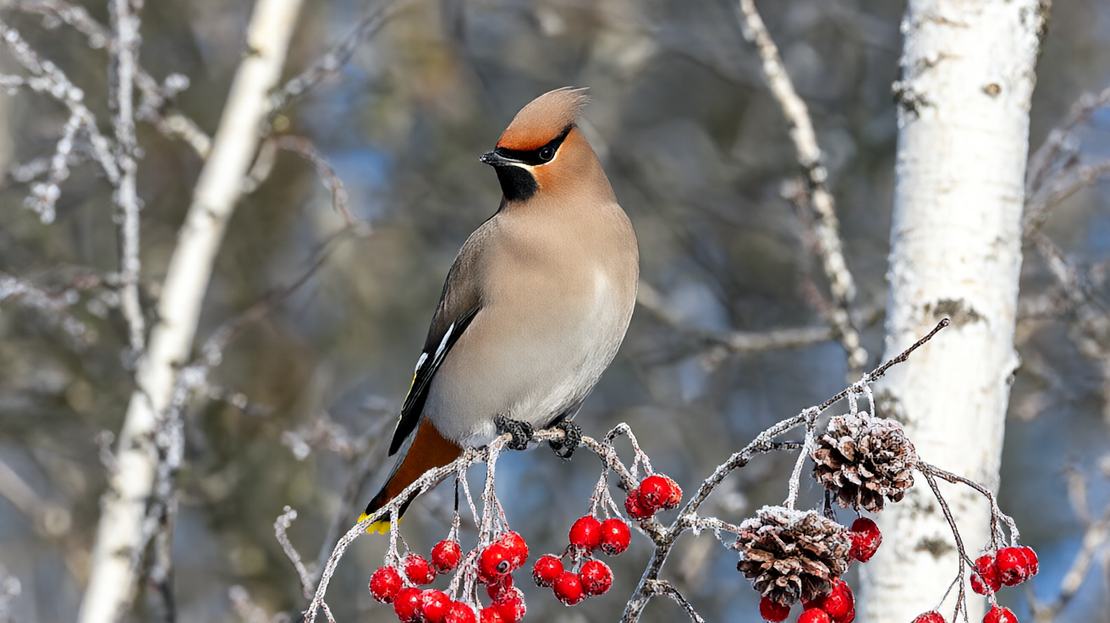
Bombycilla garrulus | Bohemian Waxwing
Species Profile · Bombycillidae
Bohemian Waxwing
A flock lands in a bare rowan tree and leaves it stripped within the hour.
Least Concern
Length
Weight
Clutch
Incubation
Fledge
Rating
The Bohemian Waxwing
The winter visitor with wax on its wings
A flock drops into a rowan tree and strips it in an hour. The birds look soft and slightly too round. A black mask covers each face, and a pointed crest rises behind it.
Wax red tips mark the wing feathers, and those tips gave the bird its name. Winter brings them south, though no two winters ever look quite the same. Some years a town holds hundreds of birds, and in other years none arrive at all.
Because the birds follow berry crops, they move without any fixed route. One fruiting hedge can hold a flock for a week and then stand completely empty.
Family tree
Bombycillidae, the waxwings
Its proper name is Bombycilla garrulus, one of three waxwings in the world. Two relatives live in Japan and North America. The family holds only those three species, and nothing else sits close. Two subspecies are recognised, one in the Old World and one in the New.
Because the group is so small, relationships with other songbirds stayed unclear for years. Recent work places waxwings near the silky flycatchers of Central America. Garrulus means talkative, which suits the constant chatter of a feeding flock.
Crest, mask and wax
How to tell one
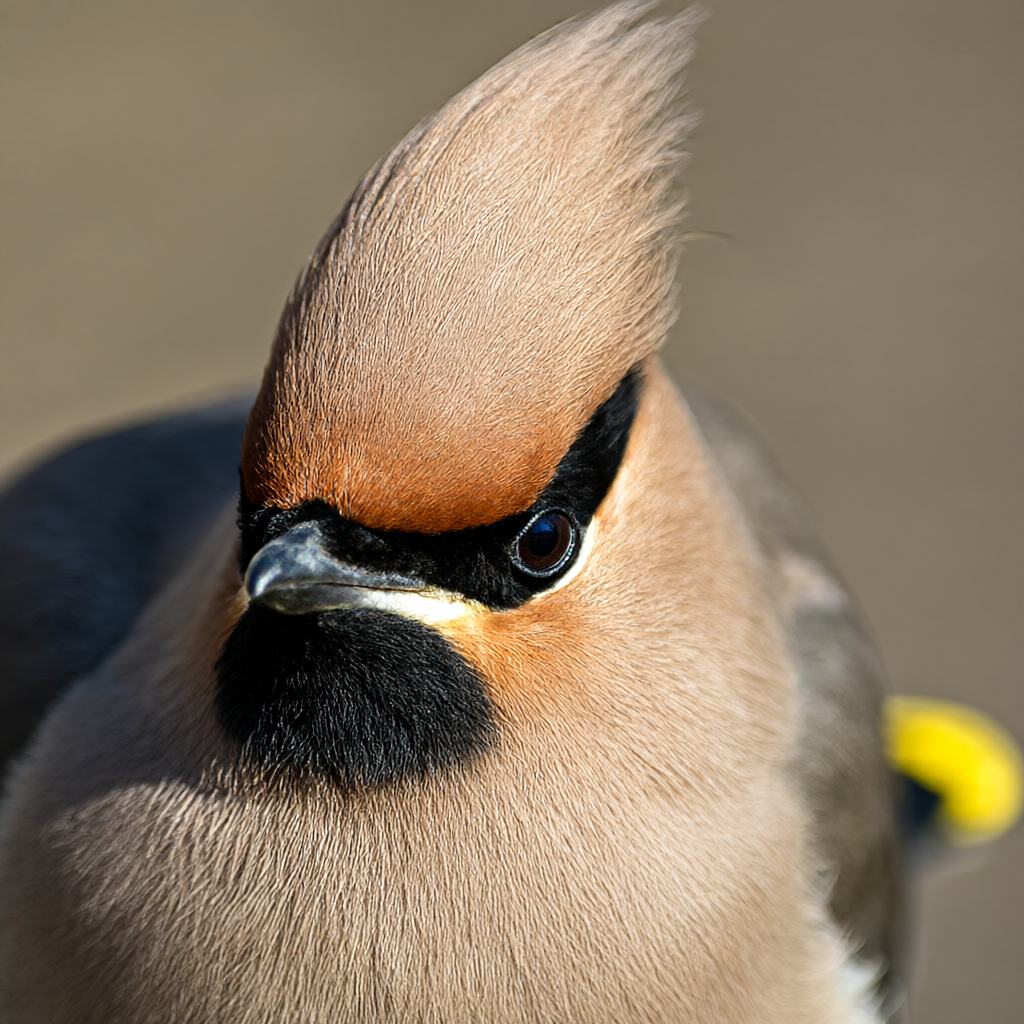
Adults measure 19 to 23 cm from bill to tail. Weight falls between 45 and 70 g, which is heavy for a songbird. Plumage runs pinkish brown, and it looks silky rather than glossy in the winter light. Black covers the eye and throat as a mask, and a tall crest stands behind it in a point.
Red waxy droplets tip the secondary feathers, and only the oldest birds carry many of them. Yellow bands the tail tip, and white marks the wing. The bill is short and wide, since the bird swallows whole berries that would choke a smaller songbird. Because the feathers stay soft and loose, the bird looks plumper than it really is.
Females run slightly duller than males, though the difference is subtle. Feet grip well on a swaying twig, and a flock packs tightly together.
1
2
3
Boreal forest
Where it lives
Boreal forest is the breeding habitat across the north. Birch, spruce and pine all hold nests in open woodland. Winter takes birds south into farmland, parks and town centres. Because berry bushes grow in gardens, towns often hold more birds than the open countryside does.
Irruption years follow a poor berry crop in the north, and birds then appear in thousands across the south. The flock moves on as soon as a hedge is stripped. A song thrush works the same berry bushes, though it takes one fruit at a time.
Berries, swallowed whole
What it eats
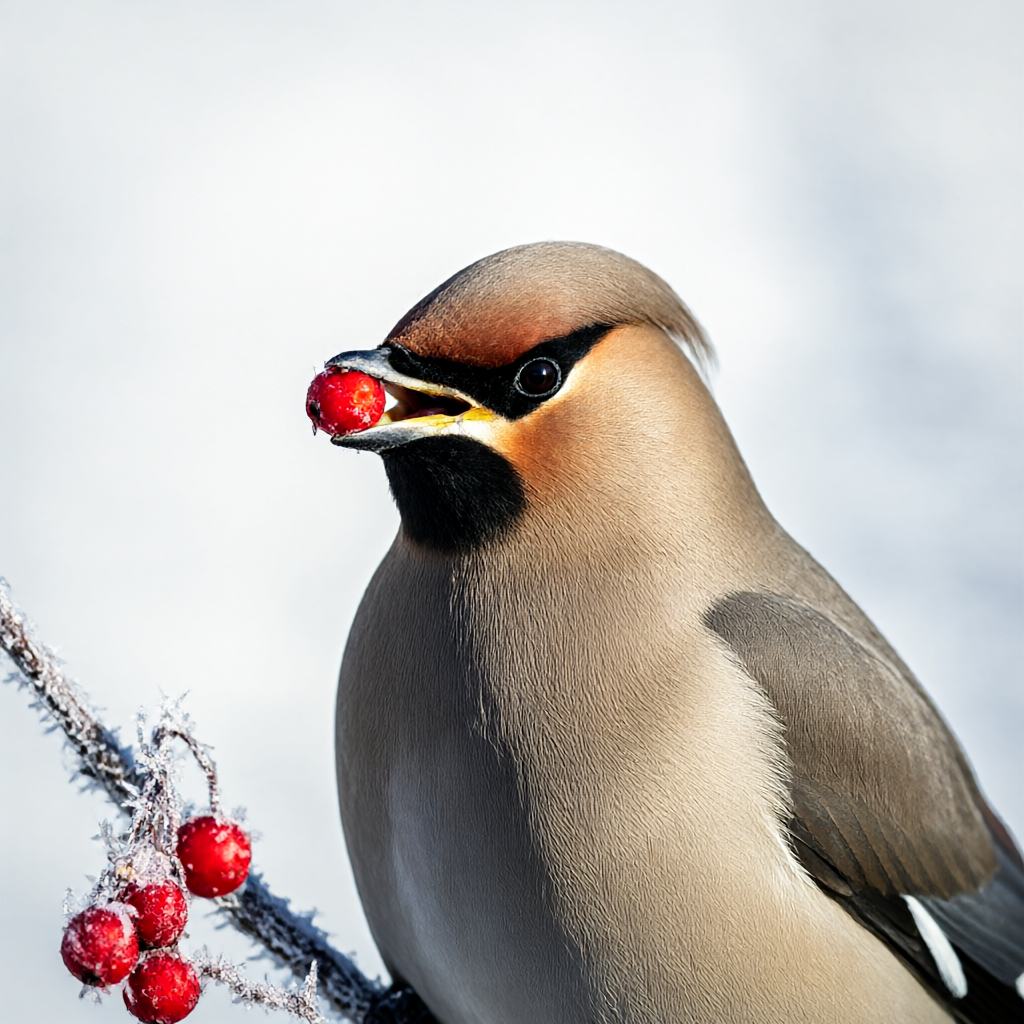
Berries make up most of the winter food. Rowan, hawthorn and rose hips all get taken, and bog bilberry matters in some areas. Fruit goes down whole, and the soft parts digest quickly while the bird flies on to the next bush. Insects supply protein in summer.
Because berries ferment late in the season, birds sometimes fly badly after a long feed. Collisions with windows kill many in towns each winter. A flock feeds fast, since a good bush draws far more birds than it can possibly hold at once.
A short northern summer
The breeding cycle
A pair builds a cup of twigs and grass in a conifer. Down and moss line the inside, and the nest sits well out on a branch. Four to six eggs are laid in early summer. Incubation lasts about 14 days, and the female does most of it.
Chicks grow fast, since the northern summer is short. Fledging takes 15 to 17 days, and insects feed the young throughout. Because the breeding range is so remote, only a few nests get studied at all.
Alcohol in ripe fruit
Conservation
The Red List calls the species Least Concern. The breeding population looks large, though counts are rough. Because the bird wanders across borders, no single country can manage it alone, and no survey follows it. Logging removes the old trees that hold nests in the north.
Window strikes kill many birds in towns during irruption years. Fermented fruit causes further losses late in winter. Nothing suggests a rapid decline yet, and the species remains widespread.
Side by side
How It Compares
| Trait | Bohemian Waxwing | Cedar Waxwing |
|---|---|---|
| Family | Bombycillidae | Bombycillidae |
| Length | 19-23 cm | 15-18 cm |
| Food | rowan and other berries | berries and flying insects |
| Wing marks | red droplets, yellow tail band | red droplets, no yellow band |
| Range | northern Eurasia | North America |
| Rating | Least Concern | Least Concern |
Common misreadings
What People Get Wrong
- Not one garden. A flock strips a rowan tree and then moves on. Those birds may not return for years, since the wander follows the berry crop across a whole continent.
- Not paint. The red droplets are flattened extensions of the feather shaft. Old birds carry the most, and a bird with a full row of them has survived several winters of weather and hawks.
- Not drunk birds. Fermented fruit does contain alcohol, and flocks do eat it. Most birds move on before the sugar turns, and the famous stories come from gardens where fruit sits too long.
Going further
Sources and Further Reading
Quick hits
Five things to remember
- Its wing tips look like red wax.
- It can get drunk on berries.
- It has no fixed migration route.
- Its family holds only three species.
- A flock can strip a tree in an hour.