 By Iris
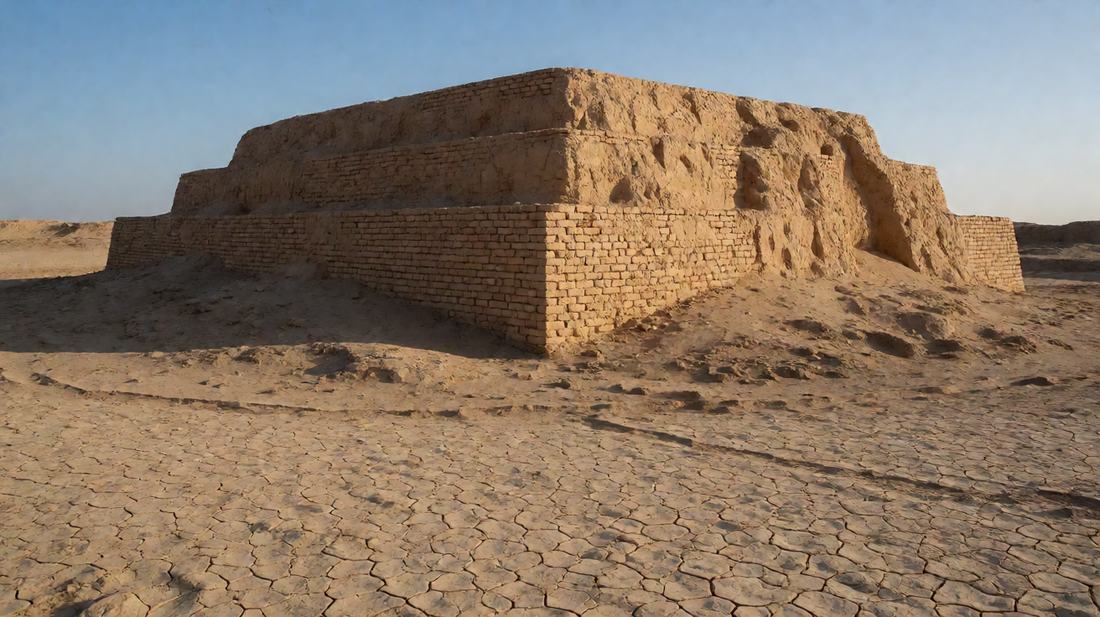
The Moche | The Pyramid Builders of the Coast
Historical Profile · Peru
The Moche | The Pyramid Builders of the Coast
A state of mud brick and canal water on a desert coast, which built the largest platform in the Americas and then broke apart when the water failed.
AD 100-700
Founded
Capital
Water
Craft
End
The big picture
Introduction
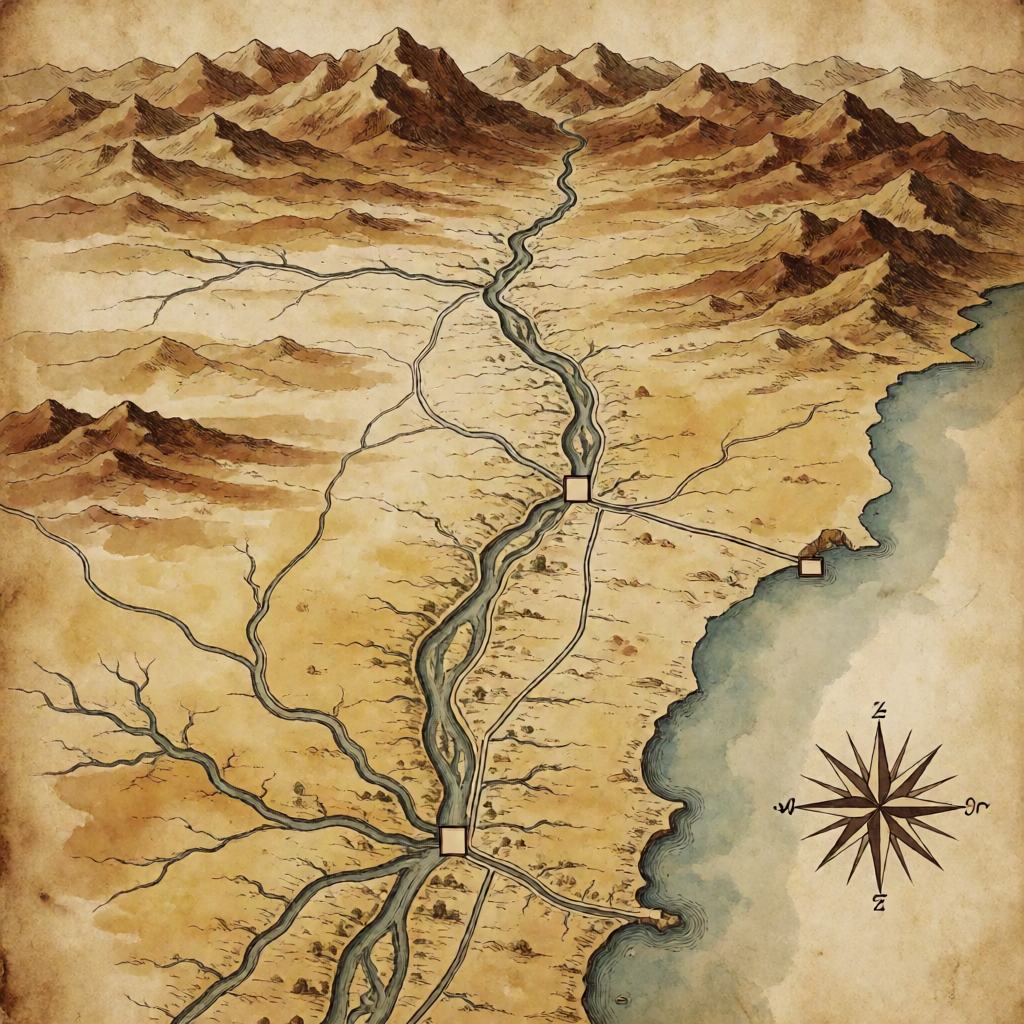
Moche is the name of a people who never wrote a word we can read. Their state stood on a narrow strip of desert between the Andes and the ocean. Rivers ran down from the mountains, and every drop had to be guided since rain almost never fell. Builders turned water into fields.
That surplus in turn paid for the pyramids. Two great mounds of mud brick rose at the capital. One of them still stands. Metalsmiths worked gold, silver and copper into masks and cups, and indeed into regalia of every kind.
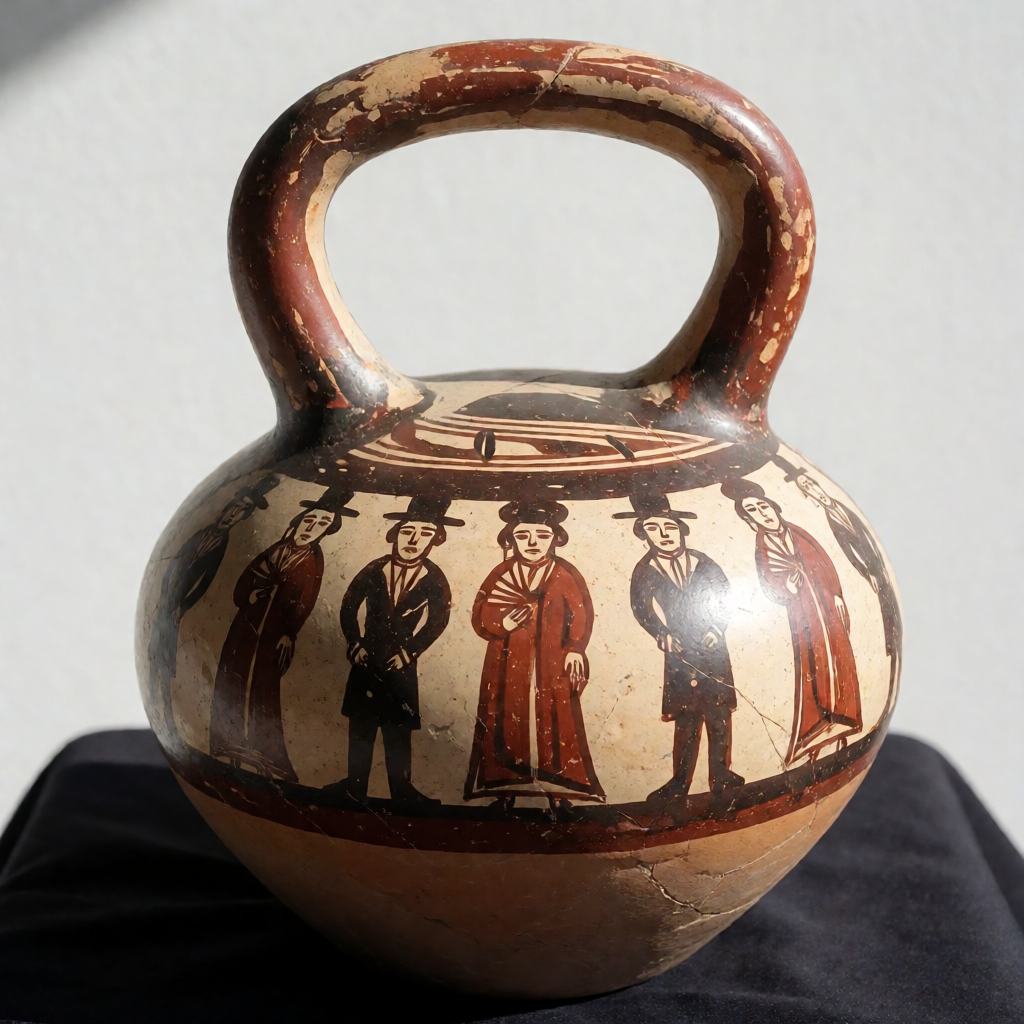
Potters made vessels that show battles, processions and the faces of rulers. Its state lasted about six hundred years and then broke apart. No city arose beyond the valleys. What survived was clay, metal and a shape cut into the desert.
Setting
Historical Context
People had farmed these valleys for two thousand years before the Moche arrived. Earlier builders raised platforms of stone and clay, and the Moche inherited that habit while changing the style. Their state appears around AD 100 in two river valleys on the northern coast. Southern valleys looked to the Moche valley and its two great mounds. Northern valleys looked to the Jequetepeque and to their own courts. Each mound was built from millions of mud bricks, and many of those bricks carry a maker’s mark.
Such a mark let a gang be paid, and in effect it turned tribute into walls. Craft workers lived beside the pyramids in planned rooms. Rulers were buried under the floors with gold. They also took a good deal of pottery. For six centuries the state grew. Then the water failed.
Drought could break a state that lived on a canal, and so could a violent flood. Both happened, since the record of ice and sediment shows a run of bad years. Central authority failed, and the valleys in turn broke into small lordships. No single cause explains the end, and historians still argue about it. What is clear is that the pyramids were abandoned, not destroyed.
Turning points
Key Events
Records of events come from pictures rather than from writing. Painted pots show a sequence that scholars call the Sacrifice Ceremony. Warriors are taken in battle, and their weapons are hung on a pole. Crescent headdresses mark the noble who receives the captives. Each scene ends with a cup of blood. Blood is the point.
No text explains it. Excavators found the bodies of young men under the platform of the smaller mound. Their bones were cut and their graves were sealed, and the story on the pots matched the ground. Such agreement is rare, since art and archaeology seldom match so closely. In AD 450 a woman of high rank was buried at a site now called El Brujo. Her grave held gold, copper and cloth.
It held a set of weapons too. Weapons in a woman’s grave are unusual, and her rank thus remains a puzzle. Between AD 600 and 800 the two halves of the state quarrelled. Two centres fought, and the loser in turn lost its monopoly on craft. After that the style spread in every direction, though no single court controlled it.
1
2
3
Who held power
People and Powers
One ruler sat at the top, and his face was in effect the face of a god on the walls. Priests stood beside him, and they read the calendar of the ritual year, since a wrong day could ruin a rite. Below them came a warrior class that supplied officers in war. Craft specialists formed a middle group, and they lived near the temples. Potters, weavers and metalsmiths worked for a lord and were fed by him.
Commoners worked the fields and the brick yards. The work was owed as tribute. There was no standing army, and equally there was no police force. Obligation ran the state, and obligation was recorded on bricks. Brick marks show which gang made it, and thus who had paid.
No code of law survives, and thus the rules must be inferred from the buildings. Power was personal, and it depended on a ruler who could feed his people. Weak heirs inherited a strong machine, and the machine then began to slip. Most states of this kind follow the same pattern, and the Moche were no exception.
Everyday world
Daily Life and Society
Most families lived in one room of mud brick. The roof was woven matting. Houses had a courtyard, a hearth and a store jar sunk into the floor. Floors were packed earth, and walls were replastered every year, since dust blows in from the desert. Water came by canal.
Every household owed labour on it. Fields lay beyond the houses, and the harvest was stored in sealed rooms. Pottery served every use, and a good vessel was indeed a mark of standing. Cloth was woven at home from fibre grown in the valleys. Commoners ate from plain bowls, and lords ate from painted ones, so that rank showed at the table.
Work began at dawn. Noon was for rest. Children learned a trade from a parent, and the trade likewise stayed in the family. Life was short, and the bones show hard labour from an early age.
Craft and ideas
Trade, Technology and Ideas
Metalwork was the most advanced craft, and it began with hammering. Smiths beat gold into thin sheet, and they shaped it over a wooden form. They also cast copper in moulds. Joined metals made a harder alloy. Gilding came later, and it let a copper object look like solid gold.
Pottery was made in moulds, and thus a workshop could turn out hundreds of identical vessels. That is an early form of mass production, and in fact it fed a market that reached far inland. Bricks were stamped or marked, and the marks show a system of quotas. Canals carried water for many miles, and the slope had to be measured with care. Copper came from the highlands, and in turn it moved down the valleys by pack.
There was no coinage. Indeed there was no market in the modern sense. Value moved through gifts and through tribute, so that a lord was a clearing house. Gold work of this quality also appears among the Muisca far to the north. Ideas moved more slowly, since every valley kept its own style of painting.
What lasted
Legacy
The state fell, yet its canals were still in use a thousand years later. Later kingdoms took the old channels and enlarged them, and thus inherited a working system. Its rulers built a city of mud that is the largest of its kind on earth. Moche moulds passed into that tradition, and the pottery in turn stayed fine. Archaeology here began with a German scholar who dug at the pyramids in 1899. For a century after him the site was treated as a quarry.
Looters took gold, and they left broken pots in heaps, so that context was lost. Field survey then mapped the site, and it changed the picture. Painted pots are now read as texts, and their scenes can be compared. This method gave the Moche a history, though it gave them no names. Stonework tells a different story, and Machu Picchu shows what a later state could do. Permanence was the aim of the Incas, and their walls still stand without mortar.
Moche building was never meant to last. Most of it has gone back to earth. States can run on clay and water. They can still produce art of the first order. This is the lesson. A written record would have blurred it.
Side by side
How It Compares
| Point | Moche | Nazca |
|---|---|---|
| Dates | AD 100-700 | 100 BC-AD 800 |
| Coast | Northern valleys | Southern desert |
| Building | Platforms of mud brick | Lines and open courts |
| Water | Canals fed from the rivers | Channels dug into gravel |
| Art | Painted pots and fine metal | Painted pots and cloth |
| End | Drought and local war | Highland pressure |
Common misreadings
What People Get Wrong
- The Moche are often called a state with one capital. Two centres shared the coast, and neither held the other for long.
- Their pyramids are usually described as temples alone. The larger mound held workshops and stores as well, so that the whole complex worked as a seat of government.
- The Sacrifice Ceremony is often read as pure myth. Excavated graves match the painted scenes closely, down to the cut bones.
Going further
Sources and Further Reading
- Wikipedia, Moche culture
- Encyclopaedia Britannica, Moche. Encyclopaedia Britannica, Inc.
- Moseley, M.E. 2001. The Incas and Their Ancestors. Thames and Hudson.
- Quilter, J. 2014. The Ancient Central Andes. Routledge.
Quick hits
Five Things to Remember
- The Moche built two great pyramids of mud brick.
- Their state ran for about six hundred years.
- Painted pots show battles, processions and ritual.
- In AD 450 a high-ranking woman was buried with weapons.
- The canals they dug served later states for centuries.