 By Iris
The Sultanate of Aceh | The Veranda of Mecca
Historical Profile · Sumatra
The Sultanate of Aceh | The Veranda of Mecca
A port at the far end of a strait, which turned a position between two seas into four centuries of trade, law and war.
AD 1496-1903
Founded
Position
Wealth
Court
End
The big picture
Introduction
Great ports can be lost in a day. New ones can rise in a decade, since trade moves faster than stone. In 1511 Portugal took Malacca, and the traders who had used it looked for another harbour. They found one at the northern tip of Sumatra.
Aceh had a good bay, a short route to the spice coast and a ruler who wanted them. Within a century it was the richest state in the region. Its king could put a fleet to sea, and its scholars could argue law with anyone. It also called itself the veranda of Mecca, since pilgrims waited there for a ship.
Three European powers tried to take it, and two failed. Thirty years passed before the third power won. What made the port was not its own goods but its position between two seas, and every fleet knew it.
Setting
Historical Context
Sumatra’s northern tip faces the strait on one side and the open sea on the other. That position made it a natural stop, and it also made it a target for every fleet that wanted the strait. Local lines took the coast in the 1490s and began to build a state. That state grew from the tolls, in effect. The fall of Malacca gave it a gift, since Muslim merchants moved their warehouses north, and they brought their capital with them.
Its new port sold spice to the west and bought cloth from India. Whoever taxed that trade could pay for a fleet. Aceh also sat at the end of the pilgrim route. Ships to the Red Sea left from a handful of harbours. Aceh was one of them.
That traffic gave the court a second income and a claim to lead. It also brought teachers who had studied in Arabia. Courts that could argue law were courts that other states respected. Students came from far away.
Turning points
Key Events
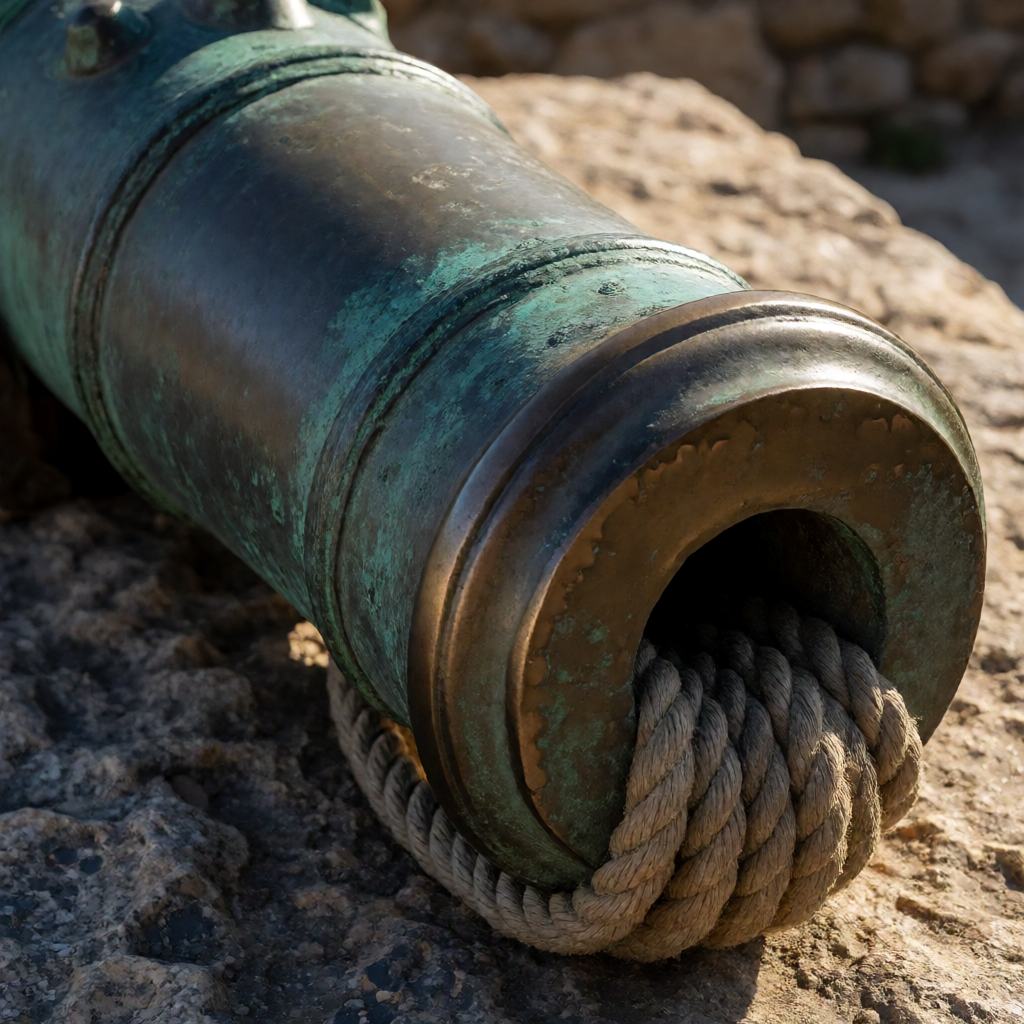
War with Portugal began early and never quite ended. Aceh took the old Portuguese post at Pasai in the 1520s. Portugal answered with raids, and the raids did not stop the trade. A greater king came in 1607, moreover, and he changed everything. Iskandar Muda spent thirty years building a fleet and a siege train.
He attacked Malacca twice, in 1615 and in 1629, and failed both times. Fortified towns held by a determined garrison are hard to take from the water. Two attacks proved it, and he took his revenge on Johor instead, though that war cost more than it earned. His successors reversed his policy and made peace. Queens then ruled in a line for half a century.
It stayed rich, though the fleet shrank. Dutch ships came in greater numbers, and a company wanted a monopoly. Terms agreed in 1641 gave the Dutch a share, and a share became a grip. In 1873 a new war began, and it ran until 1903.
1
2
3
Who held power
People and Powers
Sultans sat at the top, and a council of chiefs sat below them. Chiefs held districts and supplied men, and in return they kept their own courts. Religious courts settled marriage and inheritance, and royal courts settled the rest. The state sold its main export itself, and a monopoly paid for the fleet. That arrangement made the crown rich and the chiefs restless.
Queens who ruled well could hold the balance, and four did. Four queens did, in a row, and their coins carry their names. Below the court stood merchants from India, Arabia and China. Each group lived in its own quarter. Merchants who lost the favour of the court lost their trade as well, since a port lives on trust.
Farmers paid a tithe, and river crews paid a share of the catch, so that no trade escaped the tax. Neither had a voice at court, yet a trading state listened to traders. That was its strength as well as its weakness.
Everyday world
Daily Life and Society
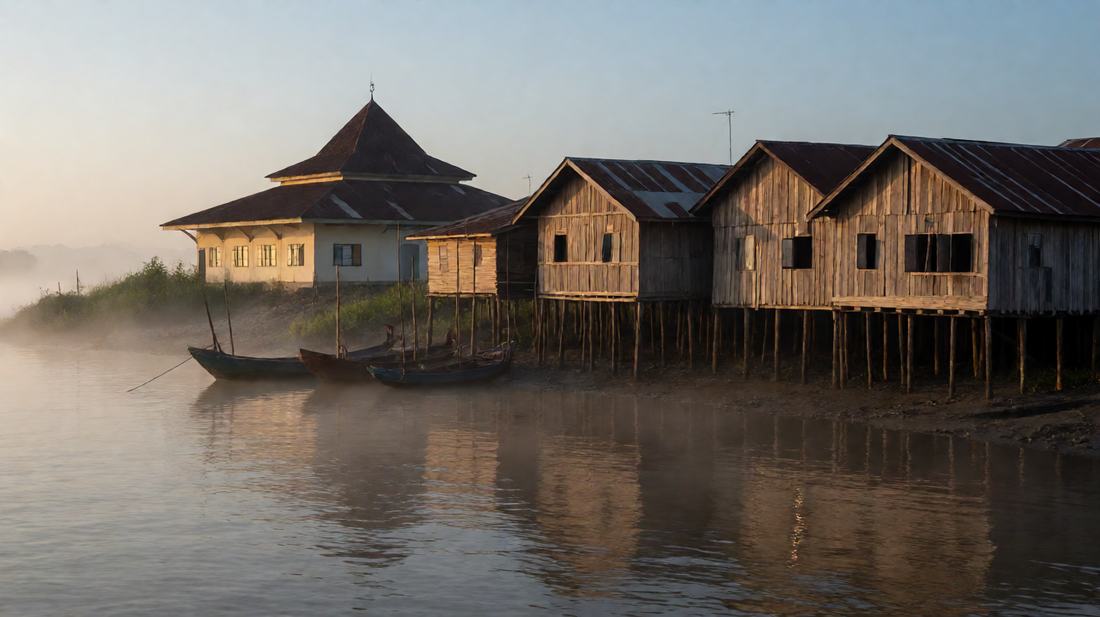
Most people in the lowlands grew rice and worked the river. Households kept a house on posts above the flood. A boat was as useful as a cart, and every family had one. Starch and grain fed a family. A bad harvest meant a lean year. Cloth came from India, and a common family wore the cheaper sort. Markets floated on the river in some towns.
Fixed markets stood in others, so that trade met twice a week. Houses were built of timber with a steep roof. Space below held a boat, which was the family’s second asset. Women ran the market trade in many towns. A few of them grew rich. Children learned the faith and a trade from a parent. Most never left the district.
Festivals marked the end of the fast. Everyone came out, and the market closed for a day. Mosques stood near the harbour. Their call set the hours, so that the day had a shape. Sick men went to a healer or a shrine. Often to both, rather than choose.
Craft and ideas
Trade, Technology and Ideas
Spice went west, and cloth and grain came east. Ships from Gujarat brought cotton and took spice home. Round trips took a season. Chinese ships had called at the coast in 1414. Their account of the place is one of the earliest we have.
Zheng He had come with a fleet and a claim. That visit changed nothing lasting. The Silk Road was a land route, yet its goods reached this coast by sea. Ports that sold spice to three markets could set their own price, and thus their own terms of trade. Tin came down from the interior, and it paid for rice.
Coins struck in the name of the sultan paid for small things. Foreign coins were weighed, since trust stopped at the border. Merchants needed credit, and credit needed law. Courts that enforced a contract kept their trade, while courts that broke one lost it within a season.
What lasted
Legacy
What survived was a place, a faith and a memory of independence. Aceh kept its own line longer than any other state in the region. War in the nineteenth century cost both sides dearly. A long peace followed, but the memory stayed. This province keeps a special status and a special law, and it keeps them still.
Its harbour still handles trade, and its mosques still draw students. The Majapahit Empire had claimed the sea lanes in an earlier age, and its claim was remembered. Aceh made a different claim, since it led by faith rather than by descent. Writers argue about how much of the wealth reached a village. Harbour records show ships, and the ships show a trade, in turn.
They do not show what a river crew kept. Boasts on a tombstone are not a tax roll. That is where the history gets hard.
Side by side
How It Compares
| Point | Aceh | Malacca |
|---|---|---|
| Dates | AD 1496-1903 | AD 1400-1511 |
| Position | The northern tip of Sumatra | The narrow point of the strait |
| Wealth | Pepper, tin and gold | Spice, cloth and tin |
| Rule | A sultan with strong nobles | A sultan with a chief minister |
| Faith | A centre of Islamic learning | A centre of Islamic trade |
| End | A long war with the Dutch | Taken by Portugal in 1511 |
Common misreadings
What People Get Wrong
- Popular accounts draw the sultanate as a pirate port. Its court kept a written law, a mint and a fleet, and it fought the Portuguese for a century.
- The fall of Malacca is usually said to have moved trade north at once. The shift took decades, and Johor took the first share of it.
- Relations with the Ottomans are often overstated. Aceh asked for guns and received some, yet it never became a province of any foreign court.
Going further
Sources and Further Reading
- Wikipedia, Aceh Sultanate
- Encyclopaedia Britannica, Aceh. Encyclopaedia Britannica, Inc.
- Reid, A. 1988. Southeast Asia in the Age of Commerce. Yale University Press.
- Ricklefs, M.C. 2008. A History of Modern Indonesia. Stanford University Press.
Quick hits
Five Things to Remember
- Aceh rose after Portugal took Malacca in 1511.
- It sold spice to the west and bought cloth from India.
- Iskandar Muda attacked Malacca twice and failed both times.
- Four queens ruled in a row and struck coins in their own names.
- A war with the Dutch ran from 1873 to 1903.