 By st20113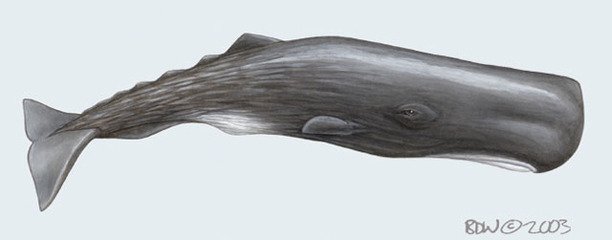
Introduction
The sperm whale (Physeter macrocephalus) is the largest toothed predator on Earth, recognizable by its enormous square-shaped head constituting up to one-third of the animal’s total body length. Found in every ocean from the Arctic to the Antarctic, sperm whales are legendary deep divers, capable of descending to depths exceeding 2,000 meters in pursuit of their primary prey, giant squid. The species was the target of the largest single-species hunt in human history, immortalized in Herman Melville’s Moby-Dick.
Taxonomy
The sperm whale is the sole living member of the family Physeteridae, belonging to the order Artiodactyla and the infraorder Cetacea. Its scientific name translates as “blowpipe whale with a large head,” referencing its most striking feature. The species is classified within the suborder Odontoceti, the toothed whales, distinguishing it from filter-feeding baleen whales. Molecular data indicate that sperm whales diverged from other toothed whales 25 to 30 million years ago, making them evolutionarily distinct from dolphins, porpoises, and beaked whales. The sperm whale represents a deep evolutionary branch within the cetacean lineage.
Physical Characteristics
Sperm whales are the largest toothed whales, with adult males reaching 15 to 18 meters and 35 to 45 tonnes, while females are smaller at 11 to 13 meters and 15 to 20 tonnes. The most distinctive feature is the massive rectangular head containing the spermaceti organ, a cavity filled with a waxy liquid once prized for candles and lubricants. Sperm whales possess the largest brain of any animal, weighing 7 to 9 kilograms, more than five times the size of a human brain. They produce clicks exceeding 230 decibels underwater, the loudest sounds of any animal, used for echolocation and long-range communication. Like the walrus, they are large, deep-diving marine mammals with powerful jaws.
Habitat
Sperm whales are found in every major ocean, from polar waters to the equator, though distribution varies between sexes and age classes. Adult males range into cold, productive polar waters during summer before returning to warmer breeding grounds, while females and juveniles are largely restricted to warmer latitudes. Sperm whales prefer deep offshore waters, occasionally entering continental shelf waters where deep canyons bring the seafloor close to shore. Tagging studies reveal that sperm whales are among the deepest-diving marine mammals, with foraging dives routinely reaching 400 to 800 meters and lasting 30 to over 60 minutes. Like the humpback whale, sperm whales are highly mobile and capable of transoceanic migrations.
Diet
The sperm whale’s diet is dominated by cephalopods, with giant and medium-sized squid as the primary prey. Studies of stomach contents have documented more than 30 squid species, including the giant squid and colossal squid, as well as demersal fish and crustaceans. Sperm whales use echolocation clicks to locate and track prey in the darkness of the deep sea, then rush in to seize it with their powerful jaws. The energetic cost of deep foraging is substantial, with large adult males consuming an estimated 700 to 1,000 kilograms of food daily. Like the orca, they are apex marine predators that play a keystone role in their ecosystem.
Reproduction
Sperm whales have a slow reproductive rate, with females giving birth to a single calf every 4 to 6 years after a gestation of 14 to 16 months. Calving occurs in warm tropical or subtropical waters, where females form cooperative nursery groups that provide protection and babysitting services. Newborns measure approximately 4 meters and weigh around 1 tonne, nursing for 2 to 3 years while learning hunting skills from their mothers and other group members. The long calving interval is the primary factor limiting population recovery from historical overexploitation. Like the great white shark, sperm whales exhibit extreme sexual dimorphism, with adult males up to three times the mass of females.
Conservation
The sperm whale was hunted for more than 200 years for its spermaceti oil and ambergris, reducing global populations to a fraction of their original size. The International Whaling Commission imposed a complete moratorium on commercial hunting in 1985, allowing populations in many regions to recover. Today, primary threats include entanglement in fishing gear, ship strikes, and ocean noise pollution. Commercial shipping creates collision risks, while underwater noise from ships and sonar systems interferes with communication and foraging efficiency.
Fun Facts
The sperm whale holds the record for the deepest documented dive by a marine mammal, with one individual recorded at 2,992 meters below the surface. The rhythmic clicking patterns produced by feeding sperm whales, known as codas, vary between populations and function as a form of cultural transmission, with different social groups maintaining distinct repertoires across generations. This cultural diversity has been compared to human language variation and represents one of the most compelling examples of animal culture in the marine environment. Herman Melville’s Moby-Dick transformed the sperm whale into one of the most enduring symbols in world literature.
[…] swims fast and fights hard, the sperm whale also gave whalers their most famous stories. It is the sperm whale that stands at the centre of Herman Melville’s novel Moby-Dick, published in 1851. Science […]