 By st20113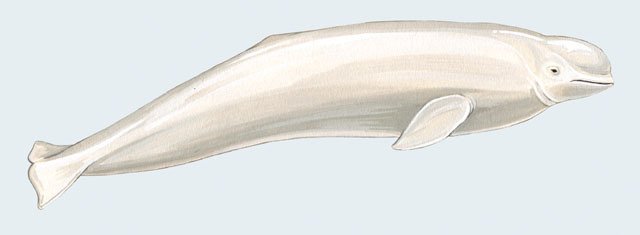
Introduction
The beluga whale (Delphinapterus leucas) is a small, arctic-dwelling cetacean known for its striking white color and flexible, bulbous forehead. Often called the sea canary for its wide repertoire of chirps and whistles, the beluga is a highly social toothed whale of the monodontidae family. Belugas inhabit the cold waters of the Arctic and sub-Arctic, migrating with the seasons along coastlines and into river estuaries. Unlike the enormous blue whale that filters tiny krill, the beluga is an active predator of fish and invertebrates.
Taxonomy
Belugas belong to the family Monodontidae, which includes only one other living species, the narwhal. The genus Delphinapterus means wingless dolphin, referencing the absent dorsal fin, while leucas derives from the Greek for white. Toothed whales, belugas are relatives of the bottlenose dolphin and the orca, though they diverged into a distinct arctic lineage. Fossil relatives once ranged farther south, but today the beluga is a true cold-water specialist. The humpback whale belongs to a different suborder of baleen whales, illustrating the broad diversity packed within the order Cetacea as a whole.
Physical Characteristics
Adult belugas measure three to five meters long and weigh between four hundred and fifteen hundred kilograms, with males larger than females. Their most distinctive feature is the melon, a malleable fat pad that focuses echolocation clicks and changes shape with mood. The skin is slate grey at birth, fading to creamy white by maturity. A flexible neck allows the head to turn independently, unlike most whales with fused neck vertebrae. The great white shark poses little threat in the beluga’s icy realm, though polar bears and orcas may prey on them. Thick blubber insulates against freezing water, and the unpigmented skin reduces heat absorption in summer open water.
Habitat
Belugas occupy shallow arctic and sub-arctic waters, favoring estuaries, fjords, and ice edges where fish congregate. They undertake long seasonal migrations, sometimes exceeding thousands of kilometers, moving between summer feeding grounds and winter ice fields. Some populations summer in brackish river mouths, where they rub on gravel to shed skin. The humpback whale and the blue whale roam more open pelagic waters, while the beluga stays closer to coasts and ice. Belugas are uniquely adapted to ice, using breathing holes and cracks to surface. Climate change and industrial noise increasingly reshape these quiet habitats, complicating the whales’ reliance on sound for navigation and social contact.
Diet
Belugas are opportunistic feeders, taking a variety of fish such as salmon, capelin, cod, and herring, plus invertebrates like squid, shrimp, and worms. They hunt cooperatively, herding schools into tight balls and stunning prey with tail slaps. Unlike the specialist great white shark, which targets fatty marine mammals and fish, the beluga switches prey with the seasons and available stocks. Their echolocation lets them find food in dark, murky, or ice-covered water where vision fails. Calves begin eating solid food within months but continue nursing through their first year. Seasonal feasting builds the blubber reserves needed to survive lean arctic winters beneath the ice.
Reproduction
Female belugas mature around four to seven years and calve every two to four years after a fourteen to fifteen month gestation. A single calf is born tail first in warm summer waters, then nurses for up to two years while learning to hunt. The strong mother calf bond is central to beluga society and survival. Males mature slightly earlier and compete for mates through displays and vocalization. Because belugas invest heavily in few offspring, populations are slow to rebound after declines. Calving grounds in estuaries are especially vulnerable to disturbance, and protecting these nurseries is a priority for managers seeking to keep local groups stable and resilient over time.
Conservation
The beluga is assessed as Least Concern globally, yet several localized populations are endangered or depleted. The Cook Inlet population in Alaska is listed as Endangered due to pollution, habitat degradation, and prey shifts. Belugas are vulnerable to ship noise, oil spills, and chemical contaminants that accumulate in their blubber. Inuit communities harvest belugas sustainably under co-management plans, but climate change is reshaping arctic food webs. The orca and other predators add natural pressure, while warming seas alter the fish the whales depend on. Conservation focuses on reducing noise, protecting estuaries, and monitoring stocks so that these charismatic arctic whales endure as the region transforms.
Fun Facts
Belugas can change the shape of their melon at will, producing an astonishing range of facial expressions. They are among the most vocal whales, earning the name sea canary for songs that include clicks, whistles, and bell-like tones. Unlike the humpback whale with its acrobatic breaches, belugas often swim upside down and spy hop to inspect their surroundings. Perhaps most charming, captive belugas have mimicked human speech patterns, delighting researchers studying the evolution of communication across the mammalian world.
[…] Monodontidae, which contains just two living species — the narwhal and its close relative, the beluga whale. The genus name Monodon means “one tooth” in Greek, and the species name monoceros […]