 By st20113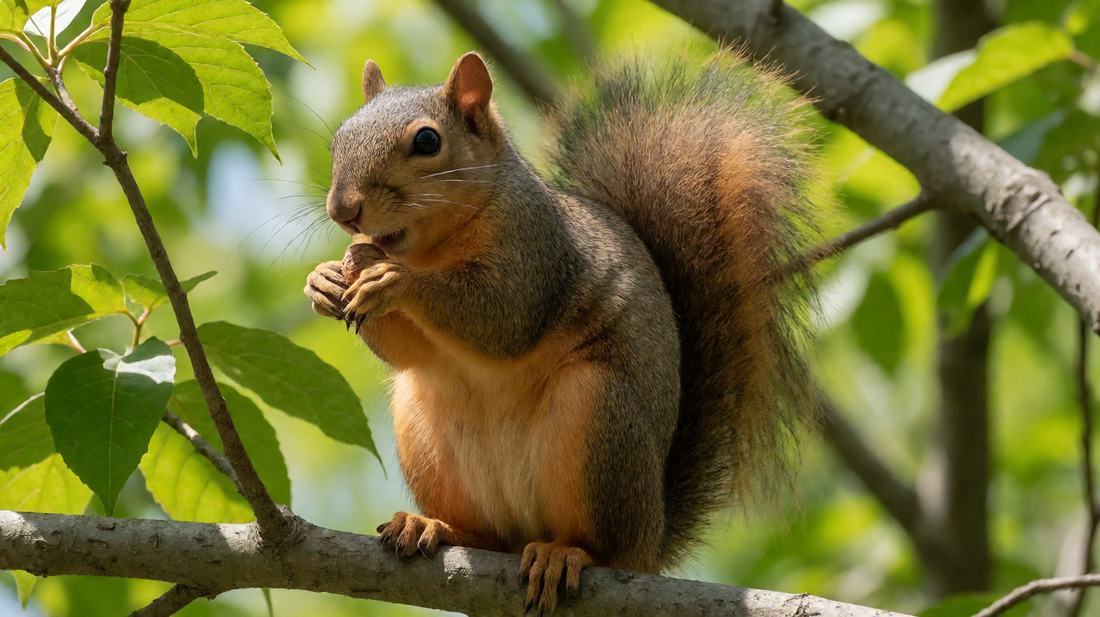
Sciurus niger | Fox Squirrel
Species Profile · Sciuridae
Fox Squirrel
The largest tree squirrel in North America, bounding across open oak woodlots and burying thousands of nuts that grow into the next forest.
Least Concern
Total length
Tail
Weight
Litters
Leaves nest
Rating
The Fox Squirrel
The squirrel that plants the forest
A large squirrel bounds across an open oak woodlot. Its tail is full and rusty. The belly shows warm orange.
Tree squirrels rarely get this big. Acorns are the winter staple, of course. Nuts are buried one by one.
Many are never found again. Those lost nuts grow into trees. Because the animal buries thousands of nuts each autumn, it quietly plants more forest than any person with a shovel could manage.
Family tree
Sciuridae, the squirrels
The species belongs to the family Sciuridae. Carl Linnaeus described it in 1758. Ten subspecies are now recognised. Colour differs widely between them.
The capybara is a rodent of South America and a much larger one. Both gnaw with front teeth that never stop growing. One lives in trees and buries nuts, however, while the other grazes grass in wet fields beside rivers.
Big, rusty and long-tailed
How to tell one
Total length runs 45 to 70 cm. The tail adds 20 to 33 cm. Weight falls between 500 and 1000 g.
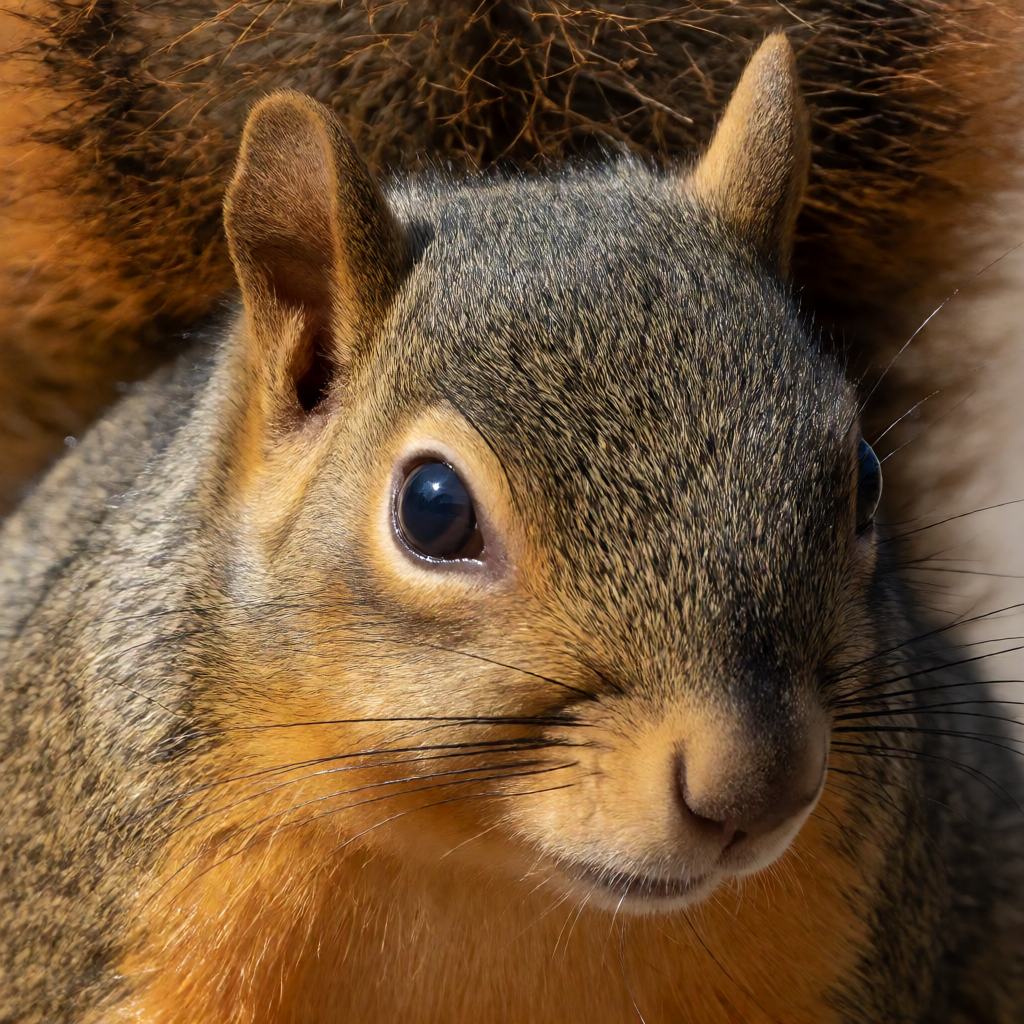
Fur is coarse and fairly long. Colour runs from grey to rusty orange. Some southern animals are almost black.
Ears are short and rounded. In addition, hind feet are large and strong. Nothing about the build is tiny, and the whole animal is the largest tree squirrel in North America by a wide margin.
1
2
3
Open oak woods and city parks
Where it lives
Open oak and hickory woods are the best ground. Small woodlots suit it well. City parks and old cemeteries hold squirrels.
Its range covers the eastern and central United States. Southern Canada marks the northern edge. Introduced animals live in the west as well.
A mix of trees and open ground matters most. Because the squirrel travels on the ground more than most tree squirrels, hedges and fences matter as much as the trees themselves.
Acorns and cached nuts
What it eats
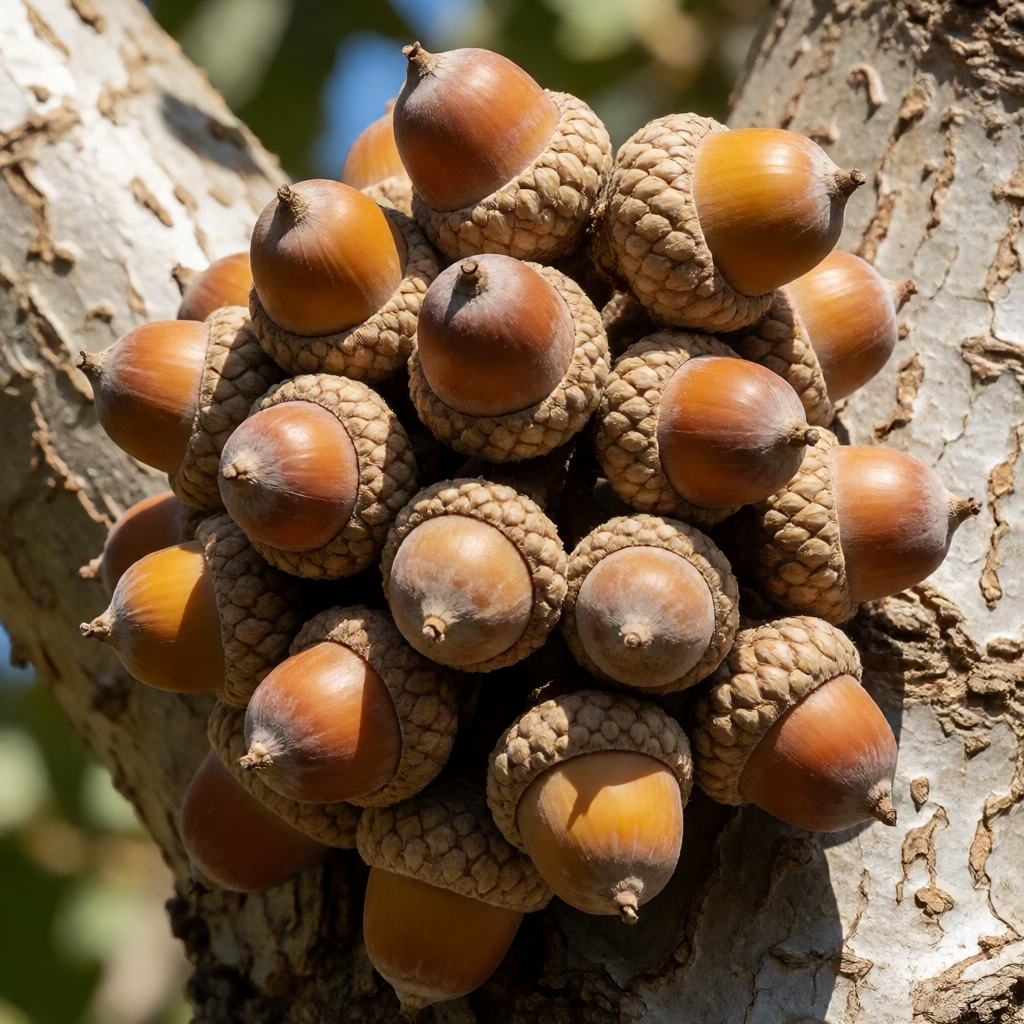
Acorns are the autumn staple. Hickory nuts and walnuts follow. Pecans and beechnuts are eaten.
Seeds, buds and flowers fill spring. Fungi and insects are taken. Bird eggs are raided at times.
Corn and garden crops are fair game. Food is cached in thousands of spots, in fact. Because a buried nut that is never dug up will sprout, the squirrel works as one of the main planters of hardwood forest.
Two litters in a good year
The breeding cycle
Breeding peaks in late winter and again in summer. Males chase females through the branches. Nests are made of leaves and twigs.
Tree cavities are used as well. Litters hold 1 to 6 young. Two or three is the usual number.
Young are born blind and naked. They leave the nest at about 3 months, even so. Because many squirrels die in their first year, the species breeds twice a season and relies on numbers rather than on long lives.
Least Concern
Conservation
The IUCN rates the species as Least Concern. The range is wide and the numbers high. City squirrels do very well.
Loss of mature oak woods is the main worry, however. Cars kill many animals each year. Hunting is legal in much of the range.
Unlike the redwood, which needs centuries of undisturbed ground to recover, this squirrel bounces back from disturbance in a couple of seasons. That fast rebound helps, since a woodlot cleared one year can hold squirrels again as soon as the young trees reach seeding age.
Side by side
How It Compares
| Trait | Fox Squirrel | Eastern Grey Squirrel |
|---|---|---|
| Size | largest North American tree squirrel, 500 to 1000 g | smaller, 400 to 600 g |
| Colour | rusty orange to black | grey with a whitish belly |
| Range | eastern and central United States | eastern North America |
| Tail | full and rusty | bushy, grey with white tips |
| Ground use | travels a lot on the ground | more often in trees |
| IUCN status | Least Concern | Least Concern |
Common misreadings
What People Get Wrong
- A black squirrel is a separate species. Some fox squirrels are just black.
- Squirrels eat the nuts they bury. Many are forgotten and sprout.
- The fox squirrel stays in trees. It forages on the ground more than most.
Going further
Sources and Further Reading
- Wikipedia, Fox squirrel
- IUCN Red List, Sciurus niger. The IUCN Red List of Threatened Species.
- Animal Diversity Web, University of Michigan. Sciurus niger.
- Koprowski, J. L. 1994. Sciurus niger. Mammalian Species.
Quick hits
Five things to remember
- It is the largest tree squirrel native to North America.
- One squirrel can bury thousands of nuts each autumn.
- Many buried nuts sprout into new hardwood trees.
- Southern animals are sometimes almost black.
- Wild animals rarely live past 8 years.