 By st20113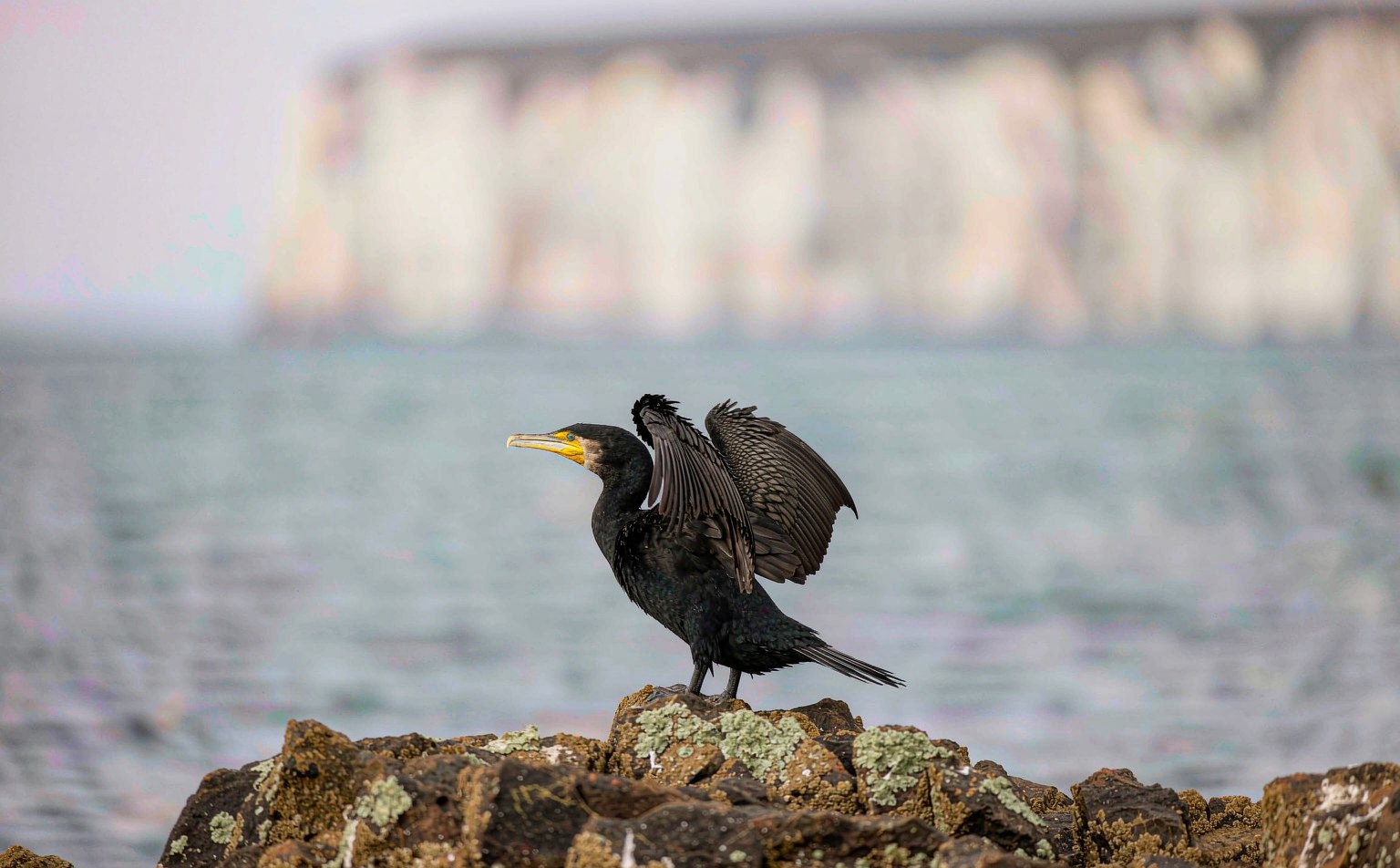
Phalacrocorax carbo | Great Cormorant
Introduction
The Great Cormorant (Phalacrocorax carbo) is one of the most widespread and familiar waterbirds of the Northern Hemisphere, a large, dark, hook-beaked diver that hunts fish underwater with remarkable skill. Found from Europe and Africa to southern Asia and Australasia, it is equally at home on rocky coasts, estuaries, large lakes, and rivers, often seen standing with wings spread to dry after a fishing foray. Among the many birds that share inland and coastal waters, few are as unmistakable as this glossy black fisher.
A highly adaptable species, the Great Cormorant has expanded its range and numbers across much of Europe in recent decades, recovering from historical persecution and benefiting from cleaner, fish-rich waters. Its habit of gathering in sizeable roosting and breeding colonies makes it a conspicuous feature of many waterways, though it has sometimes been viewed as a competitor by anglers and fish farmers.
Although a powerful flyer, the cormorant is best known for what it does below the surface, and its presence is a useful indicator of healthy aquatic ecosystems. As a fish-eating specialist it shares its waters with many other species, including schooling fish such as whitefish, which form part of the prey base in the lakes and rivers it frequents.
Taxonomy
The Great Cormorant was first described by Carl Linnaeus in 1758 and is the type species of the genus Phalacrocorax, one of the largest genera of the cormorants and shags. The scientific name combines the Greek phalakros, meaning “bald,” and korax, “raven,” a reference to the bird’s bare, often pale face and its overall raven-like blackness.
Several subspecies are recognized across the species’ enormous range, differing chiefly in size and the color of the facial skin and throat pouch. Birds from the temperate north are generally larger than those from the tropics, and the well-known Asian and Australasian forms were once treated as separate species before being merged on the basis of intermediate populations.
Molecular studies place the cormorants within the family Phalacrocoracidae, close to the related shags and the more distant frigatebirds and boobies. The group is united by webbed feet and dense, largely featherless faces adapted to a life spent plunging after fish, and the Great Cormorant sits at the center of this diverse and ancient lineage of aquatic birds.
Physical Characteristics
The Great Cormorant is a large, heavy-bodied waterbird, typically 80 to 100 centimeters long with a wingspan of 130 to 160 centimeters and a weight of 2.5 to 5 kilograms, females slightly smaller than males. The adult in breeding plumage is glossy black with a bronze sheen, a white thigh patch, and a scattering of white filaments on the head and neck, while the bare face and the pouch at the base of the bill become bright yellow.
The long bill is powerful and strongly hooked at the tip, built for gripping slippery fish, and the neck is thick and sinuous, giving the bird a distinctive profile both in flight and on the perch. The legs are set far back on the body, an adaptation for efficient underwater propulsion, though it makes the bird somewhat clumsy on land.
Juveniles are quite different, clad in dark brown upperparts and pale, streaked underparts that gradually darken with age. In flight the cormorant is recognizable by its long, broad, angled wings and its flat, outstretched neck, often flying in long, loose lines low over the water. Its feathers, unlike those of most waterbirds, are only partly waterproof, which is why the bird spends so much time spread-eagled drying its wings.
Habitat
Great Cormorants occupy a very wide range of aquatic habitats, from sheltered sea coasts and rocky islands to estuaries, lagoons, rivers, lakes, and reservoirs. They require safe roosting and nesting sites, usually in trees, on cliffs, or on flat islands where they are protected from terrestrial predators, and they need productive waters nearby that hold enough fish to support the colony.
In winter the birds may move to ice-free coasts and large unfrozen lakes, gathering in communal roosts that can number in the hundreds or thousands. They tolerate a surprising degree of human presence and increasingly use constructed wetlands, fish ponds, and gravel pits, though they remain sensitive to disturbance at the nest during the breeding season.
Because they depend on visible, catchable fish, cormorants are most abundant where water clarity and prey density are high. Their colonies can have strong local effects on fish stocks and on the vegetation beneath the nests, where the accumulation of droppings may damage trees, a factor that has sometimes brought the birds into conflict with people.
Diet
The Great Cormorant is almost exclusively a fish-eater, taking a broad variety of species depending on what is available, from small schooling fish to slower bottom-dwelling kinds. It hunts by diving from the surface and propelling itself underwater with its webbed feet, pursuit fish by sight and seizing them with the bill before surfacing to swallow them, often after tossing them into position head-first.
The size of prey is limited by what the bird can handle, typically a few grams to a kilogram or so, though large individuals can manage surprisingly big fish. Schooling species such as whitefish, perch, and various cyprinids are important in fresh water, while in coastal waters the diet shifts toward bottom fish and schooling marine species.
Cormorants are visual, shallow to medium-depth divers rather than deep divers, and most foraging takes place in water a few meters deep where fish are easy to see. They may travel considerable distances from the roost to productive feeding areas, and a single bird can consume a substantial weight of fish each day, a fact that underlies both its ecological role and its contested relationship with fisheries.
Reproduction
Breeding takes place in colonies that may be shared with other waterbirds, with pairs building a bulky nest of sticks, reeds, and seaweed, lined with softer material. The nest is placed in a tree, on a cliff ledge, or on the ground on an island, and the same colonies and even the same nest sites are often reused for many years, growing larger with accumulated material.
The female lays three to five pale blue eggs, and both parents share incubation for about 28 to 31 days. The chicks hatch naked and helpless, and are fed by both adults, which regurgitate partly digested fish into the nest. The young fledge at roughly seven to eight weeks but continue to be fed and to roost with the adults for some time afterward.
Great Cormorants typically begin breeding at three to four years of age and may live for more than fifteen years in the wild. Colony success depends heavily on local fish supplies, and in years when prey is scarce, fewer chicks survive, a natural brake that keeps populations in step with the productivity of the surrounding waters.
Conservation
The Great Cormorant has a very large global range and a population that is increasing in many regions, and it is classified by the IUCN as a species of Least Concern. In Europe the bird was heavily persecuted and reduced in the nineteenth and early twentieth centuries, only to recover strongly from the late twentieth century onward as legal protection, cleaner rivers, and abundant fish allowed numbers to rebound.
The principal tensions today are human ones. Cormorants are sometimes culled or deterred at fish farms, ornamental lakes, and put-and-take fisheries where they are blamed for losses, and conflicts also arise at breeding colonies where their droppings damage trees. Balanced management, including the protection of key sites and the regulation of control measures, aims to reconcile the bird’s conservation with the interests of fisheries.
Climate and habitat change may shift the distribution of both the birds and their prey, but the species’ adaptability makes it comparatively resilient. Continued monitoring of colony sizes and fish stocks, together with international agreements that protect migratory waterbirds, provides the framework within which this recovering fishers of the waterways can be sustained alongside the people who share its waters.
Fun Facts
- Unlike most waterbirds, the cormorant’s feathers are only partly waterproof, so it must spread its wings to dry after almost every fishing session.
- A cormorant can dive to several meters and stay submerged for more than a minute while chasing fish underwater.
- The bird’s bare, brightly colored face changes with the season, becoming most vivid during the breeding period.
- Colonies can be enormous and long-lived, with some sites occupied continuously for decades and the nests growing into substantial platforms.
- Historically trained cormorants were used in parts of Asia for fishing with human handlers, a tradition that survives today as a cultural spectacle.