 By st20113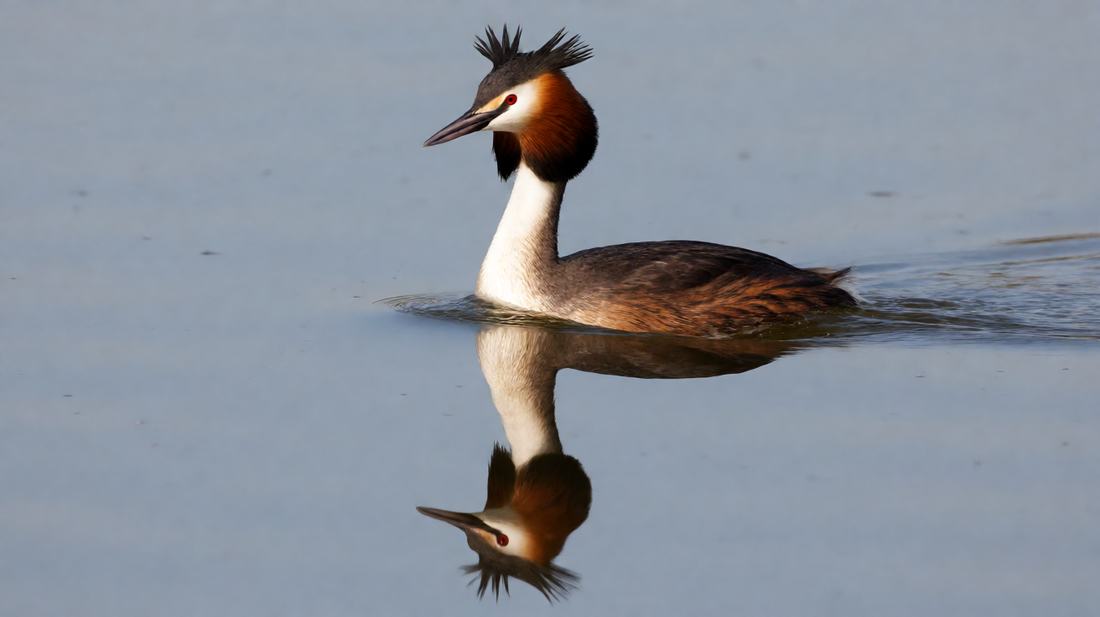
Podiceps cristatus | Great Crested Grebe
Species Profile · Podicipedidae
Great Crested Grebe
The star of the gravel pit and the reservoir, famous for a weed dance and for carrying its striped chicks on its back — and a bird brought back from the hat trade.
IUCN: Least Concern
Range
Length
Weight
Nest
Incubation
The dancer of the lake
A grebe of the open water
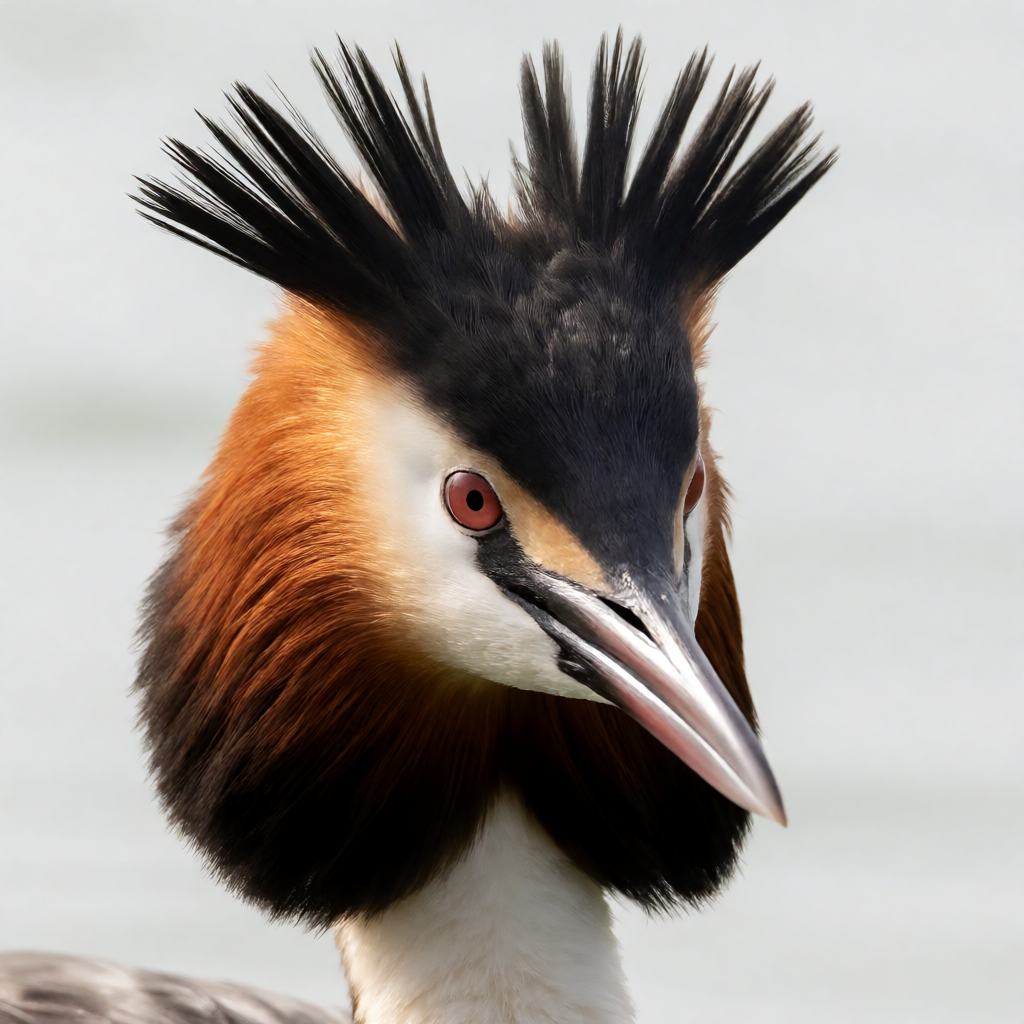
The great crested grebe is the largest of the grebes of Europe. It is also the most elegant of them. It is one of the most beautiful of all the water birds of the continent. In the breeding plumage the bird carries a double crest. The crest is a black one on the crown. A broad frill of the chestnut and the black runs down the sides of the head. That frill is unique among the birds of the region. The whole of the head is set on a long and a slender neck. The neck is a brilliant and a silky white. The bird is one of the sights of the lake in the summer. It is also a sight of the gravel pit and of the reservoir. The grebe is a diver of the most specialised kind.
The whole of its body is arranged for the swimming under the water. The legs are set very far back at the tail. The feet are broad and flattened and lobed rather than webbed. The arrangement makes the bird one of the fastest of all the diving birds. It makes the bird one of the worst of the walkers on the land. The grebe can hardly walk at all. It comes ashore only to the nest and to the resting on the bank. The species is famous for 2 things. The first is the extraordinary courtship of the pair. It includes a series of the displays performed on the water. It ends with the 2 birds rising from the surface in the famous weed dance. Each bird holds a bill full of the water weed.
The second is the habit of the family. The young birds are carried on the back of the parent. The striped and the very conspicuous chicks are borne between the wings of the adult. They stay there for the first weeks of life. They are fed with the small fish that the parent brings to the surface. The grebe was hunted almost to the extinction in Britain in the 19th century. The plumage of its breast and of its head was the reason. The persecution of the bird led directly to the foundation of the first societies. Those were the societies of the protection of the birds in Europe. The trade was stopped. The recovery of the bird after the trade was stopped is an early success story.
Family tree
Podiceps, the typical grebes
The great crested grebe was described by Linnaeus in 1758. He gave it its present name. The modern treatment places it in the genus Podiceps. Those are the typical grebes. The family is the Podicipedidae. The family contains about 22 species. It is one of the most ancient of the groups of the water birds. It is also one of the most isolated. The grebes are related to the flamingos. That is the finding of the modern molecular evidence. The relationship is a surprising one. The 2 groups look and live in a completely different way. The anatomy and the fossils both support the connection. The grebes are united by the lobed and not the webbed foot.
They share the very backward position of the legs. They share the dense and the waterproof plumage. They share the habit of the eating and the swallowing of the feathers. That last habit is one of the strangest of the whole of the bird world. The grebes take the feathers of their own breast into the stomach. The feathers are formed into a ball. That ball is thought to protect the gut from the sharp bones of the fish. It is also thought to allow the pellets of the indigestible material to be formed. The great crested grebe is the largest of the European grebes. It is the one with the most elaborate plumage. Its closest relatives are the other members of the genus. The species is therefore the relative of the smaller grebes of the same family. It is not a relative of the other water birds of the lakes. The grebes have been confused with the ducks and with the divers.
The mistake is one of the oldest of the classification. The same confusion surrounds the other diving fish-eaters of the same water. The great crested grebe is regularly seen with the Great Cormorant (Phalacrocorax carbo) on the same lake. The 2 birds also share the same estuary. The 2 birds hunt the same small fish in the same water. The similarity of the grebe to the diving ducks and to the cormorant is misleading. It is a consequence of the similar way of life and of the same environment. It is not a consequence of the common descent. The species is divided into 3 subspecies by the modern treatment. The nominate form lives in Europe and in the west of Asia. It is the one that is most often seen. One of the other forms lives in the east of Asia. The other lives in the south of Africa and in the east of Africa. The last of those is a smaller and a much darker bird.
Crest, tippet, white neck
How to identify one
An adult great crested grebe is between 46 and 51 centimetres in length. Its wingspan is between 59 and 73 centimetres. Its mass is between about 600 and 1500 grams. The male is the larger and the heavier sex. The difference between the 2 is conspicuous on the water. The bird in the full breeding plumage carries a crown of the black. The black is prolonged into 2 distinct tufts or crests. The sides of the head carry the broad and the very conspicuous frill. The frill is of the chestnut and the black. It is known as the tippet. It is the single most beautiful character of the whole of the bird. The neck and the front of the body are a brilliant and a silky white.
The back and the wings are a dark brown-grey. The white of the neck and of the breast sets them off. The plumage outside the breeding season is a very much plainer thing. The tippet and the crest are lost. The bird becomes a plain grey-brown above and a clean white below. The winter bird is one of the most difficult of the grebes to identify. The best of the characters is the long and the white neck. The foreneck is white all the way up to the bill. The bill is long and slightly upturned and a pale pinkish colour. The bill of the adult in the breeding plumage is a long one. It is a very finely pointed structure of a pinkish-grey. The eye is a dark red that is very bright in the living bird.
The legs are set very far back on the body. The bird cannot stand upright because of it. It must shuffle on the belly when it is on the land. The feet are broad and are not webbed. Each of the toes carries a wide and a flat lobe. The lobe is spread in the swimming and folded in the recovery. The young bird is a very different animal. The body is a brownish-grey. The head carries a series of the very conspicuous stripes of the black and the white. Those stripes give the chick the look of a small and a striped ball of wool. They are the origin of the popular name of the humbug. That is the name in the language of the birdwatchers.
1
2
3
Lake, reservoir and gravel pit
Where it lives
The great crested grebe is a bird of the open and the still freshwater. It uses the lake and the reservoir and the gravel pit. It also uses the slow and the broad river. The species needs 2 things above all others. The first is the open water. It must hold a good supply of the small and the medium-sized fish. The second is the fringe of the reed and the rush. The other emergent vegetation of the margin serves the same purpose. The bird anchors the floating nest in that vegetation. The species is therefore a bird of the richer and the larger water of the lowland. It is not a bird of the small and the upland pond. The bird breeds in the whole of the temperate belt of Europe.
It also breeds in the centre of Asia. It breeds in the south of Africa and in the east of Asia as well. In Europe it is commonest in the lowlands of the south and the centre. It is common in the shallow lakes of the countries of the Baltic. It is also common on the north of the plain of the north of Europe. The species has taken the greatest advantage of the making of the gravel pit. It has done the same with the reservoir. The sand and the water companies make them. The modern gravel pit is a shallow and a fish-rich lake. It has a fringe of the reed. It has become one of the best of the habitats of the bird. That is true over the whole of the south of England.
It is true in the north of Europe as well. In the winter the bird moves from the inland water to the coast. The species then gathers on the sheltered estuaries. It gathers on the coastal bays and the lagoons of the western coast of Europe. Many thousands of the birds gather on the coast of the Baltic. They gather on the shallow seas of the south of the North Sea as well. That is one of the great gatherings of the water birds of the continent. The winter flocks of the Mediterranean type of the bird are huge. They gather in the Gulf of Trieste and in the lagoons of the north of the Adriatic. Those are among the largest of all the aggregations of the grebes of the world.
A chaser of small fish
What it eats
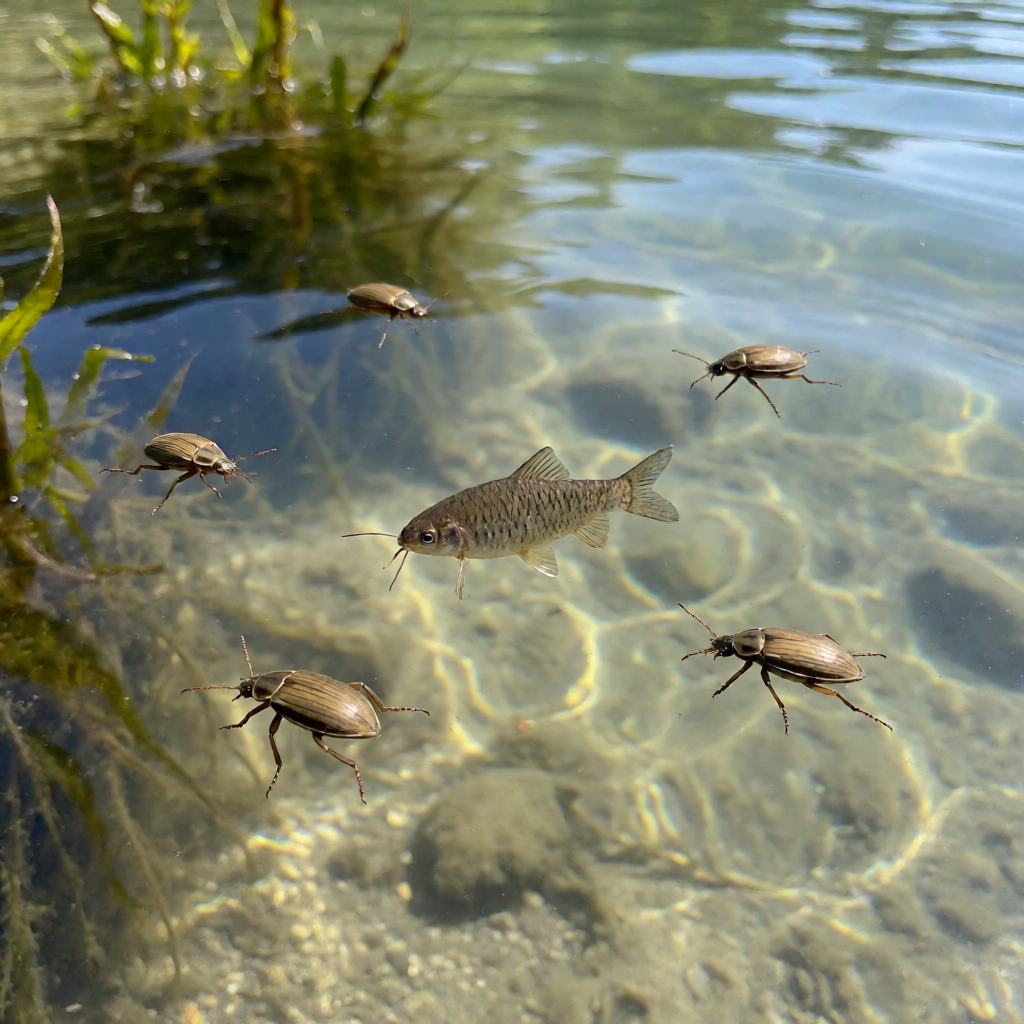
The great crested grebe is a predator of the small and the medium-sized fish. The greater part of the diet is made up of the fish of the shallow water. The species takes the roach and the rudd and the perch. It takes the young pike and the bleak and the stickleback. It takes the other small fish of the lake as well. It also takes the crustaceans and the aquatic insects. The worms and the leeches are on the list too. So are the small frogs and the newts. The composition of the diet changes with the season. It changes with the habitat and with the age of the bird too. The young chicks are fed almost entirely on the insects. The small fish make up the rest of their food.
The adult takes a wide range of the prey. The method of the hunt is the pursuit dive. The bird swims with the head under the water. It locates the prey with the eye. It then dives with a smooth and a very quick movement of the body. The dive lasts for between about 20 and 30 seconds in the ordinary case. The bird uses the lobed feet as the means of the propulsion. The whole of the movement is silent and is hidden from the surface. The prey is caught in the bill. It is brought to the surface and is swallowed before the bird dives again. The species also takes the insects from the surface. It takes them from the vegetation too.
The bird takes the emerging insects in the air. It does so by a quick and a short leap from the water. That habit is one of the few moments at which the grebe is visible. It is usually no more than a dark shape under the surface. The grebe swallows a great deal of its own feathers. The feathers are formed into a ball in the stomach. The ball is thought to protect the gut from the sharp bones of the fish. It is also thought to help the formation of the pellets. The parent feeds the feathers to the young chick. That is one of the most remarkable pieces of the behaviour of the whole family.
The weed dance
The breeding cycle
The great crested grebe performs one of the most elaborate court-ships of the birds. The whole sequence has been described in great detail. The students of the behaviour of the birds have done the work. The pair bond is formed and maintained by a series of the displays. The displays are carried out on the water in the early part of the year. The displays include the shaking of the head. They include the turning of the head from side to side. They include the rise of the body out of the water. The attitude is a ghostly and a mechanical one. The sequence reaches its climax in the display that is known as the weed dance. The 2 birds dive. They return to the surface with a bill full of the water weed. They then rise clear of the water. They hold the position breast to breast with the weed held aloft. The nest is a great floating platform.
It is made of the reeds and the weed and the other vegetation of the water. The whole of the structure is anchored to the stems of the reed. It can also be anchored to the branches of the submerged bush. The platform is built up from the water. It decays and it is repaired and rebuilt by the pair. That work goes on through the whole of the breeding season. The nest is frequently covered by the water. A rise of the level of the lake is the cause. The eggs are sometimes lost as a result. The clutch contains between 3 and 4 eggs in the usual case. The eggs are laid at the intervals of 1 or 2 days. They are a pale and a chalky white. The wet vegetation of the nest stains them. The incubation lasts for between 27 and 29 days. It is carried out by both parents.
The eggs are covered by the sitting bird with the vegetation of the nest. The bird does that whenever it leaves. So a clutch that is temporarily abandoned is very difficult to see. The chicks are covered in the striped down. They leave the nest within 1 or 2 days of the hatching. They are carried on the back of the parent between the wings. That starts in the first hours of the life. The young are fed by the parent with the small insects and the fish. They take refuge on the back of the adult whenever the bird is alarmed. The chicks can swim and dive on their own within a few days. They continue to be carried and fed for a period of several weeks. The young birds can fly at between 70 and 79 days of age. The species raises a single brood in the year in the north of the range. It sometimes raises 2 in the south. The bird breeds for the first time at the age of 2 years or older.
Saved from the hat trade
Conservation
The great crested grebe is assessed as Least Concern on the global Red List. The world population is a very large one of several hundred thousand pairs. The species has an enormous range. It covers the whole of the temperate belt of Europe and of Asia. It reaches the south of Africa and the east of Asia. The bird is not thought to be close to the thresholds. None of the threatened categories apply. The history of the species in Europe in the 19th century is very instructive. It is one of the most striking of all the histories of persecution. The breast skin of the grebe was taken in enormous numbers. The trade of the millinery wanted it. The beautiful tippet of the head was taken as well. The skins were used to trim the hats and the coats.
The fashionable women of the cities wore them. The species was hunted to the point of the practical extinction. That happened over a great deal of the western part of the range. The whole of the population of Britain and of Ireland was reduced. Only a very small number of the pairs was left. The trade was stopped by a combination of 2 forces. The legislation and the public campaign did the work. The movement was formed in order to stop the killing of the birds for the plumage. That movement grew into the great society of the protection of the birds. That society is still one of the largest of the organisations of the conservation. It works for the wildlife of the world. The recovery of the grebe after the legal protection is one of the earliest records. It is one of the clearest of the records.
It is a record of the recovery of a bird. The recovery followed the removal of a single pressure. The species is now affected mainly by the loss of the habitat. The degradation of the habitat matters too. The building on the shore of the lake is one of the pressures. The pollution of the water is another. The disturbance by the boats and by the anglers matters in the modern landscape. The bird is also killed in some numbers by the entanglement in the fishing line. It is killed by the ingestion of the lead of the anglers’ weights as well. The grebe is not a species that is shot. It is not a species that is collected. So the modern conservation of the bird is a matter of the water. The vegetation and the disturbance at the nest matter as well.
Quick hits
Five things to remember
- The tippet of the chestnut and the black at the sides of the head is lost entirely outside the season. The winter bird is a plain grey and white animal.
- The grebe cannot walk on the land. The legs are set so far back on the body. The bird must shuffle on its belly when it comes ashore to the nest.
- The 2 birds rise clear of the water breast to breast. Each holds a bill full of the water weed. That is the display known as the weed dance.
- The chicks are carried on the back of the parent between the wings from the first hours of life. They take refuge there whenever the bird is alarmed.
- The breast skin and the head plumes of the bird were taken in enormous numbers for the hats of the 19th century. The trade was stopped only after the species had been reduced over a great deal of its western range.