 By st20113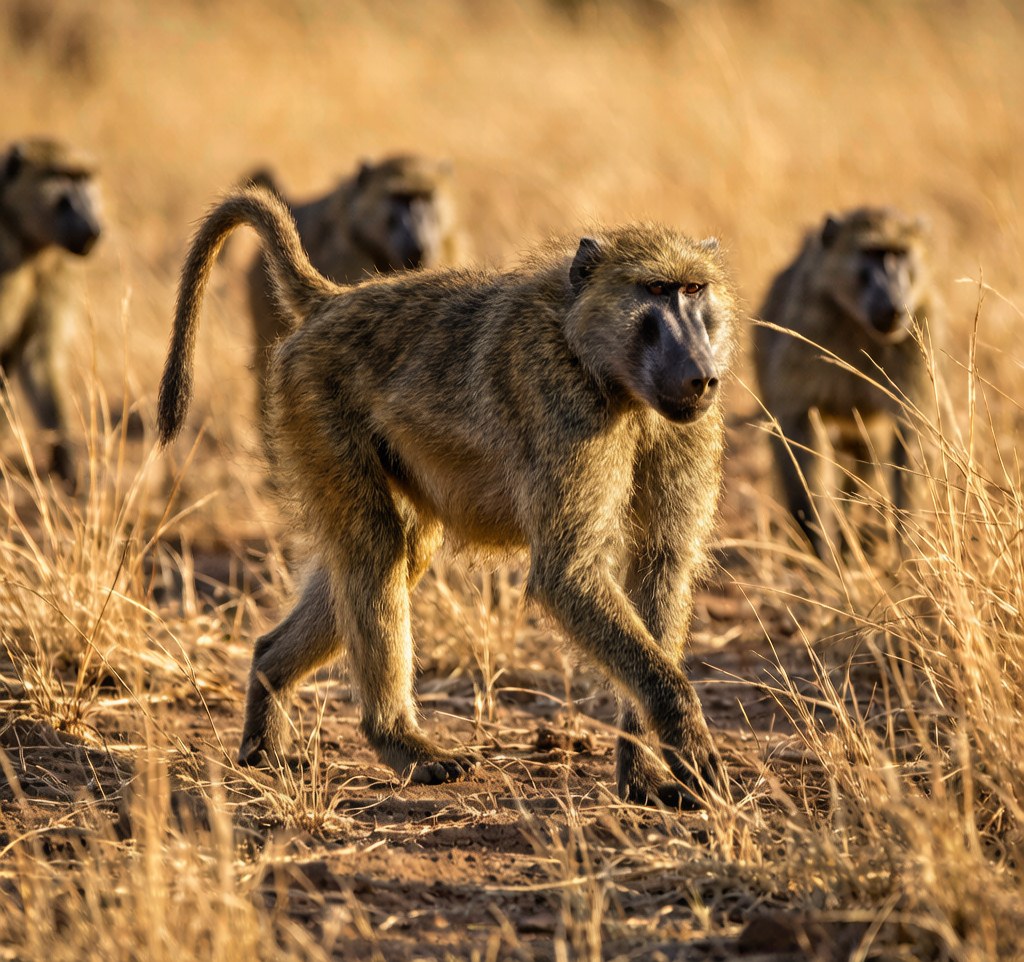
Introduction
The olive baboon (Papio anubis), also known as the Anubis baboon, is a large primate native to savannas and woodlands across 25 African countries. Named for its olive-grey coat and its resemblance to the Egyptian god Anubis, this species is one of the most widespread and adaptable of all Old World monkeys. Olive baboons live in complex social groups called troops, which can number from 15 to over 150 individuals. Their success across diverse habitats makes them a fascinating subject for primatologists studying animal behavior. Unlike the forest-dwelling gorilla, olive baboons thrive in open landscapes where they have developed sophisticated strategies for predator avoidance.
Taxonomy
The olive baboon belongs to the family Cercopithecidae, which includes Old World monkeys. French naturalist Anselme Gaetan Desmarest described the species in 1827. The genus Papio contains six species: the olive baboon, yellow baboon, chacma baboon, Guinea baboon, hamadryas baboon, and Kinda baboon. Olive baboons frequently hybridize with other baboon species where their ranges overlap, particularly with hamadryas baboons in Ethiopia. Along with the chimpanzee, baboons belong to the broader primate order, but their evolutionary path diverged from apes around 30 million years ago, placing them firmly within the monkey lineage.
Physical Characteristics
Olive baboons are robust, powerfully built primates with distinctive dog-like muzzles. Adult males weigh between 22 and 37 kilograms and measure up to 70 centimeters at the shoulder, while females are roughly half that size. Their fur is coarse and varies from yellowish-brown to olive-grey, giving the species its common name. The face is hairless and dark, with prominent brow ridges and a long, protruding snout. A unique feature is the tough, hairless callosities on their buttocks, which are specialized sitting pads that allow them to sleep comfortably on rough branches. Unlike the spotted coat of a cheetah, the olive baboon’s muted coloration provides excellent camouflage in the dry savanna grasslands.
Habitat
Olive baboons inhabit an extraordinary range of environments across sub-Saharan Africa, from the savannas of the Serengeti to the montane forests of Ethiopia. They are equally at home on open grasslands, in wooded savannas, and along riverine forests. This adaptability is unmatched among African primates, as they have even established populations in urban areas of some African cities. Troops require access to water sources and sleeping sites, typically choosing tall trees or rocky cliffs for overnight refuge. In the Serengeti ecosystem, olive baboons share their territory with the African lion, which is one of their primary natural predators.
Diet
Olive baboons are opportunistic omnivores with an exceptionally varied diet. They consume fruits, seeds, grasses, leaves, roots, and flowers, supplemented with insects, small mammals, birds, and occasionally young antelopes. They have cheek pouches that can hold as much food as their stomachs, allowing them to quickly gather and store food while foraging. This dietary flexibility has been key to their success across different environments. Olive baboons are also known to raid crops, bringing them into conflict with farmers throughout their range. The Nile crocodile poses a threat to baboons at water sources, where these primates must balance thirst with constant vigilance.
Reproduction
Olive baboon society is organized around strict dominance hierarchies that influence mating opportunities. Females remain in their natal troop for life, forming strong matrilineal bonds, while males typically disperse upon reaching adulthood. Breeding occurs year-round with a gestation period of approximately six months. A single infant is born, clinging immediately to its mother’s fur. Newborns have black fur and pink faces, which gradually take on adult coloration over several months. Mothers are highly protective, and female relatives often assist in infant care, a behavior known as allomothering. Unlike the solitary hunting lifestyle of the red fox, baboon infants grow up within a dense social network of relatives and peers.
Conservation
The olive baboon is classified as Least Concern on the IUCN Red List, reflecting its wide distribution and large population. However, local populations face threats from habitat loss, hunting, and conflict with agricultural communities. In some regions, baboons are hunted for bushmeat or killed as crop pests. Their adaptability has allowed them to persist where many other large mammals have declined, but ongoing habitat fragmentation remains a concern. Conservation efforts focus on mitigating human-wildlife conflict through non-lethal deterrents and promoting coexistence strategies. Protecting the savanna ecosystems that support olive baboons also benefits the diverse array of African wildlife that shares their grassland habitats.
Fun Facts
- Olive baboons have a complex vocal repertoire that includes grunts, barks, screams, and lip-smacking sounds.
- They are excellent swimmers, unlike many primates, and will readily cross rivers during migration.
- Male baboons sometimes form coalitions to challenge dominant individuals for higher social rank.
- Baboons have been observed using their keen color vision to select the ripest fruits during foraging.
- A single troop may travel up to 10 kilometers per day while searching for food and water.