 By st20113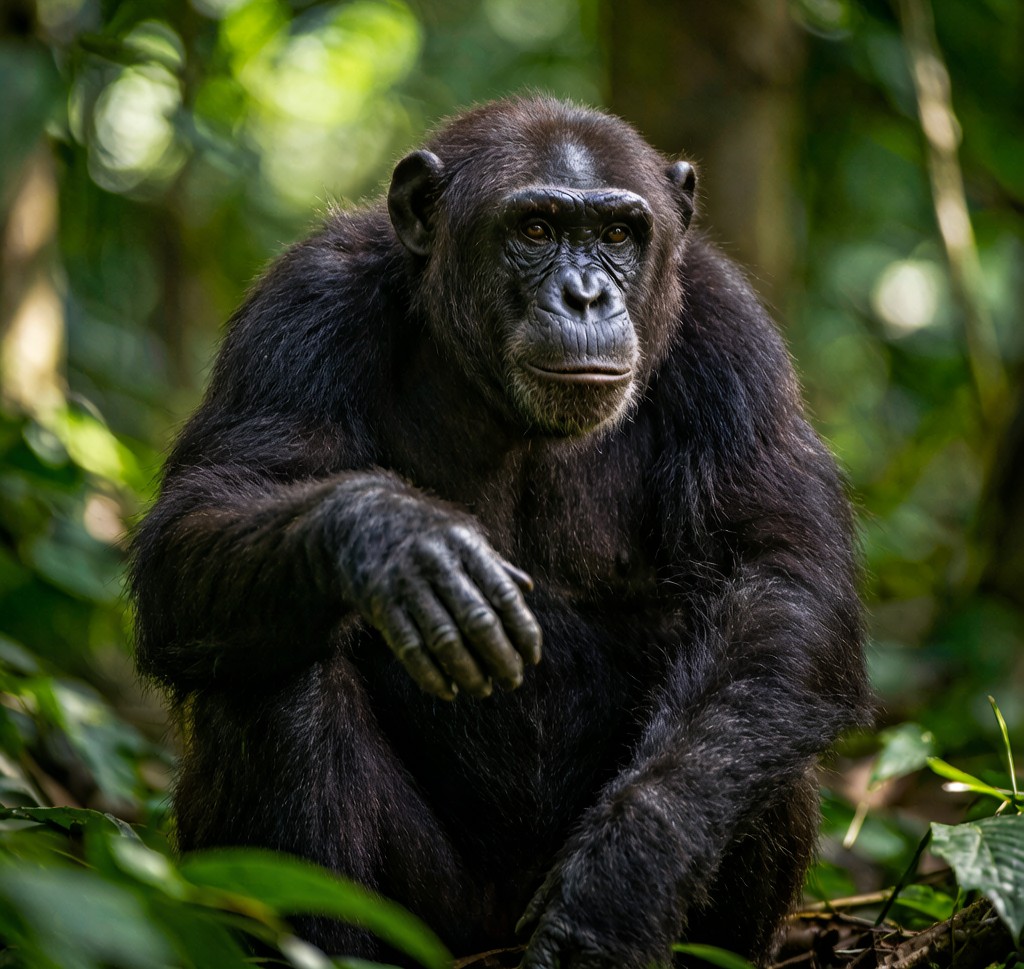
The common chimpanzee (Pan troglodytes) — or simply the chimpanzee — is our closest living relative in the entire animal kingdom, sharing approximately 98.6 percent of our DNA, and one of the most intellectually, socially, and culturally sophisticated non-human species on the planet. Found in the tropical forests, savanna woodlands, and mountain forests of central and West Africa, the chimpanzee has been studied more intensively than any other wild animal, and what researchers have discovered has repeatedly overturned assumptions about the boundary between human and animal cognition. Chimpanzees make and use tools — fishing for termites with sticks, cracking nuts with stone hammers, extracting honey with crafted leaf sponges — they hunt cooperatively in organized parties, they wage wars against rival communities, they comfort distressed individuals with embraces and kisses, they learn regional cultural traditions that are passed down through generations, and they show the full range of emotions traditionally associated with human experience. As a flagship species and an indicator of forest health, the chimpanzee’s survival is inseparable from the survival of the tropical forests of Africa.
## Physical Characteristics
The common chimpanzee is a robust, short-tailed ape with a body length of 63 to 94 centimetres and a weight of 28 to 60 kilograms, with males considerably larger and heavier than females. The body is covered in coarse black hair, and the face, ears, hands, and feet are bare — the skin ranging from pink to dark brown and darkening with age. The face is distinctive, with prominent brow ridges, deep-set eyes, a short, flat nose, and a wide, protruding mouth. The hands and feet are highly dextrous, with opposable thumbs and big toes that enable the precise manipulation of objects and tool use. Chimpanzees walk on all fours (knuckle-walking) on the ground but can also walk bipedally for short distances. Their brain is relatively large at 350 to 400 cubic centimetres, and research has shown that their cognitive abilities, particularly in spatial reasoning and social learning, are comparable to those of a human child. Chimpanzees reach sexual maturity at approximately 12 to 15 years of age and can live for over 50 years in captivity, with wild lifespans typically reaching 35 to 40 years.
## Habitat and Distribution
The common chimpanzee is found across 21 African countries, from Senegal in West Africa east to Tanzania and Uganda in East Africa, and south to Angola and Zambia. The species inhabits a wide range of forest and woodland habitats including tropical rainforest, swamp forest, dry semi-deciduous forest, bamboo forest, and savanna woodland at elevations up to approximately 2,800 metres. The chimpanzee is one of the most ecologically flexible of the great apes, able to survive in heavily degraded and fragmented forest landscapes provided that sufficient food trees and nesting sites remain. However, this ecological flexibility has not protected the species from the dramatic population declines driven by hunting and habitat loss. The four subspecies — the central chimpanzee, the Nigeria-Cameroon chimpanzee, the East African chimpanzee, and the West African chimpanzee — are each adapted to different regional environments and have developed distinct cultural traditions and tool-use repertoires.
## Diet and Behavior
Chimpanzees are omnivorous with a highly varied diet that includes fruit (the primary food source at up to 60 percent of the diet), leaves, flowers, seeds, pith, bark, honey, insects, eggs, and meat. The meat component of the diet is obtained through cooperative hunting: male chimpanzees in particular form hunting parties and coordinate to chase and capture monkeys — especially red colobus monkeys — through the forest canopy. The meat is shared within the group in a complex pattern that reflects social relationships, hunting role, and political alliances. Tool use in chimpanzees is one of the most extensively documented examples of non-human material culture. In different parts of their range, chimpanzees use different sets of tools, and these traditions are transmitted socially from mother to infant over generations, analogous to cultural variation in human populations. The social structure of chimpanzees is based on fluid communities of 20 to 150 individuals, within which smaller parties form and disband based on the availability of food, the presence of estrous females, and shifting political alliances among males. Male chimpanzees are notably more social than females and form long-lasting alliances with each other that can determine their dominance rank and access to mates.
## Conservation
The common chimpanzee is classified as Endangered on the IUCN Red List, with population estimates of between 200,000 and 300,000 individuals across its range — down from an estimated 1 to 2 million just a century ago. The primary threats include habitat loss through deforestation for agriculture, logging, and mining, commercial hunting for bushmeat, which has reached crisis levels in many parts of the range, and disease, including Ebola hemorrhagic fever, which has caused catastrophic mortality in some populations. Chimpanzees are also captured for the illegal pet trade and for use in entertainment and biomedical research, though international trade in wild-caught chimpanzees is prohibited under CITES Appendix I.
[…] rainforests of the Democratic Republic of the Congo in Central Africa. Sometimes called the pygmy chimpanzee, the bonobo is one of humanity’s two closest living relatives, sharing more than ninety-eight […]