 By st20113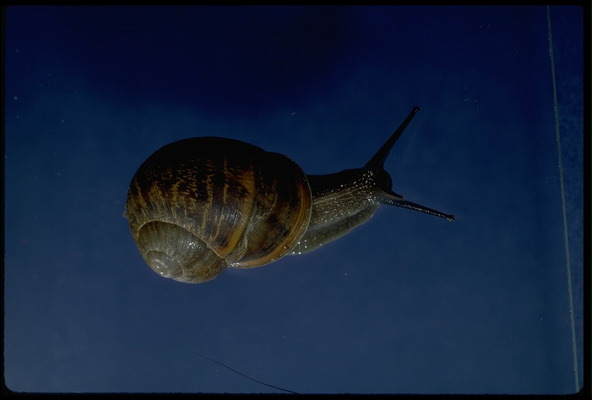
Introduction
The garden snail (Helix aspersa), also called the brown garden snail, is one of the most familiar terrestrial molluscs in the world. Native to the Mediterranean region and western Europe, it has been introduced to many other parts of the globe through human activity. Adults carry a coiled calcareous shell roughly 3 to 4 centimetres across, marked with brown bands over a creamy background. Along with relatives such as the common octopus, it belongs to the phylum Mollusca, though snails live on land rather than in the sea.
Taxonomy
Helix aspersa is classified within the class Gastropoda, order Stylommatophora, and family Helicidae. It was first described by the German naturalist Friedrich Christian Meuschen in 1774. The species name aspersa means sprinkled, referring to the speckled pattern of its shell. Two forms are sometimes distinguished, though they are generally treated as a single variable species. Genetic studies place it among the true helicid snails, a group noted for robust, rounded shells and retractable bodies.
Physical Characteristics
The garden snail has a soft, muscular foot that secretes mucus to ease movement across surfaces. Two pairs of tentacles extend from the head: the upper pair bears the eyes, while the lower pair is used for smell and touch. The body can retract fully into the shell, which is sealed with a calcareous or mucous epiphragm during dry or cold periods. The spiral shell provides protection and retains moisture. Like other molluscs such as the Atlantic rock crab, the snail relies on a hard external structure for defence rather than speed or agility.
Habitat
Garden snails thrive in gardens, parks, hedgerows, vineyards, and cultivated fields where moisture and vegetation are abundant. They prefer humid microhabitats and are mostly active at night or after rain, retreating to shade during hot, dry daylight. They can survive brief periods of drought by aestivating, a state of summer dormancy, and colder winters by hibernating. Their success as an introduced species is due to tolerance of disturbed habitats and a readiness to feed on a wide range of garden plants.
Diet
These snails are primarily herbivorous, scraping algae, decaying leaves, and living plant tissue with a ribbon-like tongue called a radula armed with thousands of tiny teeth. They favour tender seedlings, lettuce, and fruit, which makes them notable garden pests in some regions. They also consume fungi and fallen organic matter, contributing to decomposition. Calcium is vital for shell growth, so snails often gnaw on bones, limestone, or old shells to supplement their diet with minerals.
Reproduction
Garden snails are hermaphrodites, possessing both male and female reproductive organs, though they still normally mate with another individual. After courtship, each partner lays dozens of small, pearl-like eggs in a shallow underground nest. The eggs hatch into miniature snails with fully formed shells after two to four weeks. Young grow rapidly and may reach maturity within a year under favourable conditions. Because both partners can lay eggs, a single mating can yield two batches of offspring.
Conservation
The garden snail is abundant and classified as least concern. It is so successful that in many regions it is considered a nuisance rather than a conservation priority. Human transport of plants and produce has spread it across continents, where it sometimes competes with native snail species. In its native range it remains a normal part of terrestrial food webs. In some cultures it is farmed and harvested as food, a practice known as heliciculture that supports local markets.
Fun Facts
A garden snail can sleep for up to three years in hibernation if conditions are unfavourable. It moves at a top speed of about 0.05 kilometres per hour, making it one of the slowest animals on land. The slime it produces helps it glide over sharp objects without injury and even allows it to climb vertical glass. Its eyes sit on the tips of the longer tentacles and can be retracted like a telescope when threatened.