 By st20113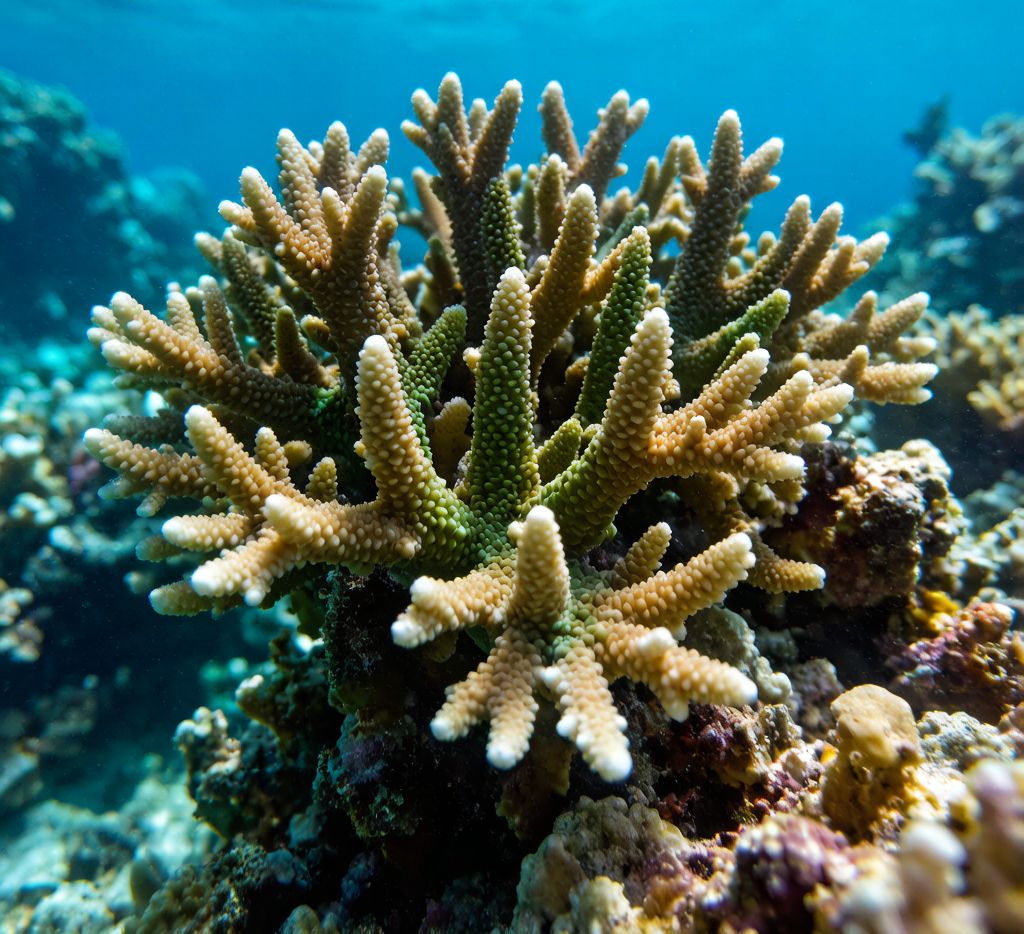
Introduction
Staghorn coral (Acropora millepora) is a branching reef-building coral widespread across the shallow tropical waters of the Indo-Pacific. As a fast-growing reef builder, it helps form the three-dimensional structure that supports an extraordinary diversity of marine life. Because it grows quickly and provides shelter, a single healthy colony can support dozens of fish and invertebrate species at once. Its colonies form dense, antler-like branches that can grow several metres across, providing structural complexity to coral reefs. The colour varies from pale tan to vivid green, pink, or purple depending on the symbiotic algae it hosts. Like other reef organisms such as the common octopus, it depends on healthy reef habitat for shelter and food.
Taxonomy
Acropora millepora belongs to the family Acroporidae, order Scleractinia, the stony corals. It was described by the British zoologist James Dwight Dana in 1846. The genus Acropora is the most species-rich coral genus, with hundreds of Indo-Pacific species. The name refers to its branched, staghorn-like growth form. Molecular studies have revealed that some apparently similar forms are cryptic species, making identification within the genus challenging even for specialists.
Physical Characteristics
This coral is a colony of tiny polyps, each with a tubular body and a ring of stinging tentacles used to capture plankton. The polyps secrete a hard calcium-carbonate skeleton that builds the branch structure. Numerous small corallites dot the surface, each housing a polyp. Colour comes largely from symbiotic zooxanthellae, algae living within the tissue that supply energy through photosynthesis. Like reef associates such as the Atlantic rock crab, the coral forms part of a tightly linked community of species.
Habitat
Staghorn coral thrives in clear, sunlit, shallow reef environments where water temperatures stay warm and nutrients are low. It favours wave-exposed reef crests and slopes with good water flow that brings food and removes waste. The species is sensitive to sedimentation and turbidity, which smother its tissue. It grows fastest in bright light because of its photosynthetic symbionts. Healthy colonies create habitat for countless fish and invertebrates, making them cornerstone builders of reef architecture.
Diet
Most of the coral’s energy comes from the sugars and oxygen produced by its zooxanthellae symbionts through photosynthesis. The polyps also capture tiny plankton and dissolved organic matter with their tentacles, mainly at night. This mixed nutrition allows rapid growth in nutrient-poor tropical seas. Large reef predators including the great white shark roam nearby waters, though the coral itself is protected by stinging cells and by the parrotfish and other grazers that keep algae from overgrowing it.
Reproduction
Staghorn corals reproduce both asexually, by branch fragmentation, and sexually, through mass spawning events. On certain nights after a full moon, colonies release clouds of eggs and sperm into the water where fertilisation occurs. Planula larvae drift before settling on suitable hard substrate and developing into new polyps. Fragmentation is so effective that a broken branch can grow into a whole new colony. This dual strategy helps reefs recover after disturbance when conditions are favourable.
Conservation
Acropora millepora is highly vulnerable to the global decline of coral reefs. Rising sea temperatures cause bleaching, in which corals expel their algae and may die if stress persists. Other threats include ocean acidification, pollution, overfishing, and physical damage from anchors and storms. The IUCN lists many staghorn corals as vulnerable or endangered. Marine protected areas, reef restoration, and cuts in greenhouse-gas emissions are considered vital to their survival.
Fun Facts
A single staghorn colony can host millions of polyps working together as one organism. The coral’s colour can shift with light level and the type of algae it harbours. During mass spawning, entire reefs may release gametes simultaneously, turning the sea into a floating snow of life. Some staghorn colonies grow several centimetres per year, among the fastest of any coral, quickly reclaiming space on a healthy reef. Reef scientists often use staghorn colonies as indicators of overall reef health because they respond quickly to changes in water quality.