 By st20113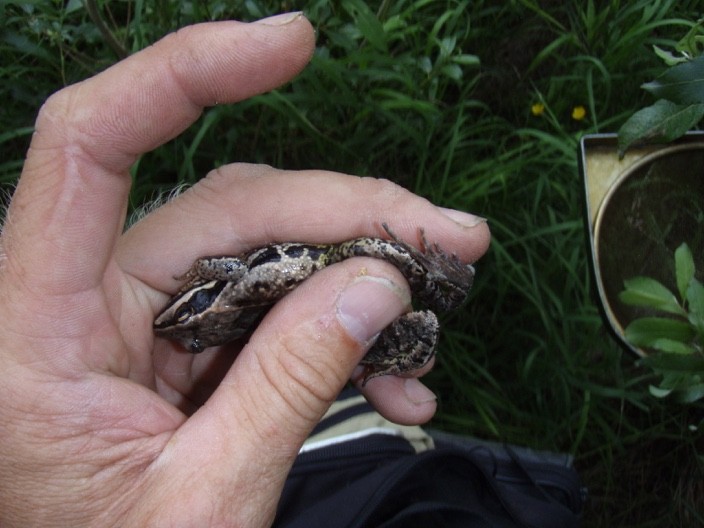
Introduction
The Moor Frog (Rana arvalis) is a small to medium-sized frog of northern European peat bogs, heathland pools, and acidic marshes, famous for the dramatic blue breeding coloration of males in spring. During the breeding season the males turn a startling cobalt blue for just a few days, transforming from their cryptic brown appearance into one of the most beautiful spectacles of European marsh wildlife. Found across a vast range from France and Scandinavia east to Siberia and northern China, it is one of the most cold-tolerant amphibians in the world.
Taxonomy and Evolution
The Moor Frog belongs to the family Ranidae, the true frogs, and the genus Rana. It was first described by the German naturalist Nilsson in 1842. Its closest relatives are the common frog and the pool frog, with which it forms a clade of three closely related species within the genus Rana. Genetic studies show it diverged from the common frog around 5 to 8 million years ago during the Miocene period. The species remarkable tolerance for cold and acidic conditions sets it apart from its relatives, and it has the most northerly distribution of all European amphibians reaching latitudes above 70 degrees North in Scandinavia.
Physical Characteristics
Moor frogs are small to medium-sized, 5 to 7 cm in body length, with a compact body and relatively short legs compared to more arboreal frogs. Outside the breeding season both sexes are brown, olive, or reddish-brown with a faint light dorsal stripe and irregular darker markings. During the breeding season, which lasts only 3 to 10 days in April or May, males undergo a remarkable transformation developing a vivid cobalt-blue dorsal coloration and enlarged forearm muscles for clasping females. This blue coloration is thought to signal male quality and may help synchronize breeding activity within a population.
Habitat and Distribution
Moor frogs inhabit acidic marshes: peat bogs, heathland pools, mires, acidified lakes, and temporary flood pools in forested and open landscapes. They require still or very slow water bodies with acidic conditions and abundant submerged vegetation for egg-laying. Their breeding ponds are typically fish-free, and the goldfish is a significant threat where introduced into acidic moorland pools. The species range extends across northern and eastern Europe from the Netherlands and Germany to the Ural Mountains with isolated populations in France and the Balkans at the southern edge of the range.
Diet and Feeding Behavior
Like other frogs, moor frogs are opportunistic predators of small invertebrates caught by a rapid tongue flick. Their diet includes spiders, flies, beetles, springtails, slugs, and caterpillars encountered in the damp habitats surrounding their breeding pools. They hunt primarily at night and in overcast conditions avoiding bright sunlight. Tadpoles are herbivorous grazing algae and detritus from pond surfaces and submerged vegetation. The metamorphosis from tadpole to froglet takes 60 to 90 days, and the newly metamorphosed froglets disperse from the pond in late summer to take up terrestrial residence in surrounding moorland and woodland habitat.
Reproduction and Life Cycle
Moor frogs migrate to breeding pools in early spring often while snow is still on the ground guided by chemical cues from the ponds. Males arrive first and establish territories on the pond bottom calling to attract females with a short deep guttural call. Males turn bright blue during the breeding season and females choose mates based on call quality and male size. Females deposit globular egg masses of 500 to 3,000 eggs attached to submerged vegetation in shallow water. The eggs develop rapidly hatching in 8 to 15 days depending on temperature. The red fox is a significant predator of moor frogs both in the water and during terrestrial dispersal.
Conservation Status
Listed as Least Concern across its wide range though populations are declining in western parts of the range due to the drainage of peat bogs, acidification of breeding ponds from atmospheric pollution, and the introduction of fish. In Germany and the Netherlands moorland habitat loss has reduced populations significantly. Key conservation actions include the protection and restoration of peat bog habitat, reducing atmospheric sulfur deposition that acidifies ponds, and preventing the introduction of fish to moorland pools. The species is a flagship species for northern European peatland conservation.
Fun Facts
The moor frogs blue breeding coloration is one of the most dramatic examples of seasonal sexual dichromatism in European amphibians, and its intensity varies between individual males and between populations. The color is produced by pigment cells called chromatophores and may signal male size, condition, or genetic quality to females. The moor frog is one of the most cold-tolerant amphibians in the world, capable of surviving body temperatures below freezing through the production of glucose as an antifreeze in its tissues. In the extreme north of its range in Scandinavia it is one of the first amphibians to begin breeding, often when ponds are still partially frozen, giving it a head start on predators and competitors.