 By st20113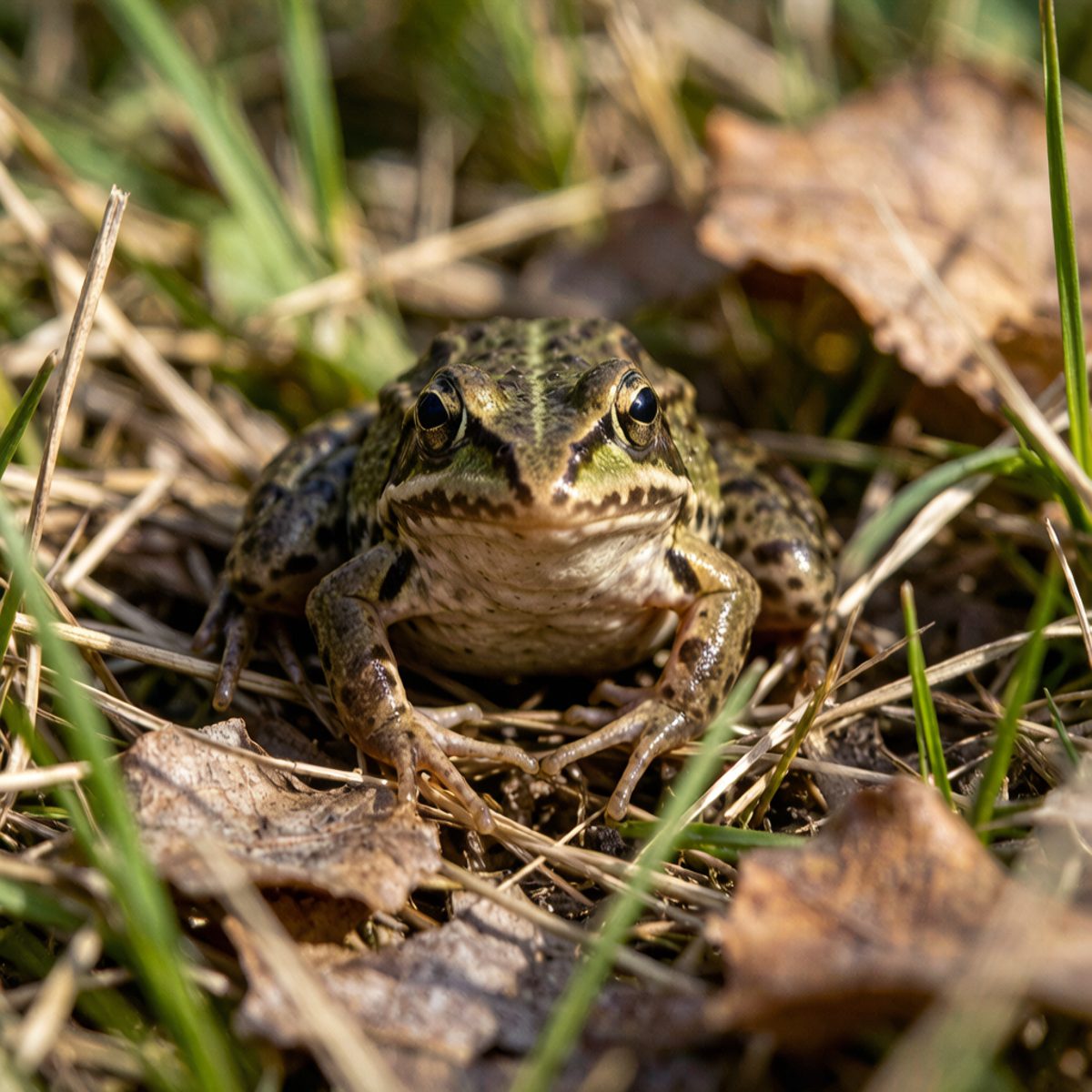
Introduction
The agile frog, scientifically Rana dalmatina, is a slender, long-legged frog of central and south-eastern Europe, celebrated for its remarkable jumping ability. When startled, it can leap several meters in a single bound to reach cover or water. A woodland and meadow species, it is active mainly at night and spends the day hidden among vegetation or in burrows. Its speed and agility make it one of the hardest European frogs to catch by hand. In spring the night chorus of calling males can be surprisingly loud for such a slender frog, echoing across meadows long after sunset. Where ponds and woods remain linked by damp grassland, the species can still thrive close to farms and villages. Its ability to vanish into leaf litter is as impressive as its famous leap.
Taxonomy
The agile frog belongs to the family Ranidae, the true frogs, within the genus Rana. It is closely related to other European brown frogs and shares the landscape with large wild mammals such as the brown bear and the red fox, though the frog keeps to damp margins where these bigger animals rarely forage for it directly.
Physical Characteristics
Adults measure 5 to 9 centimeters, with a slim body, long powerful hind legs, and a pointed snout. The coloration is usually brown or grey-green with darker patches and a light stripe along the back, providing camouflage on leaf litter. The underside is pale, and the males develop dark nuptial pads on the forelimbs during the breeding season. Unlike toads, the skin is smooth and moist, suited to a life that mixes land and water.
Habitat
Agile frogs occupy deciduous woods, hedgerows, meadows, and pastures, especially where ponds or slow streams are nearby for breeding. They need sunny, shallow water to lay eggs but spend much of the year in damp terrestrial cover. They hibernate on land in frost-free refuges such as rodent burrows or beneath roots. Their preference for varied, semi-natural countryside makes them sensitive to the loss of small wetlands and field boundaries.
Diet
These frogs are generalist predators of invertebrates, eating beetles, flies, worms, spiders, and other small creatures caught with a rapid tongue. Adults hunt mostly at night on the forest floor, playing a useful part in controlling insect numbers. Tadpoles, by contrast, feed on algae and plant matter in the water before changing into froglets. As both aquatic larvae and terrestrial hunters, the species links pond and woodland food webs across the seasons. Because it eats such a broad mix of insects, a healthy frog population helps keep midges and beetles in check around farms and gardens alike.
Reproduction
Breeding begins in early spring when frogs gather at ponds and flooded ditches. The female lays clumps of eggs attached to submerged vegetation, and the male fertilizes them externally. Tadpoles hatch within days to weeks and metamorphose by mid-summer if conditions are warm. Young frogs then disperse into surrounding grass and woodland. A single female may produce hundreds of eggs, though only a small fraction survive to adulthood.
Conservation
The agile frog is classified as Least Concern overall, but many regional populations have declined through drainage, intensification of farmland, and the disappearance of breeding ponds. It is protected in numerous countries, and pond creation with connected habitats helps local recovery. Because it depends on both water and land, conserving a mosaic of meadows, woods, and ponds is essential. Where such mosaics remain, the frog can still be common and vocal in spring.
Fun Facts
Its jump can cover more than twenty times its own body length, a feat that earns the species its name. When grabbed, it secretes a sour-tasting mucus that discourages predators. The frog can stay motionless so long among leaves that it seems to vanish. Males call with a low, rattling sound from the water in spring. Despite its speed on land, it is an excellent swimmer and dives quickly when threatened near a pond.