 By st20113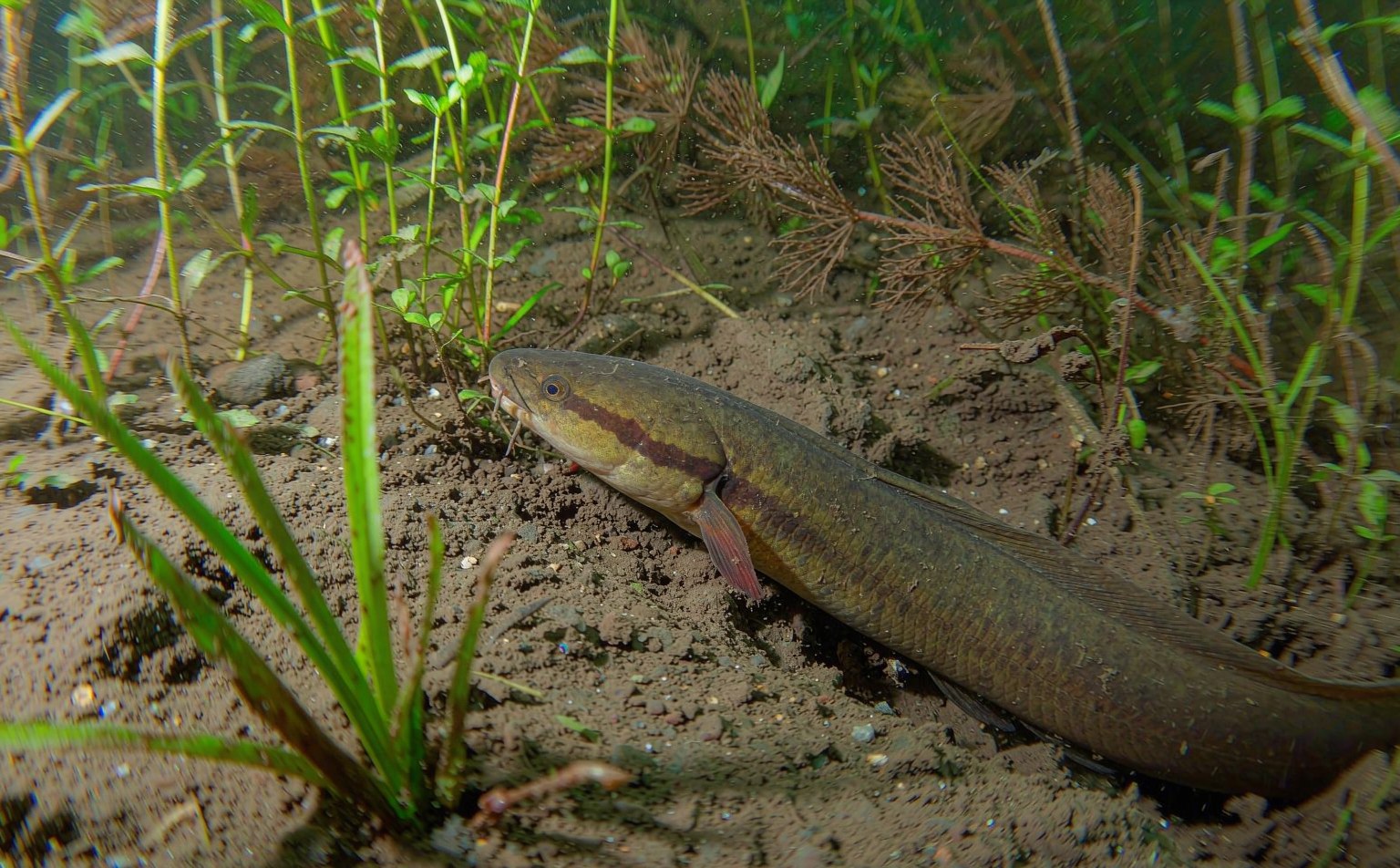
Misgurnus fossilis | Weatherfish
Introduction
The Weatherfish (Misgurnus fossilis) is a slender, eel-like freshwater fish of slow, weedy ponds and marshes, famous for its habit of becoming restless and rising to the surface before a drop in air pressure—hence its name as a living weather glass. A relative of the loaches, it reaches 20 to 30 centimetres and is a shy, bottom-living creature that buries itself in soft mud by day and feeds at dusk. Unassuming in looks, it is a survivor of low-oxygen, overgrown waters and a curious favourite among pond naturalists who value its odd behaviour.
Taxonomy
Misgurnus fossilis belongs to the loach family Cobitidae, a group of elongated, whiskered bottom fish, and is the type species of the genus Misgurnus. It is larger and more eel-shaped than the small Spined Loach that shares its muddy homes, but the two are close cousins in the same family. Six pairs of barbels around the mouth mark it as a loach, and its body plan reflects a life spent probing the bottom rather than swimming in open water.
Physical Characteristics
Adults are long and cylindrical, tapering to a fine tail, with a small underslung mouth ringed by six short barbels used to feel for food in the dark or in mud. The back is olive-brown with a row of darker blotches along the sides and a pale, often yellowish underside; a dark streak runs from the snout through the eye. The fins are small and rounded, and the scales are tiny and buried in the skin, giving a smooth, almost scaleless feel. Most fish are 15 to 25 centimetres, with larger individuals reaching 30 centimetres. A special breathing structure lets it gulp air at the surface when the water is poor in oxygen.
Habitat
Weatherfish favour still or very slow, warm, vegetation-choked waters: ponds, oxbow lakes, marshes, ditches and the margins of lowland rivers where mud and weeds abound. They like soft, organically rich bottoms into which they can bury, and they tolerate the low oxygen and high temperature of summer ponds better than most fish. They overlap with the European Eel in weedy margins and with the Crucian Carp in the same sluggish, plant-filled pools.
Diet
The species feeds mainly on small bottom-living invertebrates—midge larvae, worms, tiny crustaceans and the larvae of pond insects—sifted from the mud with the help of its barbels. It also takes some plant detritus and algae. Mostly nocturnal, it forages at dusk and by night, burying by day and emerging to feed when the pond cools. As a consumer of nuisance larvae it is useful in a pond, and it is in turn eaten by larger fish, herons and other predators that hunt the margins.
Reproduction
Spawning takes place in late spring and summer, when warm, weed-filled shallows trigger the fish to gather and scatter adhesive eggs among the plants. A female may release a few thousand eggs that stick to vegetation and hatch within days in the warmth. The young stay among the weeds, feeding on minute plankton before turning to bottom life. There is no parental care, and the adults retreat to the mud as the water cools in autumn, sometimes hibernating in the soft bottom through harsh conditions.
Conservation
Weatherfish are still widespread but have declined locally through the draining of ponds and marshes, pollution and the loss of the weedy, muddy habitat they need. They are sensitive to the disappearance of small wetlands and to the cleaning-up of ponds that removes the very mess they love. They benefit from leaving marginal vegetation, from protecting lowland marshes and from creating new, well-planted ponds. In some countries they are listed as threatened, and their fate is tied to the survival of the small, neglected waters that most people overlook.
Fun Facts
- It is said to forecast storms by growing restless and rising before a pressure drop.
- It can breathe air at the surface, helping it survive oxygen-poor ponds.
- Six pairs of little barbels around the mouth act like feelers in the mud.
- By day it often buries itself in soft bottom and feeds at dusk.
- It is a close, larger cousin of the small Spined Loach.