 By st20113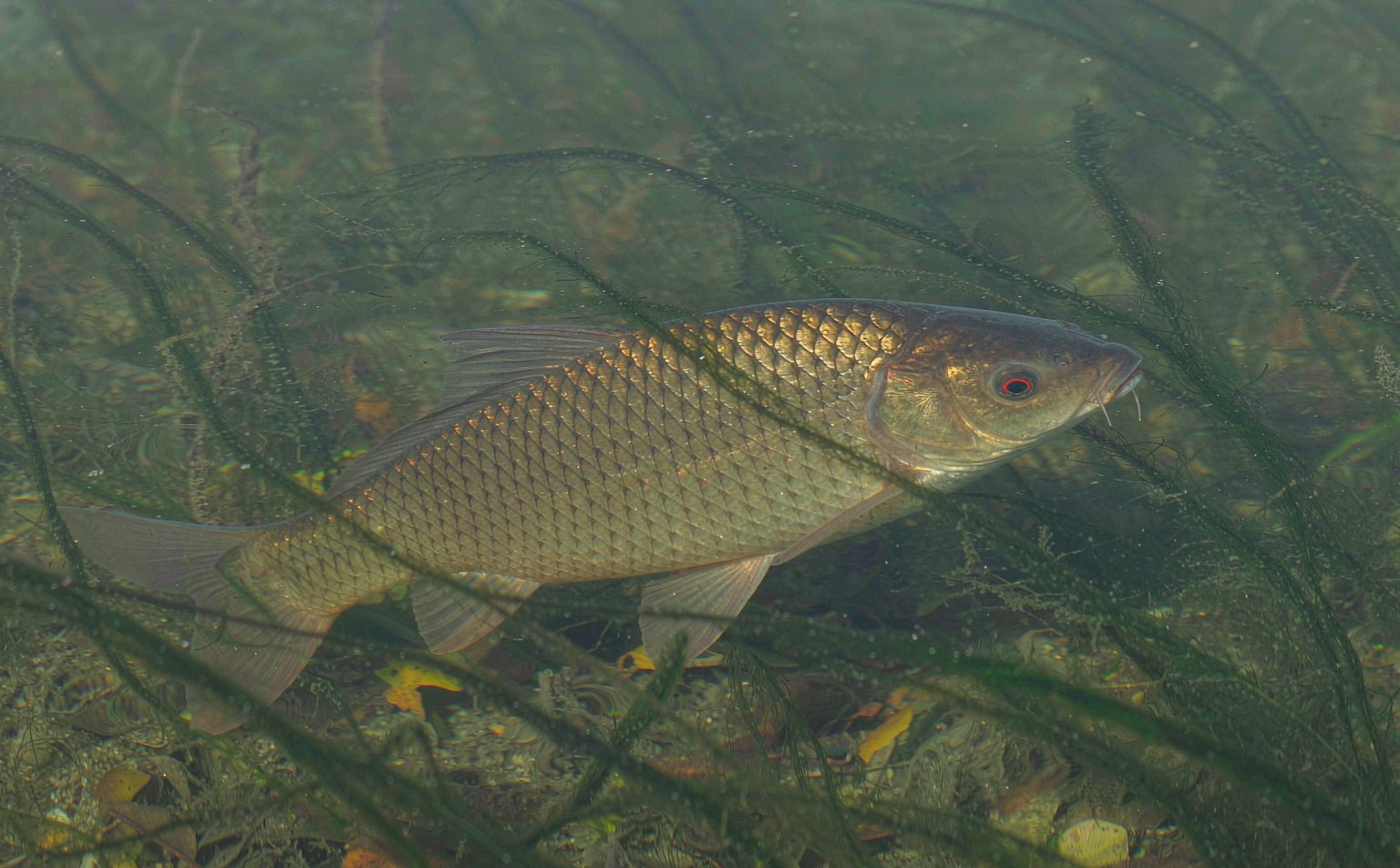
Carassius carassius | Crucian Carp
Introduction
The Crucian Carp (Carassius carassius) is a deep-bodied, golden-bronze freshwater fish of ponds, slow rivers and marshes, prized by anglers and vital to the ecology of small water bodies. Unusually tolerant of low oxygen and even winter freezing, it can survive where few other fish live, and it helps control algae and insects. Its rounded profile and small mouth distinguish it from its larger cousin the common carp.
Taxonomy
The Crucian Carp is a cyprinid, a member of the carp and minnow family Cyprinidae, and is closely related to the [Common Carp](https://www.gloencyc.com/common-carp-cyprinus-cyprio/) and the domesticated goldfish. It occurs across Europe and western Asia in slow, vegetated waters. Because it hybridises with carp and is easily confused with goldfish, genetic work is sometimes needed to confirm wild populations.
Physical Characteristics
Adults are deep and laterally compressed, typically 15 to 35 centimetres long and up to about 1.5 kilograms, with a high back and a small, toothless mouth. The colour is bronze to golden-green above, paler below, and the scales are large with a dark edge that gives a netted look. The fins are rounded, the dorsal fin long-based with a strong spine at the front.
A key feature is the absence of barbels at the mouth corners, unlike the common carp, and the deep body that deepens further with age. In oxygen-poor water the fish may develop a more elongated form. The eyes are small and the lateral line bears 31 to 36 scales, a count used to separate it from similar species.
Habitat
The Crucian Carp lives in still or slow-flowing, well-vegetated water: ponds, oxbow lakes, floodplain marshes, ditches and the backwaters of rivers. It favours warm, shallow places rich in aquatic plants, where it can hide from predators. Its tolerance of low oxygen lets it persist in small ponds that freeze over, and it is one of the few fish able to live in such closed systems.
Diet
It feeds mainly on plant material, algae and detritus scraped from surfaces, supplemented by small invertebrates such as water fleas, insect larvae and snails. Young fish take more animal food, shifting to a vegetarian diet as they grow. By stirring bottom sediment and eating algae, it influences water clarity and the plant community, linking it to species such as the [European Pond Turtle](https://www.gloencyc.com/european-pond-turtle-common-pond-turtle-emys-orbicularis/) that share weedy ponds.
Reproduction
Spawning takes place in late spring and summer when water warms, with females scattering adhesive eggs among submerged plants. A female may lay tens of thousands of eggs that stick to vegetation and hatch in a few days. There is no parental care, and the young feed on plankton before moving to the bottom. In cool northern waters a single brood a year is typical, and the fish can live for fifteen years or more.
Conservation
The Crucian Carp is widespread but has declined locally through drainage, pollution and the introduction of predatory fish that eat its fry, and some populations are threatened by hybridisation with carp. It is protected or monitored in parts of its range, and pond restoration with clean water and abundant plants helps it. As a hardy, low-oxygen survivor, it is also valued in managed angling ponds and garden lakes.
Fun Facts
- It can survive in ponds that freeze solid, thanks to exceptional tolerance of low oxygen.
- Unlike the common carp, it has no barbels at the corners of its mouth.
- The body becomes deeper and more rounded with age, almost disc-like in old fish.
- It hybridises readily with carp, which can mask pure wild populations.
- A single female can release tens of thousands of eggs in a season.
[…] even warm, low-oxygen waters where few other fish cope. A close relative of the goldfish and of the Crucian Carp, it is famously tolerant and has spread widely, sometimes at the expense of native species. […]