 By st20113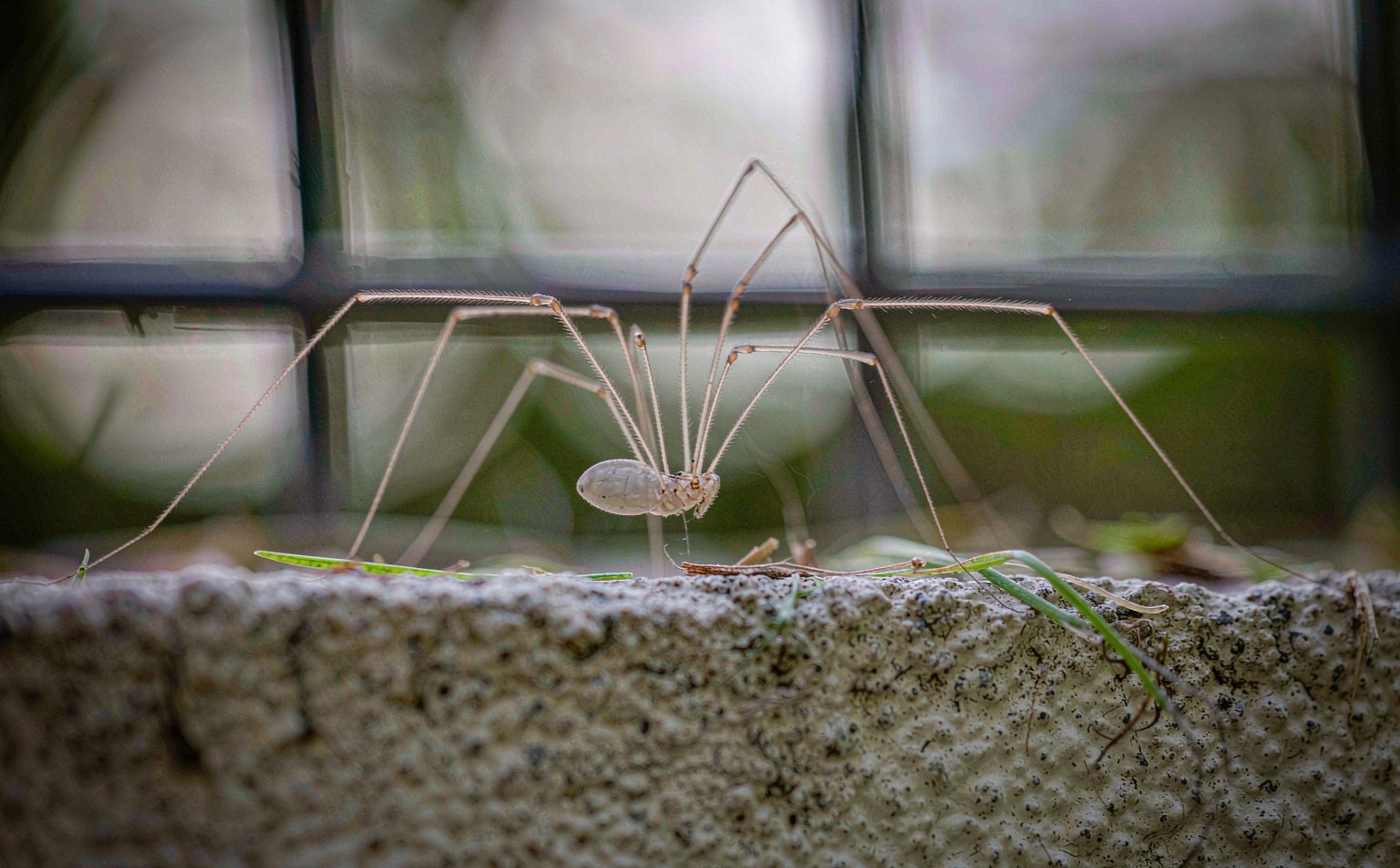
Phalangium opilio | Harvestman
Introduction
The Harvestman (Phalangium opilio) is the long-legged, small-bodied creature often called a “daddy long-legs” that creeps over garden walls, flowers and fences, waving legs like antennae. Despite the nickname it is not a spider and not a crane fly; it is a harvestman, a member of the order Opiliones, an ancient group of arachnids that looks spider-like but lives by a different rule book. Usually only a few millimetres across the body, it is all legs, and those legs can be many times its own length.
Harvestmen are among the most common arachnids of gardens and crops, and they are welcome guests, patrolling flowers and foliage for aphids and other small pests. They are harmless to people, make no silk and carry no venom, and their comical, stilt-legged scuttle is one of the gentler sights of the summer garden.
Taxonomy
The Harvestman belongs to the order Opiliones, distinct from the true spiders (Araneae), and to the family Phalangiidae, described by the German naturalist Carl Wilhelm Hahn in 1825. It is an arachnid, so related to spiders, scorpions and mites, but its body is a single oval dome rather than the two-part body of a spider, and it has only two eyes set on a small raised turret. Predators such as the common-blackbird-turdus-merula take harvestmen from foliage, and the order as a whole is one of the most diverse of the arachnids.
The genus Phalangium holds a number of long-legged harvestmen of the northern temperate zone, and Phalangium opilio is the one most often seen on walls and plants in Europe. Telling species apart usually needs a microscope, but the long legs and the eye-turret are enough to name it as a harvestman in the field.
Physical Characteristics
The body is a small, rounded, segmented dome, pale brown to grey, with a pair of short pedipalps and, most strikingly, eight extremely long, slender legs that may be many times the body length. The two eyes sit on a tiny bump on top of the head, and there is no narrow waist joining two body parts as in a spider. The second pair of legs is long and used like antennae, swept through the air to feel the way.
Harvestmen make no silk and have no venom glands, and their mouth is a small, sucking structure for liquid food. A famous trick is autotomy: if a leg is seized it breaks off cleanly at the base and the detached leg twitches for some minutes, distracting the predator while the harvestman escapes. The lost leg is not regrown, but the animal survives.
Video: a Harvestman (Phalangium opilio) on a weathered garden wall, its extremely long legs shifting gently as it waves its antennae to sense the air — a short wildlife clip.
Habitat
Harvestmen live on vegetation, walls, fences, low plants and the surfaces of sheds and outbuildings, from gardens and hedgerows to fields, orchards and woodland edges. They are often found on flowers, where they hunt and bask, and in autumn they gather in conspicuous clusters on sunny walls and in sheltered corners, sometimes dozens together.
They are found across Britain and temperate Europe and tolerate a wide range of habitats. Unlike many spiders they are often active by day as well as night, and they prefer humid places but range widely over plants in search of food, using their long sensory legs to explore every surface.
Diet
The Harvestman is an omnivorous scavenger rather than a strict hunter. It feeds on small insects and mites, aphids, scale insects and other garden pests, but also on carrion, overripe fruit, fungi and the dead remains of other invertebrates, sucking the soft tissues with its small mouth. This broad diet makes it a useful, if unspecialised, cleaner of the garden.
Because it takes aphids and other pests, it is counted a friend to the gardener, and it is itself food for birds and for spiders. The Turdus philomelos and other thrushes picking over foliage will eat harvestmen, so the species sits in the lower middle of the invertebrate food web, both predator and prey.
Reproduction
Mating is direct: the male grasps the female and transfers sperm with his pedipalps or a modified leg, depending on the group. The female then lays her eggs in the soil, under bark or in crevices, often in autumn, and the young hatch as tiny, eight-legged versions of the adult that grow through a few moults.
There is no web-bound nursery and no parental care. The autumn gatherings of adults are often the last act of the season before the eggs overwinter, and the new generation appears the following year to take up the same patient patrol of the garden’s flowers and walls.
Conservation
The Harvestman is abundant and of no conservation concern, and it is one of the commonest arachnids of human habitats across its range. Its only pressures are the same as for other small invertebrates: heavy pesticide use and the loss of leafy, flower-rich ground reduce the pests and pollen it depends on.
Because it eats aphids and other pests and asks for nothing but a little vegetation, it is a small ally of any garden left a little wild. Tolerating the long-legged “daddy long-legs” on the wall rather than sweeping it away keeps a useful, harmless and ancient arachnid at work in the garden.
Fun Facts
- It is not a spider: its body is one oval dome and it has only two eyes on a little turret, not eight.
- It makes no silk and has no venom, so it is completely harmless to people.
- If a leg is caught it snaps off cleanly and the leg keeps twitching to distract the predator while it escapes.
- Its second pair of legs acts like antennae, feeling the way as it walks.
- In autumn many harvestmen gather in clusters on sunny walls, sometimes by the dozen.
[…] animal shares the order with the Harvestman. That animal has shorter legs. It lives on the ground and on low plants. Our animal has very long […]