 By st20113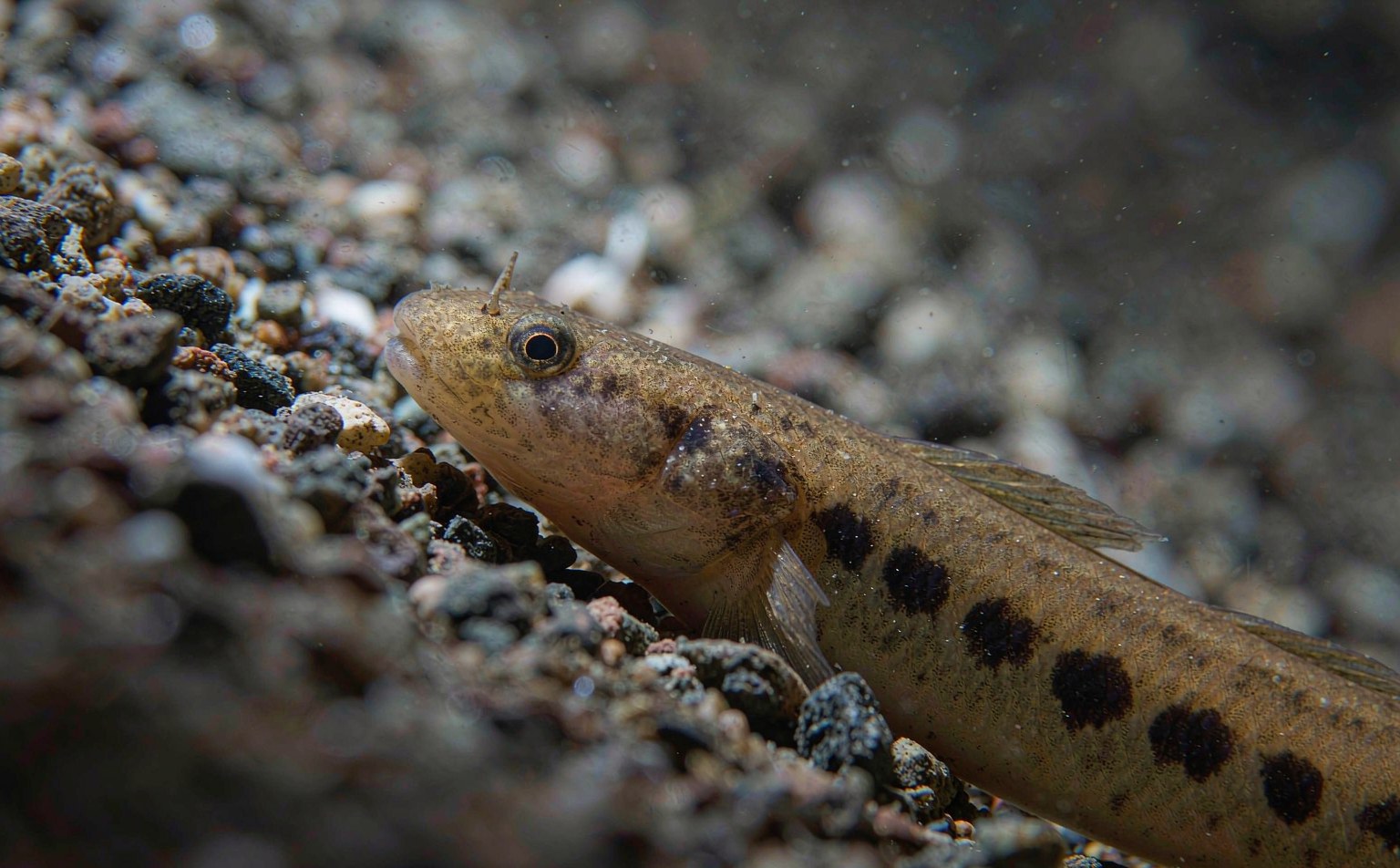
Cobitis taenia | Spined Loach
Introduction
The Spined Loach (Cobitis taenia) is a slender, barg-shaped little fish of clean rivers and streams, easily recognised by the row of dark blotches along its side and the movable spine beneath each eye. A bottom-dweller that buries itself in sand and gravel, it is a gentle indicator of healthy, unpolluted flowing water and is one of the few European fish that can gulp air at the surface when oxygen runs low.
Taxonomy
The Spined Loach is a cobitid, a member of the loach family Cobitidae, and is found across Europe east to western Russia. It is a relative of other small bottom fish such as the [Three-spined Stickleback](https://www.gloencyc.com/three-spined-stickleback-gasterosteus-aculeatus/), though the two belong to different families. Its genus Cobitis includes several similar loaches that are best told apart by their spot patterns and spine shape.
Physical Characteristics
Adults reach 7 to 12 centimetres, with a long, rounded body and a tiny downward-pointing mouth ringed by six short barbels used to feel for food. The back and sides are pale olive to sandy brown with a row of 9 to 18 dark vertical or oval blotches, and a dark stripe runs through the eye. The underside is pale, and the fins are small and rounded.
The most distinctive feature is the slender, sharp spine just below the eye, which can be flicked out as a defence and may lodge briefly in a predator’s mouth. The body is almost cylindrical, tapering to a fine tail, and the scales are tiny and embedded, giving a smooth, eel-like skin. Colour darkens on a gravel bottom and pales on sand, a useful camouflage.
Habitat
The Spined Loach lives in clear, slow to moderately flowing rivers, streams and the margins of lakes with sandy or gravelly bottoms and some weed cover. It needs well-oxygenated, unpolluted water and avoids silted, degraded channels, so its presence signals good water quality. By day it lies partly buried in the substrate, emerging at dusk to feed.
Diet
It feeds on small bottom-living animals: midge larvae, mayfly and caddisfly nymphs, tiny crustaceans, worms and the eggs of other fish, found by sweeping its barbels across the bed. It takes little plant matter. Where oxygen drops, it rises to the surface and takes a bubble of air into its gut, a behaviour that helps it survive warm, still pools that would suffocate most fish.
Reproduction
Spawning occurs in late spring and summer, when females lay small adhesive eggs among gravel and plants, often in several batches. The male uses his eye spine to clasp the female during mating, a method unusual among fish. The eggs hatch in days, and the transparent young settle to the bottom to feed. There is no parental care, and growth is slow, with adults living several years.
Conservation
The Spined Loach has declined in many areas through river engineering, siltation, pollution and the loss of natural banks, and it is a protected species in parts of its range. It benefits from river restoration that returns gravel riffles, riparian shade and clean flow, and from the presence of clean-water neighbours such as the [Noble Crayfish](https://www.gloencyc.com/noble-crayfish-astacus-astacus/) and [Goldfish](https://www.gloencyc.com/goldfish-carassius-auratus/) in compatible waters. Because it is sensitive to degradation, it serves as a useful marker of stream health.
Fun Facts
- It can flick out a sharp spine below the eye, briefly snagging the mouth of a predator.
- When water oxygen falls, it rises to gulp air at the surface like a miniature lungfish.
- It buries itself in sand by day and feeds mostly after dark.
- The body colour shifts between sand and gravel to match the riverbed.
- Its six chin barbels work like fingertips to find food in the dark.
[…] Misgurnus fossilis belongs to the loach family Cobitidae, a group of elongated, whiskered bottom fish, and is the type species of the genus Misgurnus. It is larger and more eel-shaped than the small Spined Loach that shares its muddy homes, but the two are close cousins in the same family. Six pairs of barbels around the mouth mark it as a loach, and its body plan reflects a life spent probing the bottom rather than swimming in open water. […]