 By Iris
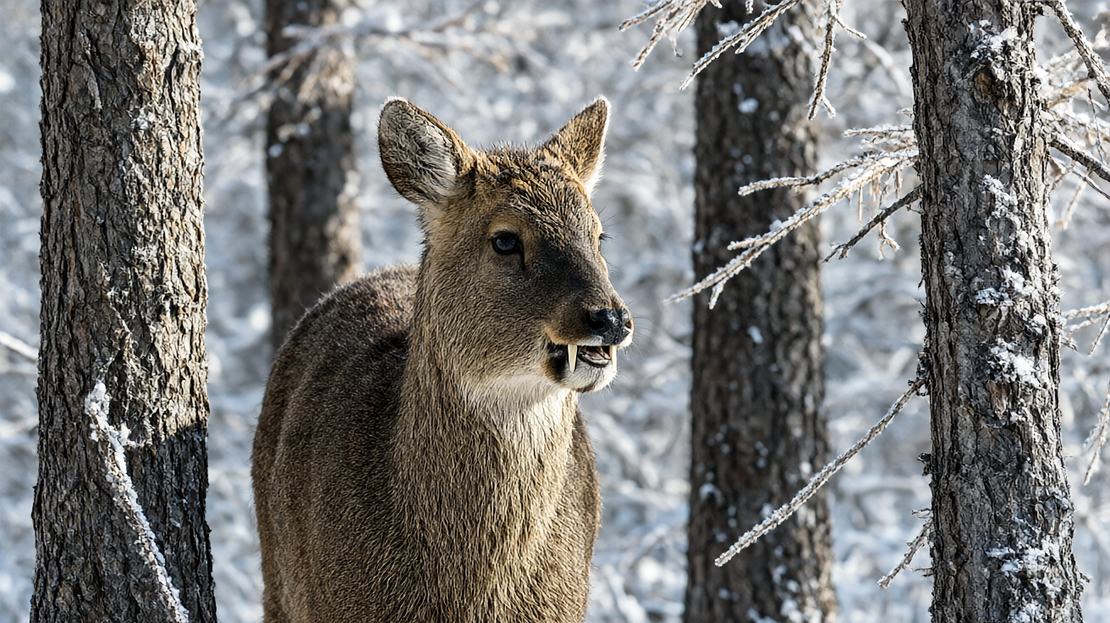
Moschus moschiferus | Siberian Musk Deer
Species Profile · Moschidae
Siberian Musk Deer
A small deer with two long canine teeth steps through deep snow.
Vulnerable
Length
Weight
Tusks
Gestation
Habitat
Rating
The Siberian Musk Deer
The deer with fangs
A small deer moves between larch trunks in deep snow. It carries no antlers at all. Two long canine teeth curve down from the upper jaw instead, and those teeth gave the animal its other name, the fanged deer.
A gland on the male abdomen gives a strong scent, and that smell caused the species more trouble than any predator did. Because musk sells for more than gold by weight, poachers set snares every winter. The deer lives in remote taiga, and it is shy beyond reason.
Family tree
Moschidae, a family without antlers
Its proper name is Moschus moschiferus, one of seven musk deer. The family sits apart from true deer, since none of its members grows antlers. Because the group split early, the animals keep some primitive features, and a gall bladder with a single pair of teats separates them further.
Five subspecies are recognised across Siberia and the Far East. Chinese and Himalayan musk deer were once lumped with this species. Skull work later showed that each form deserves its own name.
Fangs and coat
How to tell one
Adults run 90 to 100 cm from nose to tail base, and weight falls between 7 and 17 kg, which is small for a deer. Coat runs thick and coarse, and it holds heat in deep cold. Because the guard hairs are hollow, they insulate far better than a normal pelt.
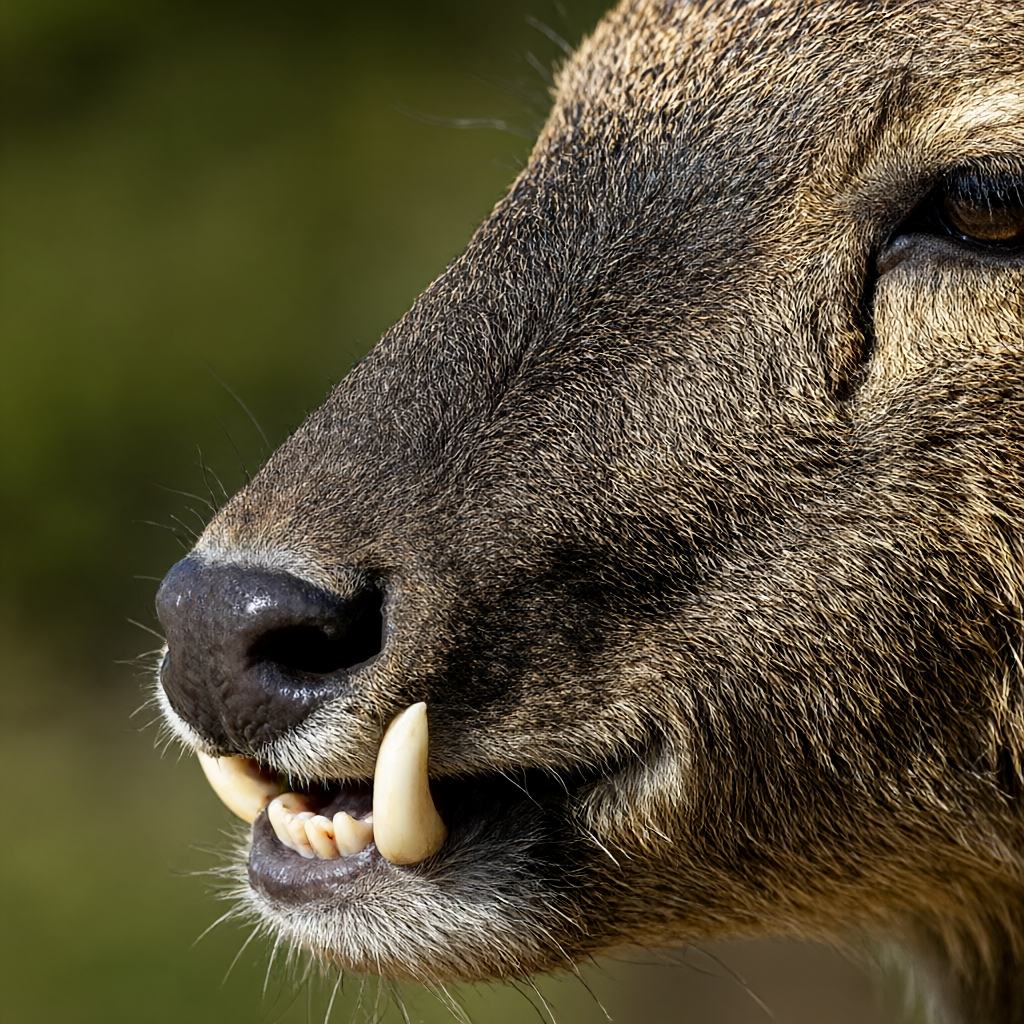
Colour varies from grey brown to almost black. Hind legs run longer than the front, which gives a hunched outline. Males carry canines that reach 7 to 10 cm and hang below the chin.
The musk gland sits on the abdomen, and it opens through a small slit. Ears run long, and the eyes stay large. Females have no canines and no gland.
1
2
3
Old taiga
Where it lives
Mountain taiga is the only habitat. Because the deer needs lichen, it stays in old forest with a good ground layer. Rocky slopes with dense cover hold most animals. Snow depth shapes the range, since deep snow limits movement.
The species avoids open ground and farmland fully. Dogs and roads push it away from otherwise good forest. A red-panda lives in similar cold forest, and both animals depend on thick cover rather than speed.
Lichen in winter
What it eats
Lichens make up most of the winter diet. Needles, bark and moss get eaten when lichen runs short. Because the food holds little energy, the animal feeds for many hours a day. Summer brings leaves, herbs and fungi.
The deer browses alone, and it never forms large herds. A good lichen patch gets visited again and again through the winter. A jaguar hunts alone too, though it depends on meat rather than on lichen.
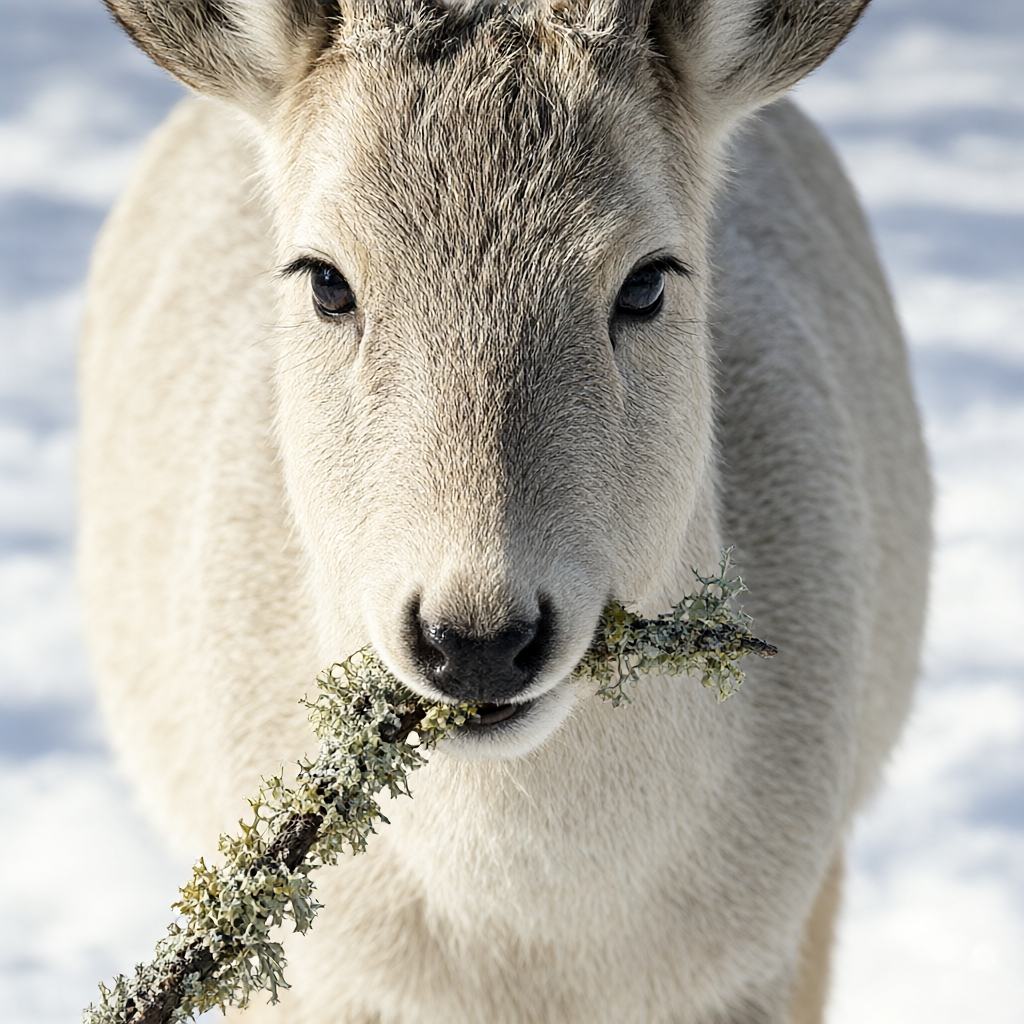
One fawn, hidden
The breeding cycle
A female gives birth to one or two young. Gestation lasts about six months, and births follow the spring thaw. Because the young must grow before winter, timing matters enormously. The fawn stays hidden for the first weeks.
Males fight with the canines during the rut. The mother chases off the young before the next birth. Independence comes within a year.
Poaching for musk
Conservation
The Red List calls the species Vulnerable. Poaching for musk drives the decline across Russia and China. Because a single gland sells for a high price, snares target males all winter.
Logging takes the old forest that supplies lichen. Fires in the taiga destroy habitat for decades. Protected areas hold animals, though patrols cover only part of the range.
Side by side
How It Compares
| Trait | Siberian Musk Deer | Roe Deer |
|---|---|---|
| Family | Moschidae | Cervidae |
| Length | 90-100 cm | 95-135 cm |
| Horns | none | short antlers on males |
| Canines | long, on males | small |
| Food | lichen and needles | grass, leaves and shoots |
| Rating | Vulnerable | Least Concern |
Common misreadings
What People Get Wrong
- Not a deer with antlers. No member of the family grows antlers at all. Males carry long upper canines instead, and they use them in fights during the rut when two animals meet at close quarters.
- Not a grazer. Lichens make up most of the winter diet. Needles, bark and moss fill the gap when lichen runs short, and a good patch gets visited again and again through the snow.
- Not a common animal. Poachers take males for the musk gland. One gland sells for more than a month of local wages, and hunters set snares along the ridges where the deer moves in winter.
Going further
Sources and Further Reading
Quick hits
Five things to remember
- It has fangs instead of antlers.
- One gland can cost more than gold.
- It eats lichen through winter.
- It lives alone in old taiga.
- Females carry no tusks at all.
[…] and merged pectoral fins set it apart from the slender cyprinids it lives alongside, such as the Minnow. Several local forms exist, and in some regions what was called C. gobio has been split into […]